The Ending the HIV Epidemic (EHE) Initiative aims to reduce HIV incidence by 90% by 2030 through a combination of rapidly diagnosing new HIV infections, preventing infection in susceptible populations through interventions such as pre-exposure prophylaxis (PrEP), and treating people with HIV (PWH) to achieve viral suppression. HIV epidemics are localized in nature, and the levels of testing, PrEP, and viral suppression needed to achieve EHE goals in specific locations are unclear. A user-friendly, location-specific tool to address this question could aid HIV decision-makers in choosing pathways to reach EHE goals.
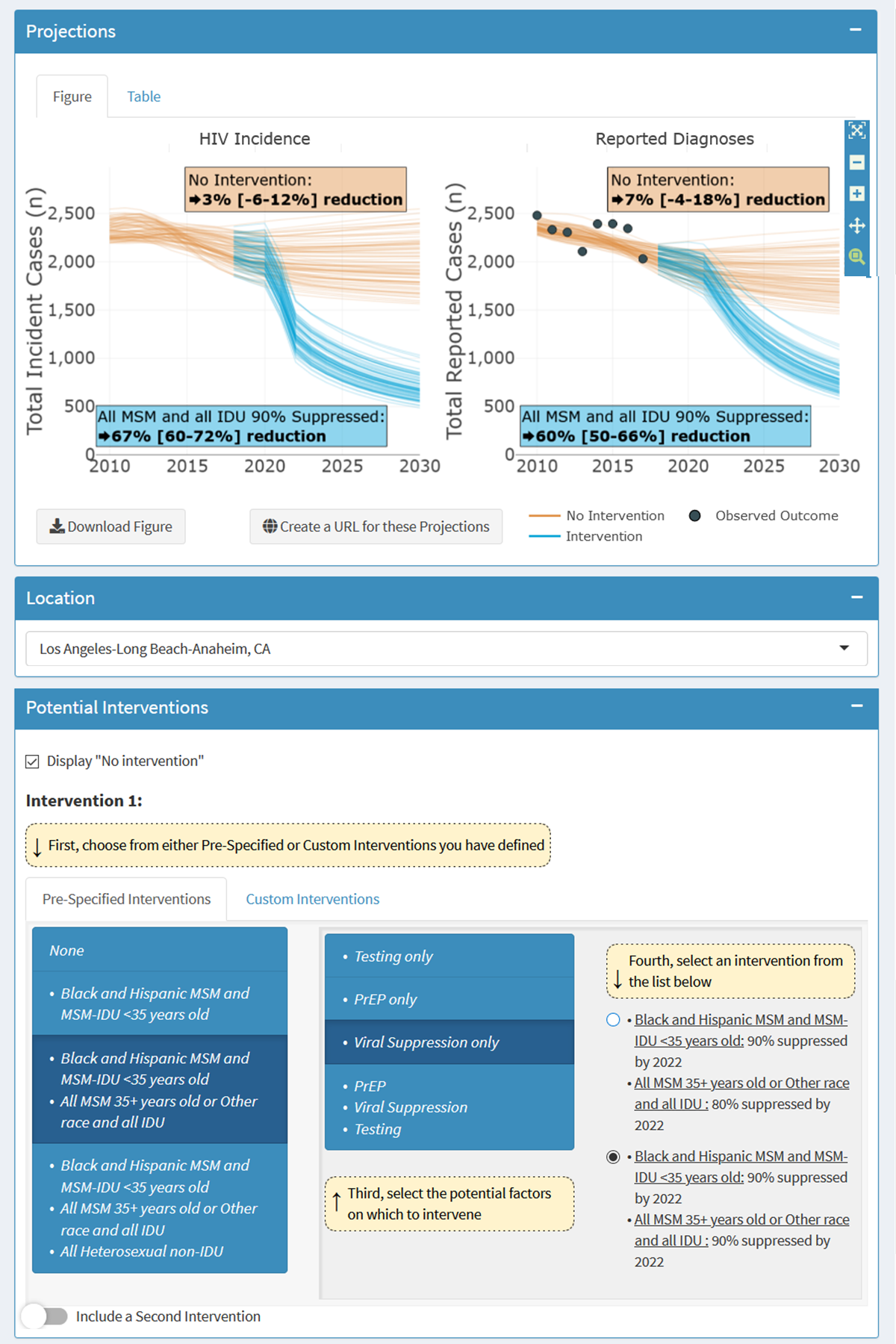
The Johns Hopkins Epidemiological and Economic Model (JHEEM) is a dynamic, compartmental model representing the HIV epidemic, calibrated to 32 Metropolitan Statistical Areas (MSAs) which encompass the 48 high-burden counties plus Washington DC identified by the EHE plan. The model makes projections of incidence, prevalence, reported diagnoses, and mortality for interventions that combine three parameters: (1) the frequency of HIV testing, (2) the proportion of at-risk individuals who are enrolled in PrEP program, and (3) the proportion of PWH who are virally suppressed. These interventions can be targeted to demographic strata of age (13-24, 25-34, 35-44, 45-54, and ?55 years old), race (Black, Hispanic, Other), sex (male, female), and HIV acquisition risk factor (men who have sex with men, injection drug users, heterosexuals). The interactive web tool allows users to visualize model projections for potential interventions in any of the 32 MSAs. Additionally, users can design custom interventions combining different levels of HIV testing, PrEP, and viral suppression, and run simulations to evaluate these interventions in real time.
The web tool is publicly available at www.jheem.org, with data visualizations as shown in the Figure. In order to achieve the EHE goal of reducing incidence by 90% over a decade, most MSAs are projected to require interventions that target multiple demographic strata and combine yearly HIV testing, PrEP uptake of 25-50% in at-risk individuals, and viral suppression of 80-90% across key populations.
The EHE goal of 90% reduction in HIV incidence is achievable, but will require substantial improvements in HIV testing, PrEP, and viral suppression among PWH. Our publicly available web tool allows health officials to project which interventions are most likely to achieve EHE goals in their local environment.