Background:
Prompt initiation of antiretroviral therapy (ART) is now considered the standard of HIV care. Factors associated with delayed or inconsistent HIV care HIV care include: poverty, lack of transportation, lack of healthcare coverage and fear of HIV stigma. Strengths-based case management, intensive outreach, and patient navigation are well-supported interventions to improve care that have largely been tested/implemented in isolation. We developed an HIV care intervention bundle that combines these strategies using pre-/post-visit telehealth calls to provide psychosocial and educational support, health system navigation, and enhanced healthcare communication.
Methods:
We conducted a longitudinal randomized control study to compare participant time to viral suppression and care-related measures (eg visit adherence). Participants were randomized to receive the intervention (n=20) or receive the standard of care (n=20). Intervention participants received up to seven additional telehealth sessions with a Registered Nurse. Intervention participants were screened for psychosocial needs, addiction services, clinical symptoms, and referred for assistance when necessary. One-on-one education and psychosocial support were provided to the intervention group. Virologic and care-related data were abstracted through prospective record review. Participation lasted one year with measures evaluated at baseline, six-months, and 12-months.
Results:
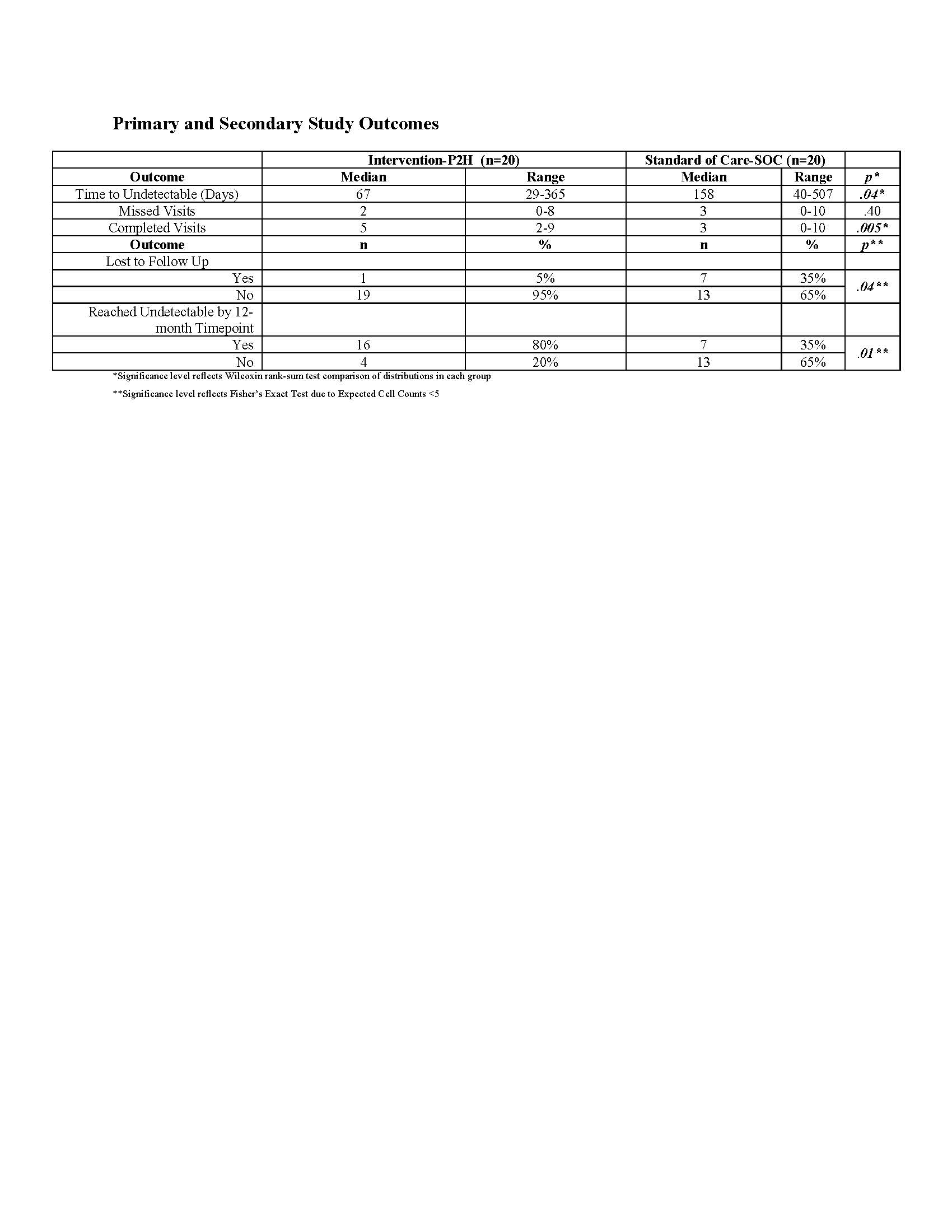
Our sample included 40 adult men (70%) and women (30%) with detectable viral loads ( >1000 copies), aged 18-65 (μ=36.30±10.82 years) who were African American (50%), White (47.5%), or multi-racial (2.5%). There were no significant differences in the distribution of gender, age, race, or baseline viral load or antiretroviral uptake between the intervention and control groups. Intervention participants reached viral suppression significantly more quickly than control participants (see table, p=0.04), were more likely to complete scheduled visits (p=.005), were less likely to be lost to follow-up in the first year (p=.04), and to be undetectable at the 12-month time point (p=.01)
Conclusions:
Our results demonstrate the potential of a telehealth intervention bundle to help patients reach viral suppression sooner, promote early identification of distress and difficulties, and help strengthen clinical relationships with the healthcare team. A healthcare bundle which focuses on supporting the needs of PWH may improve overall health and reduce the spread of HIV.
Primary and Secondary Outcomes