Background
Adolescents and young adults living with HIV (YLH) are disproportionately vulnerable to depression, affecting engagement in care and overall well-being. Cognitive behavioral interventions may improve mental health and HIV care outcomes.
Methods
We conducted cognitive behavioral therapy (CBT) as part of a multi-component intervention in a cluster randomized trial assigning Kenyan YLH to different intensities of care according to need using a clinical prediction tool. At each visit, YLH in the intervention arm with PHQ-2>2, missed visits, viral non-suppression, or other mental health concerns were eligible for referral to counseling. YLH completed standardized surveys at enrollment, 6 and 12 months; clinical data were extracted from medical records. Preliminary effectiveness was measured by comparing CBT-referred, non-referred, and control groups for depression, anxiety, retention, and viral suppression over time using linear regression adjusting for baseline measures and clustering by facility.
Results
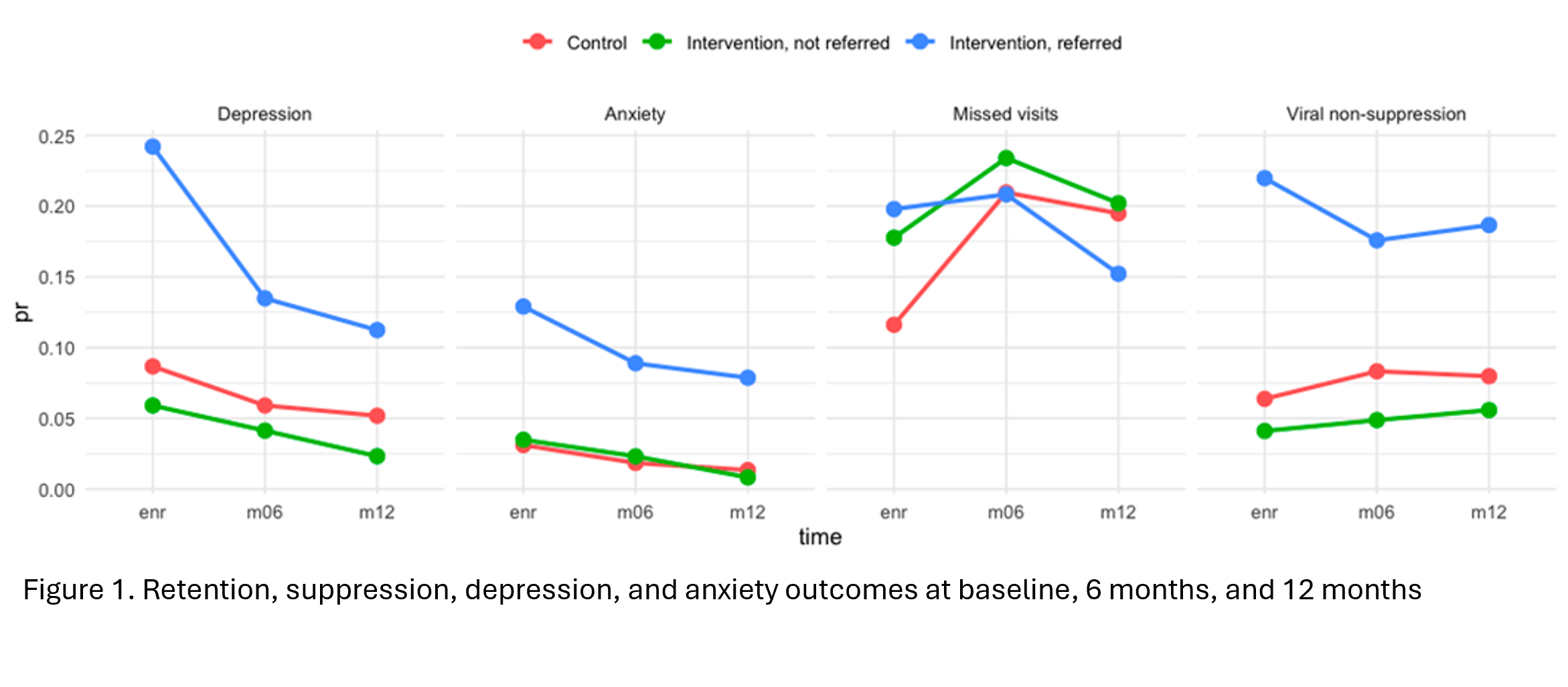
Twenty-nine of 33 selected providers (88%) completed 5-day CBT training, and 20 (61%) completed three required supervision sessions. Among 895 YLH at intervention sites, 96 were referred for CBT. Most (95%) were identified using the prediction tool: 25 reported depression, 67 missed a visit, and 55 were virally unsuppressed. At baseline, YLH referred to mental health counseling reported more depression (24% vs 6%), anxiety (13% vs 4%), history of violence (25% vs 13%), drug use (13% vs 6%), and viral non-suppression (22% vs. 4%) than those not referred (p<0.05 for all). Nearly three quarters (74%) of referred YLH completed all five counselling sessions. Among 25 YLH who did not complete all sessions; 4 transferred out of the facility and 8 had ongoing sessions at study end; 13 withdrew, were lost to care, or died during follow-up. Depression, anxiety, missed visits, and suppression improved in all three groups; the decrease in depression among CBT-referred YLH was significantly higher than those in the control group (β=-1.8; 95% CI: -3.5, -0.11; p=0.037).
Conclusions
Implementation of CBT for YLH in Kenya was feasible, with relatively high training and counseling completion rates. Depression decreased more rapidly among those receiving CBT, suggesting effectiveness, though further research with appropriate controls and longer-term follow-up is necessary.
Table or Figure