Background
Postexposure prophylaxis (PEP) is critical for HIV prevention because it is the only intervention that can prevent HIV acquisition following an exposure. 2016 CDC PEP guidelines recommend specific regimens for PEP. A recent report found increasing off-label use of bictegravir for PEP. Bictegravir is a second-generation integrase inhibitor approved for HIV treatment in 2018 that is not one of the CDC PEP guidelines recommended regimens. Our objective was to analyze national trends in the use of 2016 CDC recommended regimens and bictegravir for PEP and to describe PEP user characteristics.
Methods
We analyzed data from the IQVIA Real World Data—Longitudinal Prescriptions database and updated a validated algorithm to identify persons aged ≥16 years prescribed PEP from 2015−2023. Among those prescribed an antiretroviral (ARV) medication, we used the validated algorithm to exclude persons with prescriptions for PrEP or hepatitis B treatment. We also excluded persons with a prior or concurrent HIV diagnosis from 2015–2023, an ARV prescription with >30 days of supply, or any prior ARV prescription record. Two clinicians independently reviewed the regimens and determined probable PEP cases. We reported the annual number of PEP users, stratified by regimen type, days of supply, and PEP user demographic characteristics.
Results
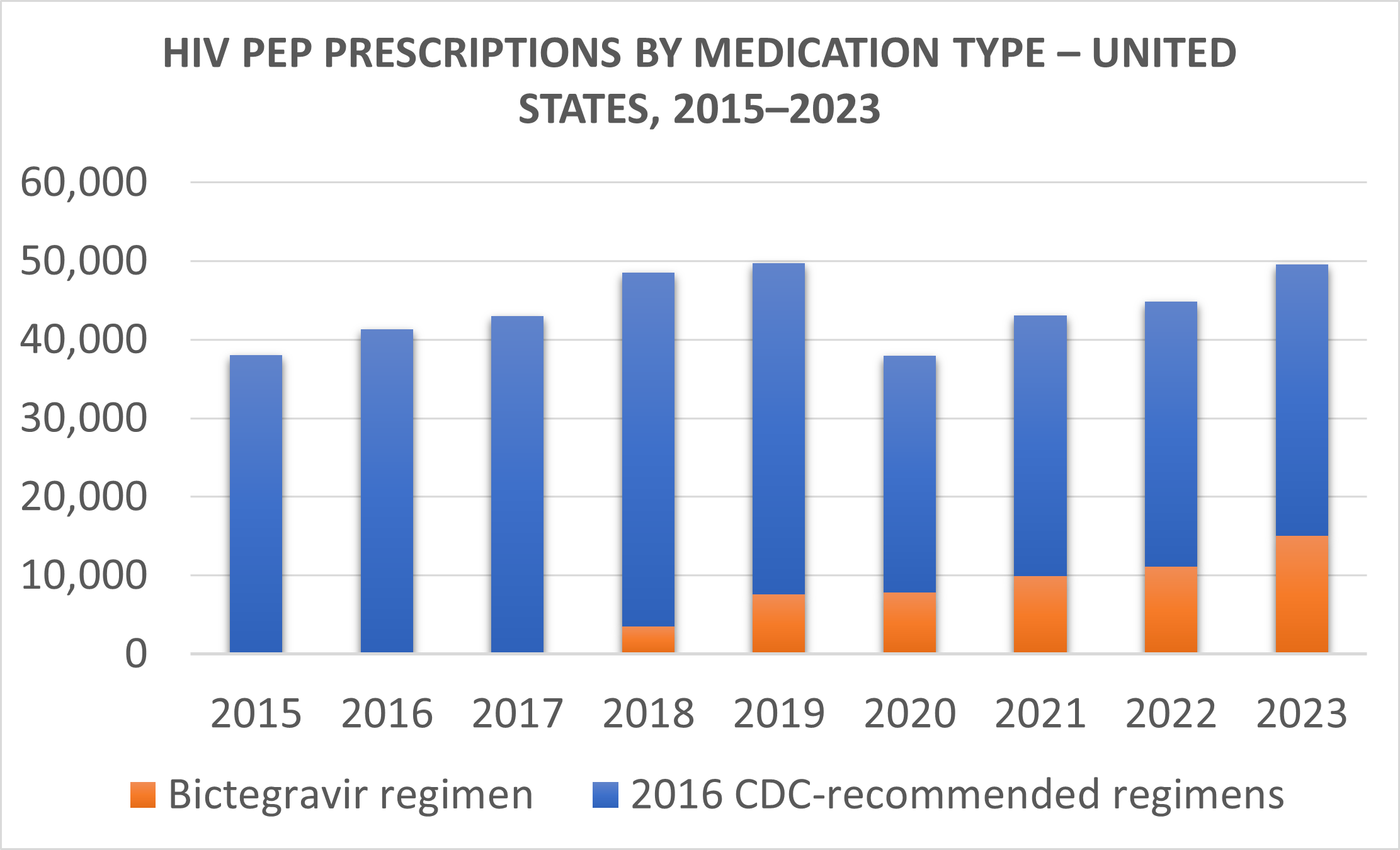
During 2015−2023, the annual number of persons prescribed PEP ranged from 38,059−49,525. In 2023, 88.1% of PEP prescriptions were a full course for 28−30 days and 12.0% for shorter durations. The number of persons prescribed bictegravir for PEP increased from 3,525 (7.3%) in 2018 to 15,048 (30.4%) in 2023. While CDC-recommended PEP regimens were prescribed equally for men and for women, bictegravir was prescribed predominantly for men (72.9%). Nearly half of individuals prescribed bictegravir for PEP were from the South (48.5%).
Conclusions
The increasing use of bictegravir for PEP reflects a shift in prescribing behavior, likely because of its dosed once daily, tolerability, and efficacy in PEP. Our finding of increased bictegravir use can inform future recommendations for PEP medications. Not all PEP users were prescribed a full course of PEP. It is important to ensure that persons prescribed PEP starter-packs be supported to follow-up for a full course.
Table or Figure