Background
Symptoms of depression, anxiety, and post-traumatic stress can negatively impact HIV outcomes and quality of life. Despite increased risk of mental distress among youth with HIV (YWH), mental health (MH) resources are limited in many countries. IMPAACT 2016 evaluated whether a group-based, peer-led, manualized Trauma Informed-Cognitive Behavioral Therapy (TI-CBT) intervention can improve MH symptoms compared to a Discussion Control (DC).
Methods
IMPAACT 2016 was a two-arm, individually randomized group treatment trial that enrolled YWH from March to September 2024 across four African countries. Key inclusion criteria were: 1) 15-19 years of age; 2) aware of their HIV status; 3) prescribed antiretroviral therapy (ART) for >6 months; 4) moderate-to-severe symptoms of depression (PHQ-9 ≥10), anxiety (GAD-7 ≥10), and/or post-traumatic stress (UCLA PTSD-RI ≥35). Youth had an unscorable PTSD-RI if they did not report a traumatic event. YWH were recruited from adolescent HIV clinics and screened by self-report. Enrolled YWH were randomized (1:1) to 6 group sessions over 8 weeks of either TI-CBT or DC, both led by trained and locally supervised youth leaders. Primary MH outcomes (PHQ-9, GAD-7, UCLA PTSD-RI, and a three-measure composite) were assessed at Month 6. ART adherence was measured with a validated 3-item self-report measure and suppression defined as HIV RNA <200 copies/mL.
Results
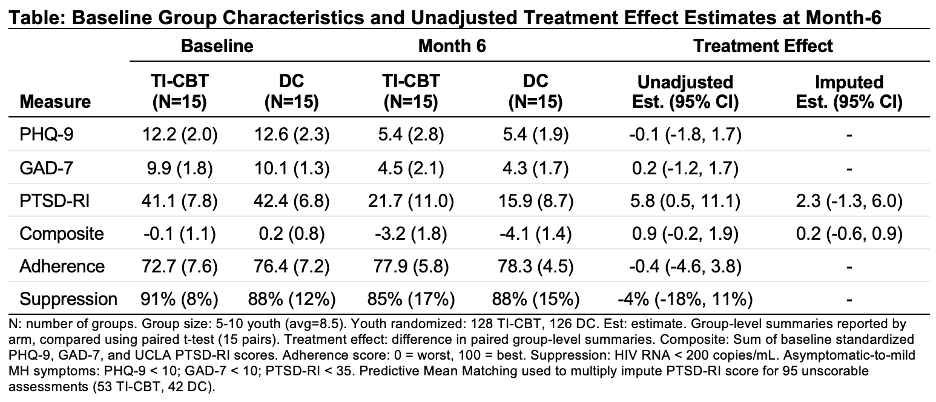
Of 365 youth screened, 254 (70%) enrolled. Mean age was 17.3 years and 57% were female. Eighty-nine percent attended all six group sessions. In both arms, group-level means suggest clinically meaningful improvement from moderate-to-severe symptoms at Baseline to asymptomatic-to-mild symptoms at Month 6. There was no statistically significant difference between arms in PHQ-9, GAD-7, or Composite scores at Month 6. The PTSD-RI was unscorable for 37% of participants at Month 6, moreso among TI-CBT and youth with less severe symptoms. Unadjusted (complete case) analysis indicated higher mean Month 6 PTSD-RI scores for TI-CBT v. DC. With imputation, the difference was attenuated and not statistically significant (Table). There was no significant difference in self-reported adherence nor viral suppression.
Conclusions
Rapid enrollment underscores the high rate of mental distress and desire for MH care among YWH. No difference in arm efficacy suggests that simply offering symptomatic YWH a safe space to discuss challenges in small peer groups led by a youth leader with supervision may lead to improved MH outcomes.
Table or Figure