Background
Doxycycline post-exposure prophylaxis (doxyPEP) is an effective strategy to prevent bacterial sexually transmitted infections (bSTIs). However, concerns that high antibiotic consumption may drive antimicrobial resistance have limited its implementation. We evaluated doxyPEP use and actual doxycycline consumption in a cohort of HIV pre-exposure prophylaxis (PrEP) users.
Methods
We conducted a retrospective analysis of all patients attending our PrEP clinic from June 2024 to September 2025 who received structured doxyPEP counseling and prescription, which was advised for individuals reporting ≥5 sexual partners in 72 hours, as per local guidelines. At each quarterly visit, patients were tested for syphilis, chlamydia, and gonorrhea; number of partners, doxyPEP use, and number of doses (1 dose = 2 pills) per interval between visits were recorded. Analysis was limited to the first two follow-up visits. Trends in doxyPEP use and correlation with number of partners were analyzed using non-parametric tests (p <0.05). Associations between doxyPEP use and bSTI prevalence were assessed using generalized estimating equations.
Results
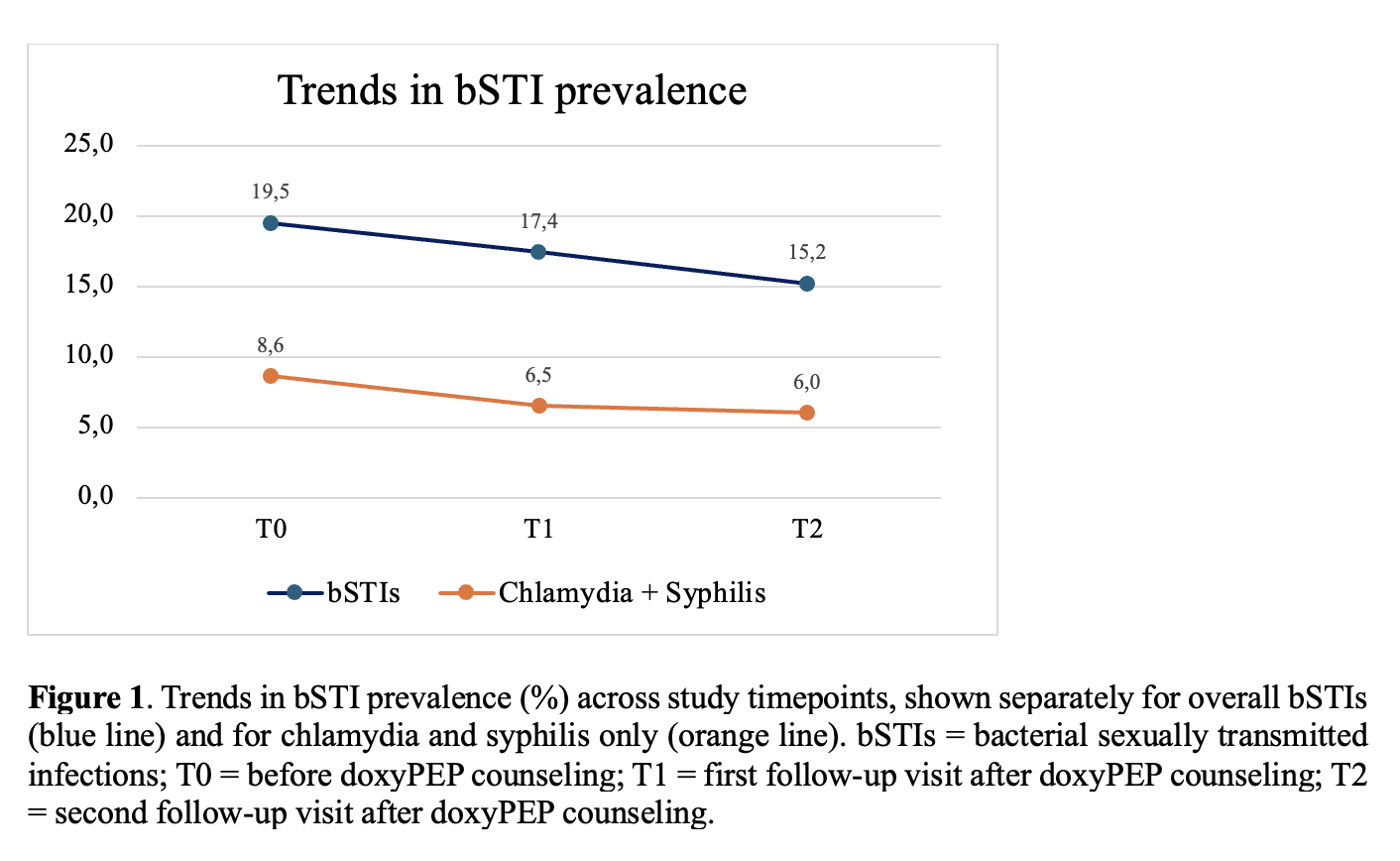
A total of 338 men who have sex with men were included, with a median age of 35 (IQR 30-41) and a median follow-up of 6.5 months (IQR 6.0-7.3). DoxyPEP users were 31.7% and 30.7% at the first and second follow-up visits, respectively (p = 0.43). Among users, the median number of doses per interval was 2 (IQR 1-2) at the first visit and 2 (IQR 1-4) at the second, corresponding to 0.67 doses per person-month. Only 8 (2.4%) participants reported more than 5 doses. DoxyPEP use was associated with a higher number of partners (p <0.001). Prevalence of all bSTIs and of chlamydia and syphilis only was 19.5% and 8.6% at baseline, and 15.2% and 6.0% at the second follow-up visit, respectively, showing a non-significant decrease (Figure 1) without significant association with doxyPEP use.
Conclusions
In this real-world PrEP cohort, overall antibiotic consumption for doxyPEP was low, suggesting that targeted behavioral counseling may help prevent overuse and mitigate concerns about antimicrobial resistance. These findings highlight the importance of counseling in supporting antimicrobial stewardship while maximizing doxyPEP benefits.
Table or Figure