Background
Retention in HIV care is vital for achieving optimal care for adolescents and young adults living with HIV (AYAH) in sub-Saharan Africa, yet clinic transfers remain common. Limited evidence exists on the characteristics of AYAH who transfer clinics and how transfers influence treatment outcomes. To address this gap, we explored demographic, psychosocial, and clinical factors associated with clinic transfers to identify strategies for strengthening care continuity
Methods
This study was nested within the Adapt for Adolescents (A4A) randomized controlled trial, which included AYAH aged 14–24 years enrolled from three high-volume public health facilities in Kisumu County, Kenya, between April 2021 and March 2022. Clinic transfers were identified through electronic medical records or self-reported by participants during follow-up. Sociodemographic data, psychosocial factors, and clinical indicators were collected at baseline and most viral load at 2-year follow-up. We used Pearson’s chi squared and Mann-Whitney U tests to compare baseline group characteristics and viral suppression (<200 copies/ml) at 2 years +/- 6 months. Multivariable logistic regression identified clinic transfer predictors, adjusting for confounders using stepwise regression.
Results
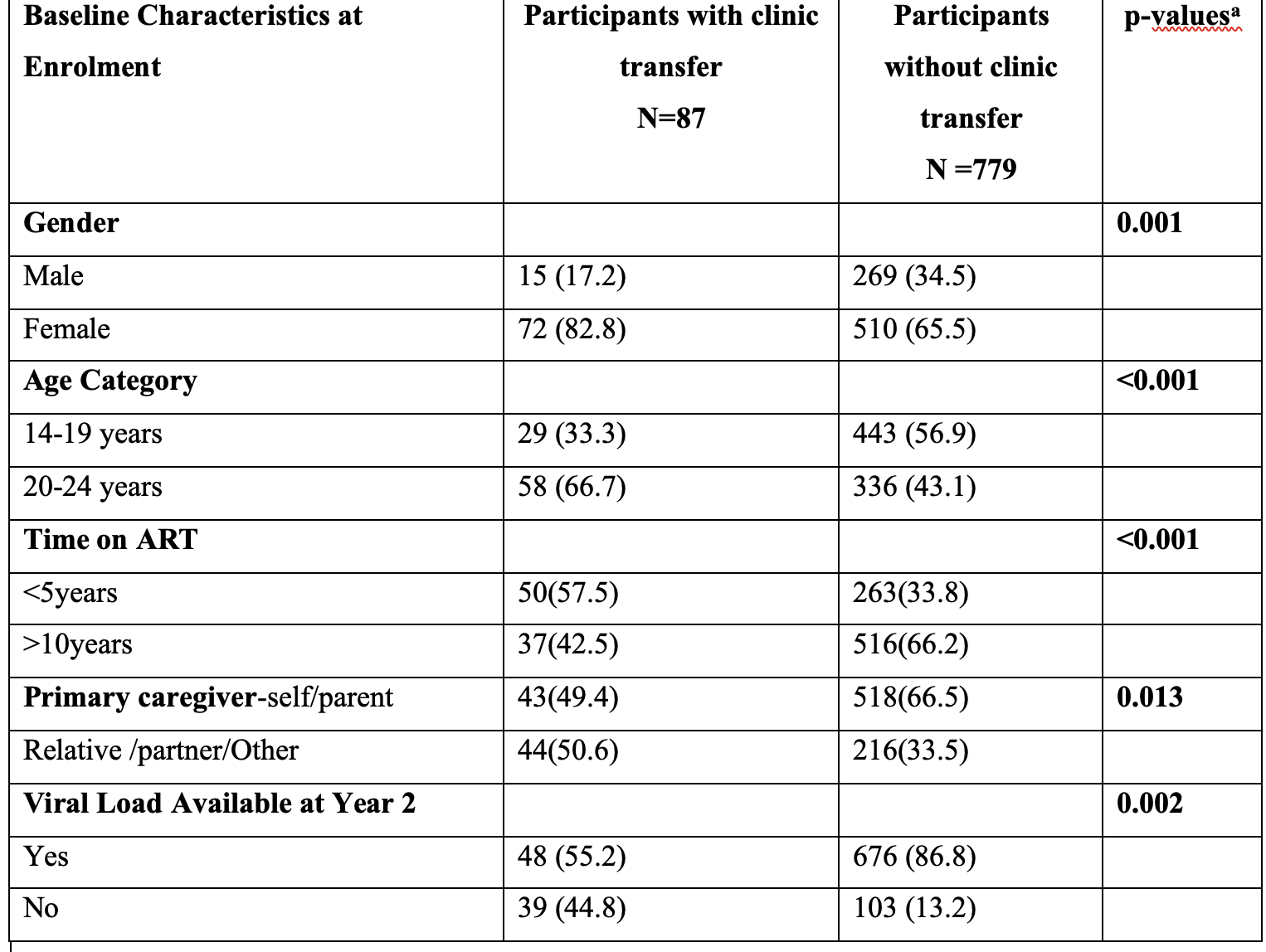
Of 880 AYAH enrolled, 87 (10.0%) transferred out. AYAH who transferred were more likely to be female (82.8% vs. 65.5%, p = 0.001), older (median 21 vs. 19 years, p < 0.001), with less time on ART (median 4 vs. 7 years, p < 0.001). At 2 years, Few AYAH who transferred had a viral load available (55.2% vs. 86.8%, p = 0.002), and among those, fewer were virally suppressed (79.0% vs. 88.0%, p < 0.001). Our adjusted regression models showed that female AYAH had seven times higher odds of transferring clinics compared to males (aOR = 7.04, 95% CI: 1.29–38.52, p = 0.024). Individuals who relied on a partner (as opposed to a parent) as their primary support had eight times the odds of transferring clinics (aOR = 8.06, 95% CI: 1.21-53.77, p=0.031).
Conclusions
Results underscore that AYAH transferring clinics tend to comprise a different population than non-transfers, with transfer negatively impacting care outcomes. Providing targeted support, particularly for young women and those without parental support, may strengthen retention and viral suppression among mobile AYAH
Table or Figure