Background
Metabolic dysfunction-associated steatotic liver disease (MASLD) affects over one-third of people with HIV (PWH), yet underlying mechanisms and metabolic signatures remain poorly defined. Dysregulated lipid metabolism may play a key role. This study aimed to identify distinctive plasma lipid metabolite patterns in PWH with MASLD.
Methods
We conducted a matched case-control study of 50 PWH with MASLD (cases) and 50 PWH without MASLD (controls) from the NIDDK-funded HIV NASH Clinical Research Network. MASLD was defined by CAP ≥ 263 dB/m on vibration-controlled transient elastography plus ≥ 1 metabolic risk factor, excluding significant alcohol use or other liver diseases. Cases and controls were matched on age, sex, race and ethnicity. Metabolites were profiled on previously frozen fasting plasma samples using the Biocrates Q500 assay and a validated oxylipin platform. Associations with MASLD were evaluated using multivariable logistic regression adjusted for BMI, diabetes, hypertension, hyperlipidemia, and statin use, with statistical significance defined as p<0.05 and false discovery rate<0.10.
Results
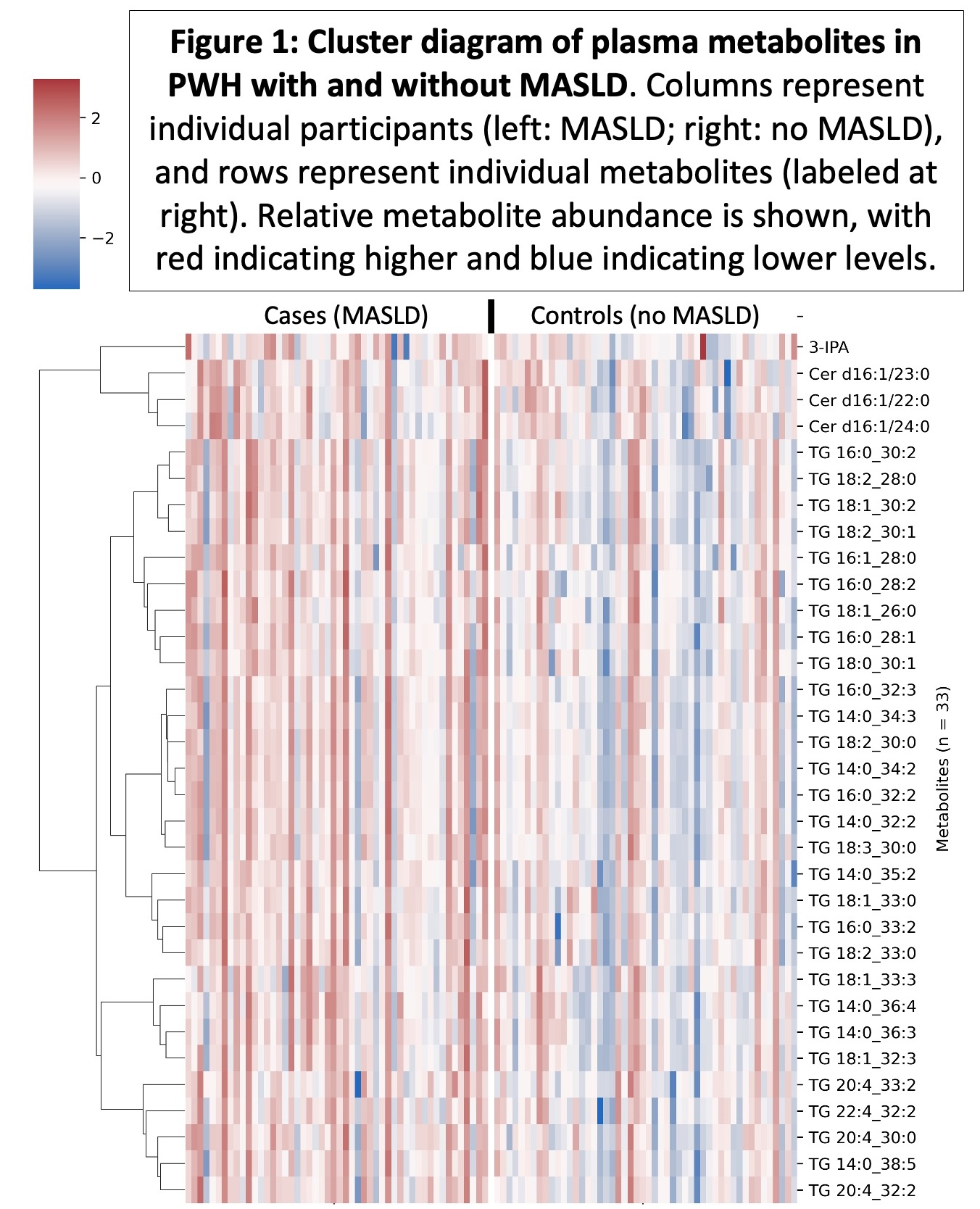
Cases had higher mean BMI (33.6 vs 27.3 kg/m2, p<0.001) and fasting triglyceride levels (138 vs 94 mg/dL, p=0.02) but were similar to controls in time from HIV diagnosis, ART regimen, prevalence of hypertension, hyperlipidemia, diabetes, and statin use (40% of cases vs 36% of controls). A total of 484 metabolites from the Q500 and 24 oxylipins were quantified. 33 metabolites differed between cases and controls (Figure 1), including 29 triglyceride (TG) metabolites detected at higher levels in cases. Nearly half the TG species contained saturated fatty acids (FA) myristate (N=7), palmitate (N=6) and stearate (N=1). Multiple species contained oleate (N=5), a monounsaturated FA. Cases also had higher levels of 3 ceramide metabolites (all with d16:1 base) and 3-Indolepropionic acid (3-IPA, derived from gut microbiota). One anti-inflammatory oxylipin, 14,15-DiHETrE, showed a trend toward lower levels in PWH with MASLD (p=0.051, FDR=0.81).
Conclusions
MASLD in PWH is associated with distinct alterations in plasma lipid and gut microbiota–derived metabolites, particularly elevated triglyceride and ceramide metabolites. These findings implicate dysregulated lipid metabolism in MASLD and support further investigation of targeted metabolic interventions, including lipid-lowering strategies, to prevent or treat MASLD in PWH.
Table or Figure