Background
Medically vulnerable individuals with pre-existing comorbidities remain at heightened risk of severe COVID-19 disease and outcomes. To better understand the post-pandemic impact of COVID-19 on this population, the COVID Community Council (eight representatives from global medically vulnerable patient organizations) co-created the ‘Attitudes about COVID and Community Engagement with Patients’ (ACCEPt) global survey.
Methods
ACCEPt surveyed 5,000 adults from 10 countries (Australia, Brazil, Canada, France, Germany, Israel, Japan, South Korea, Spain, and the United States) with risk factors for severe disease and a self-reported COVID-19 diagnosis since January 2022. The one-time online survey included 41 questions on COVID-19 knowledge, attitudes, and practices, including symptom severity and antiviral use. Responses were analyzed using descriptive statistics.
Results
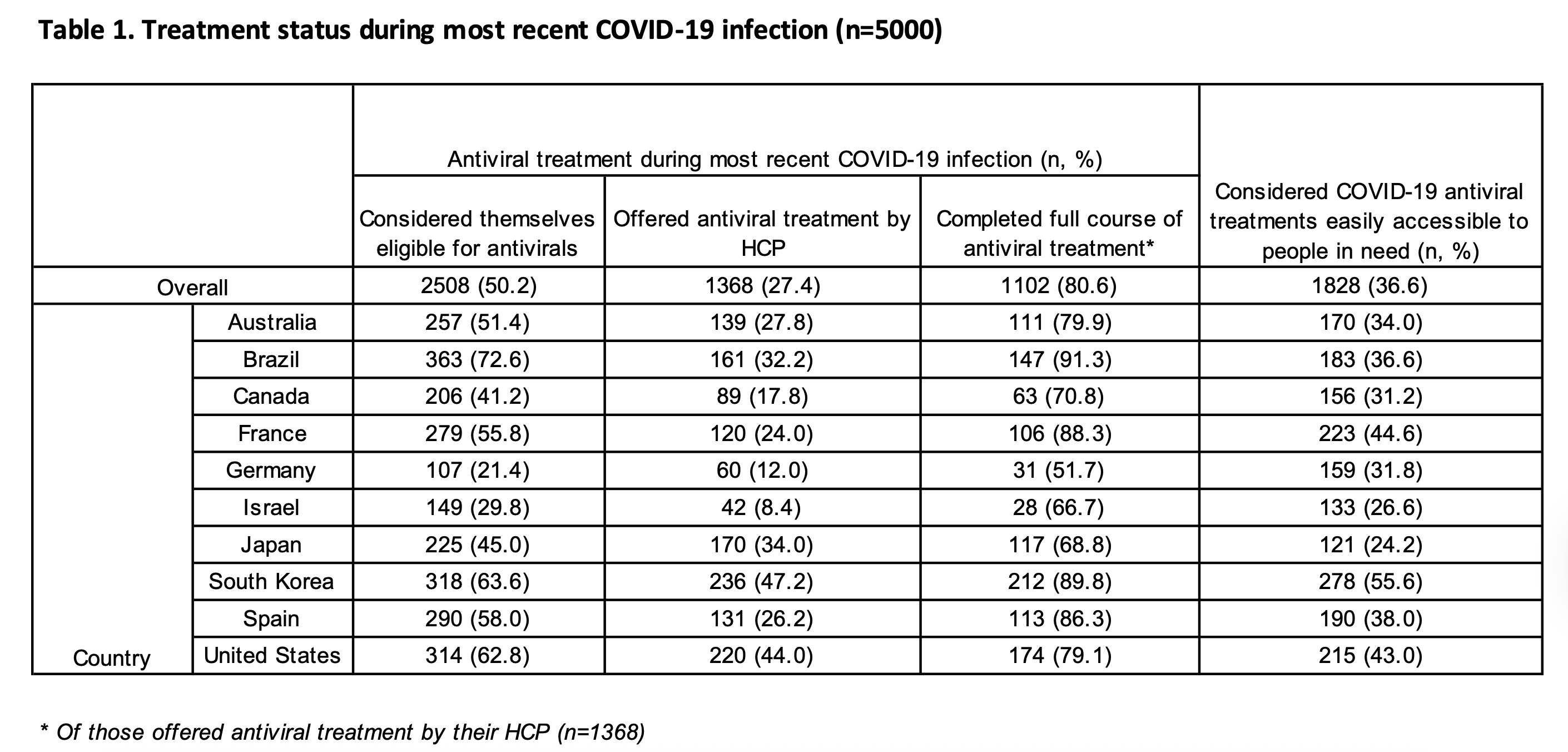
During their most recent SARS CoV-2 infection, respondents most commonly reported fever (71.4%), cough (69.6%) and sore throat (61.8%). Overall, 72.8% reported moderate-to-severe symptoms, most often among those who did not take antivirals because they were unaware of their availability: respondents aged <54 years; those in Spain, Brazil, Germany, Canada, France, and the US; and those self-reporting ‘bad’ or ‘very bad’ health. Over half (58.8%) consulted a healthcare provider during their most recent illness; however, only 27.4% of all respondents were offered antivirals. Prescribing rates of antivirals were higher among those in ‘very good’ health (41.8%) than those in ‘very bad’ health (27.4%). Despite their high-risk status, 49.8% of all respondents did not know they qualified for antivirals. While 83.3% agreed that access to COVID-19 treatment was moderate-to-very important, 27.5% did not feel it was easily accessible to those in need. Of the latter group, 85.0% reported that improved access would have a moderate-to-significant impact on their daily life and mental wellbeing. Similarly, 56.0% of all respondents reported that antiviral availability reduced their anxiety and fear of reinfection.
Conclusions
Many medically vulnerable individuals continue to experience moderate-to-severe COVID-19 symptoms, in many cases, without taking antiviral treatment. Gaps in awareness of eligibility and barriers to access persist globally. Improved antiviral availability could reduce symptom severity, improve outcomes, and positively affect daily life and mental wellbeing.
Table or Figure