Background
The Moderate Needs Clinic (MOD) utilizes a low-barrier drop-in model housed in a conventionally organized HIV clinic (Madison Clinic) to provide HIV primary care for PWH with complex needs in King County. Previously, we showed improved care engagement and a trend towards improved viral suppression in MOD. Here we assess the impact of MOD enrollment on HIV primary care and viral suppression measures and outcomes.
Methods
In this retrospective cohort study among PWH enrolled in MOD Clinic between January 2018 through April 2024 with data available 12 months pre and post enrollment: 1) we compared receipt of influenza vaccination and routine screening exams (lipids, hemoglobin A1c/plasma glucose, hepatitis C (HCV) antibody and/or RNA, blood pressure (BP), Pap smear), and achievement of HIV viral suppression in the year pre and post enrollment. 2) We determined the proportion of MOD patients diagnosed with hypertension (HTN), diabetes, dyslipidemia, and HCV who received intervention for these diagnoses (counseling as documented in clinician notes and/or medication prescription) in the year post enrollment. All diagnoses were determined by CFAR Network of Integrated Clinical Systems (CNICS) validated definitions and confirmed by chart review. We compared pre- vs post-enrollment outcomes with McNemar’s chi-squared tests. Overall Madison Clinic metrics for screening measures during the same period were obtained from CNICS.
Results
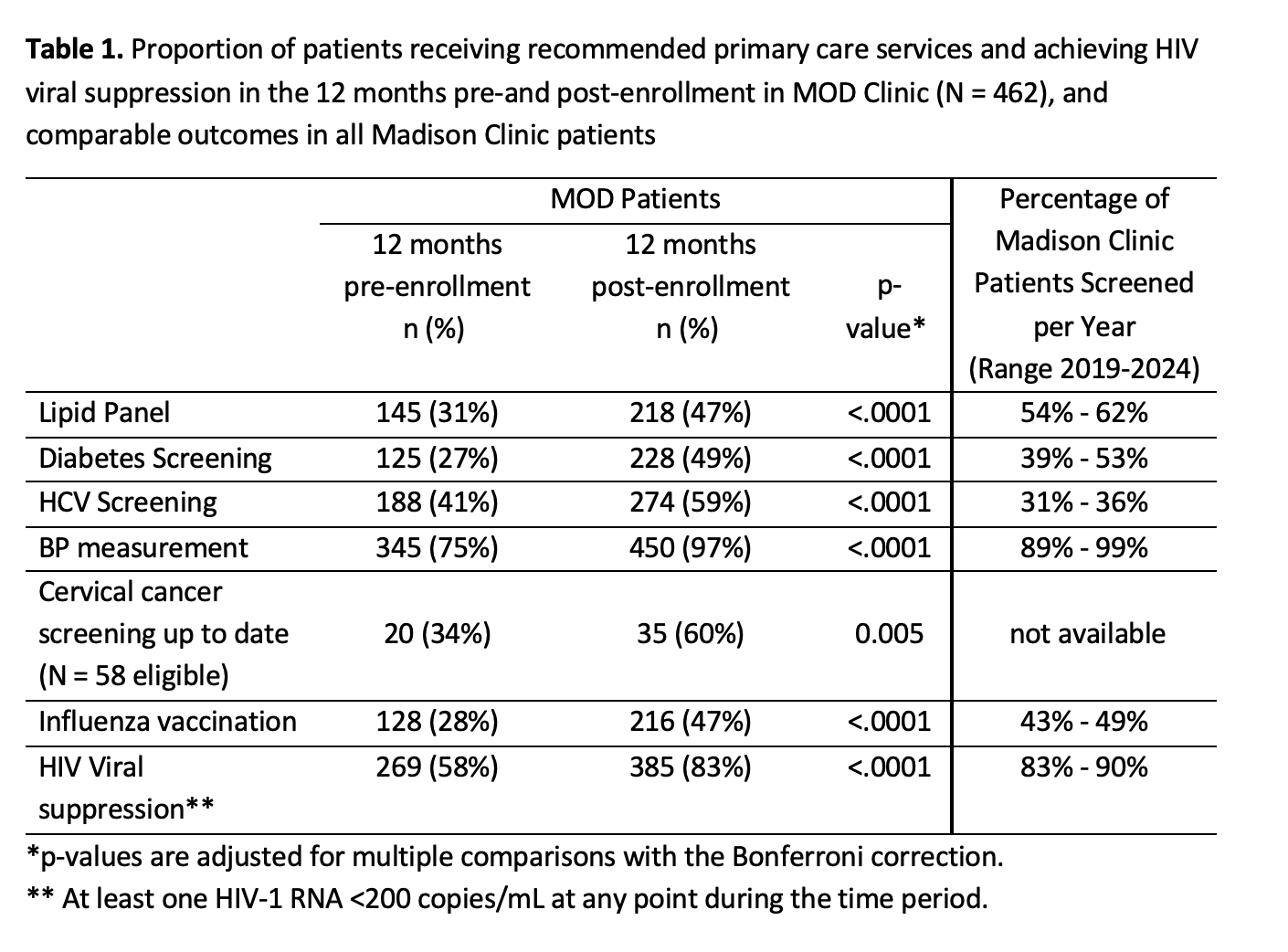
A total of 462 patients were enrolled in MOD between 1/2018 and 4/2024. Most were male (85%), 13% female, and 1% transgender. The percentage of patients screened for hyperlipidemia, diabetes, HCV, hypertension, and cervical cancer all significantly increased in the year following MOD enrollment, as did influenza immunization and achievement of HIV viral suppression (Table). Metrics for these outcomes following MOD enrollment were similar to those in Madison Clinic. During the study period, 23% had HTN, 6% had diabetes mellitus, and 11% had dyslipidemia, of whom 77%, 85%, and 25% respectively received intervention (counseling and/or pharmacologic). 47(10%) had HCV, 19% of whom were prescribed treatment.
Conclusions
Enrollment in MOD was associated with improved primary care screening and a high degree of comorbidity care. For most metrics, in the year post-enrollment, screening levels were comparable to the conventional clinic. A low-barrier approach can improve primary care for PWH with barriers to care engagement.
Table or Figure