Background
Background: Altered adipose tissue biology is a well-recognized driver of systemic inflammation and immune dysfunction and plays a key role in the development of serious non-AIDS events (SNAE), such as cancer and cardiovascular disease (CVD), and death for all causes. In people with HIV (PWH), the effect of obesity at time of antiretroviral treatment (ART) initiation on the risk of SNAE/death occurrence is poorly understood.
Methods
Methods: We included PWH of the Icona Foundation Cohort who, at the time of starting their first-line ART (baseline, BL) after 1997, were free from AIDS, CVD and cancer, with a CD4 count >200 cells/mm3. PWH with BMI <18.5 kg/m2 (underweight) were excluded; prostate cancer and non-melanoma skin cancer were not considered as events. Participants were grouped according to their baseline BMI in normal/overweight (NOW, 18.5-29.9) vs. obese (OB, 30+). We compared baseline characteristics in the BMI groups. We performed a standard survival analysis with time-fixed covariates at BL, considering a composite outcome including occurrence of SNAE/death.
Results
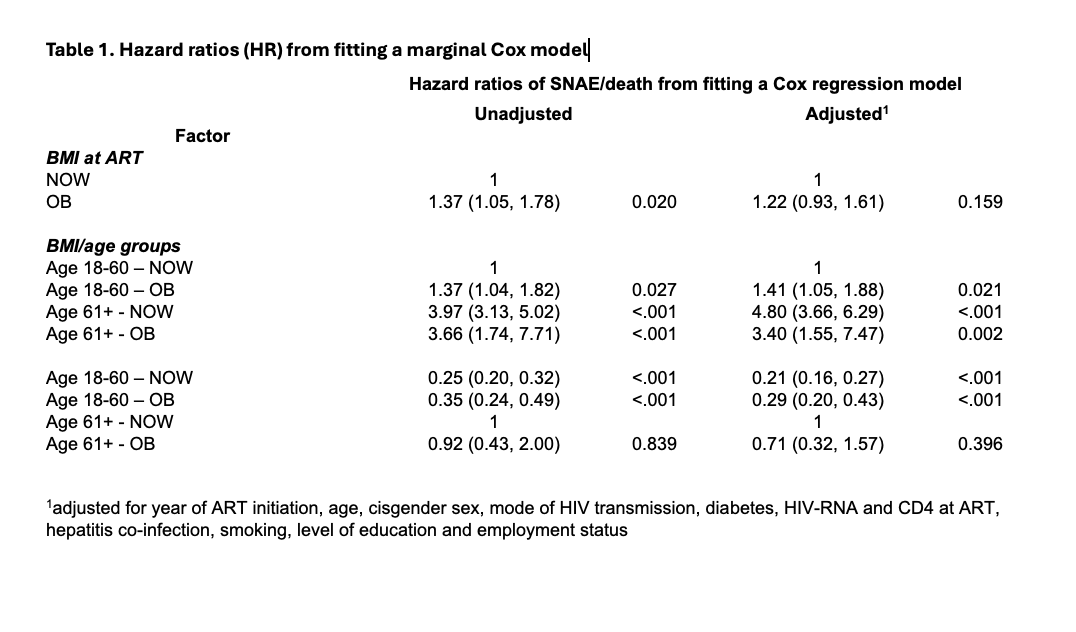
Results: A total of 11,652 PWH (21% females, median age 38 years [IQR: 31, 46]) were included: 8,153 with normal BMI, 2,848 overweight and 651 obese. Compared to OB, NOW were younger (38 vs. 41 years, p<0.001) and more frequently MSM (45% vs. 32%, p<0.001). NOW also had lower baseline CD4 count (350 vs. 389 cells/mm3, p<0.001) and lower prevalence of diabetes (2% vs. 7%, p<0.001) at BL . A total of 818 events were recorded: 122 CVD, 355 cancers and 341 deaths. By 15 years since starting ART the risk of SNAE/death was 12.3% (95% CI:11.2-13.3%) in NOW vs. 17.0% in OB (95% CI: 12.1-22.0%, p=0.04). However, after controlling for confounding, the difference was largely attenuated (adjusted hazard ratio (aHR)=1.24, 95% CI:0.94-1.63, p=0.13). In a model investigating effect measure modification by age, OB were independently at higher risk of SNAE/death when compared to NOW aged 18-60. Interestingly, we found no evidence for an effect of obesity in PWH aged >60 (Table 1).
Conclusions
Conclusions: In non-advanced PWH, obesity at ART initiation was associated with an increased risk of CVD/cancer/death in PWH aged ≤60 years, underlying the importance of obesity as a clinical risk factor per se. At older ages, we found no evidence for an association. These results suggest that the effect of novel strategies for reducing weight on the risk of clinical outcome should be investigated among young obese PWH.
Table or Figure