Background
Hypertension is one of the most common comorbidities among people living with HIV (PLHIV), and a major contributor to cardiovascular disease (CVD) in REPRIEVE, highlighting its clinical importance. Although hypertension has been described in PLHIV, its prevalence and control in a large global primary cardiovascular prevention population has not been well characterized in PLHIV. We evaluated baseline hypertension characteristics among the low-to-moderate CVD risk population of PLHIV in REPRIEVE.
Methods
Hypertension at baseline was considered if participants had (1) a prior diagnosis, regardless of antihypertensive treatment, or (2) systolic blood pressure ≥140 mmHg or diastolic blood pressure ≥90 mmHg in those without a prior diagnosis. We assessed prevalence and demographic/clinical correlates, and evaluated by region the distribution of hypertension categories: undiagnosed, diagnosed and uncontrolled, and diagnosed and controlled.
Results
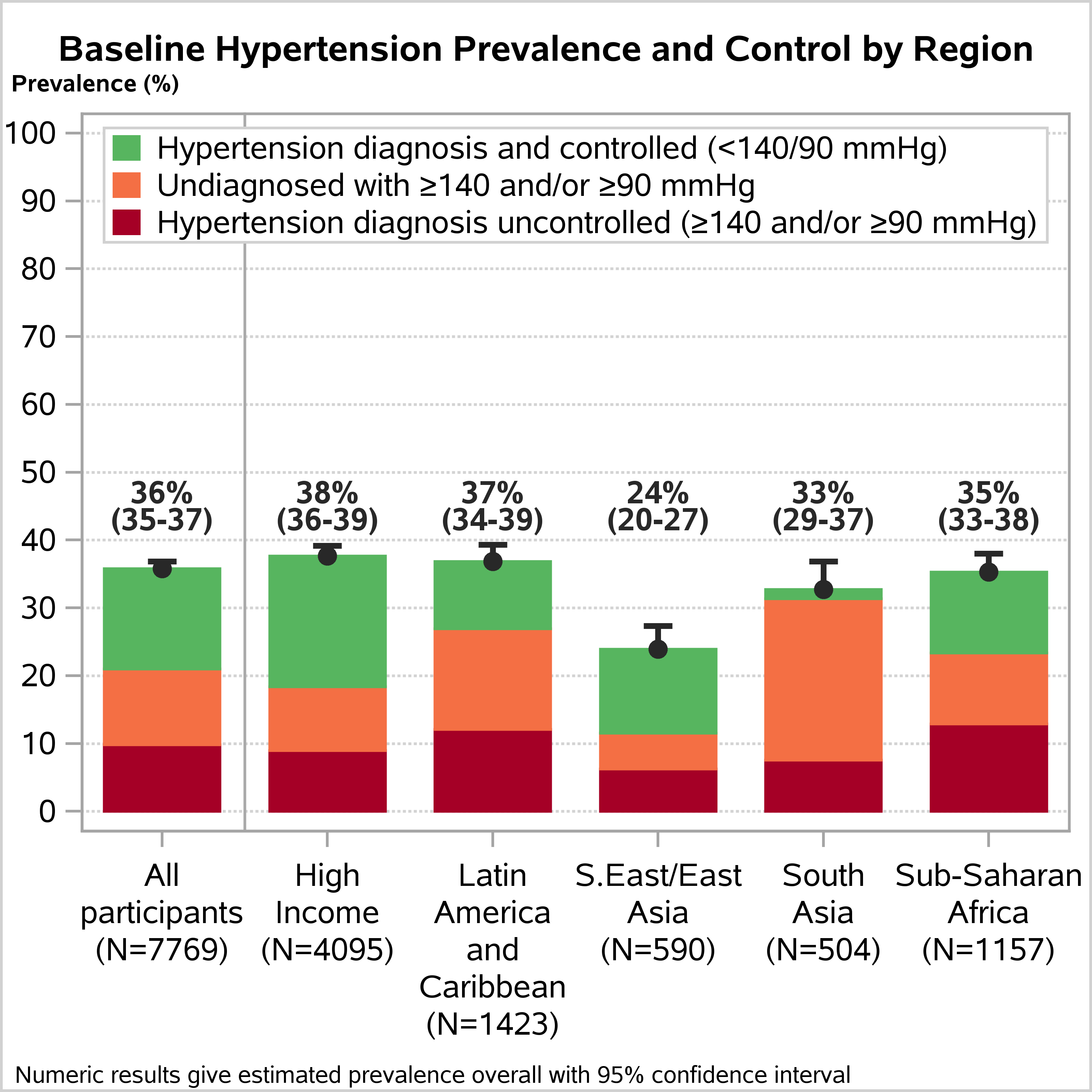
Of 7,769 participants enrolled in REPRIEVE from five global regions, median age was 50 years, and 2419 (31%) were women. The prevalence of baseline hypertension was 36% (2,780/7,769). Of these, 1549 (56%) had a prior diagnosis and were on antihypertensive medications, 333 (12%) had a prior diagnosis and were not on antihypertensives, and 898 (32%) had elevated blood pressure at baseline. Hypertension was more common in women (39% vs 34%); obese BMI (51%) vs overweight (37%) vs low/normal (26%); among participants ≥60 years (42%) vs 50-59 (40%) vs 40-49 (31%); among those reporting Black/African-American race within high income countries (46% vs 32% for other races), and with eGFR <90 ml/min vs ≥90 ml/min (40% vs 32%). There were no apparent differences in hypertension prevalence by HIV characteristics at entry (CD4 count, viral load, ART regimen). Among 1,882 participants with a known diagnosis of hypertension at baseline, 61% were controlled (<140/90 mmHg) and control appeared less common in women (56% in women and 64% men). There was geographic variation in baseline hypertension prevalence and rates of hypertension control (Figure).
Conclusions
Despite being enrolled with low-to-moderate CVD risk, more than one in three PLHIV in REPRIEVE had hypertension at baseline. Hypertension varied by region and was frequently suboptimally controlled. These findings highlight the urgent need for improved diagnosis, treatment, and control of hypertension in PLHIV.
Table or Figure