Background
Hypertension is a leading modifiable cardiovascular risk factor. Statins have been associated with lower risk of incident hypertension in non-HIV populations, but data in people living with HIV (PLWH) are limited. We assessed incidence and control of hypertension in REPRIEVE and its association with major adverse cardiovascular events (MACE).
Methods
REPRIEVE randomized 7,769 PLWH at low-to-moderate cardiovascular risk to pitavastatin or placebo. Participants with hypertension at baseline were excluded, leaving 4,989 for analysis. Incident hypertension was defined as a new site-reported clinical diagnosis (documented SBP ≥140 mmHg or DBP ≥90 mmHg on at least two occasions, or initiation of antihypertensive therapy). Blood pressure control was defined as SBP <140 mmHg and DBP <90 mmHg on treatment at follow-up. Cox models were used to estimate the effect of pitavastatin on incident hypertension, predictive factors, and relationship to MACE.
Results
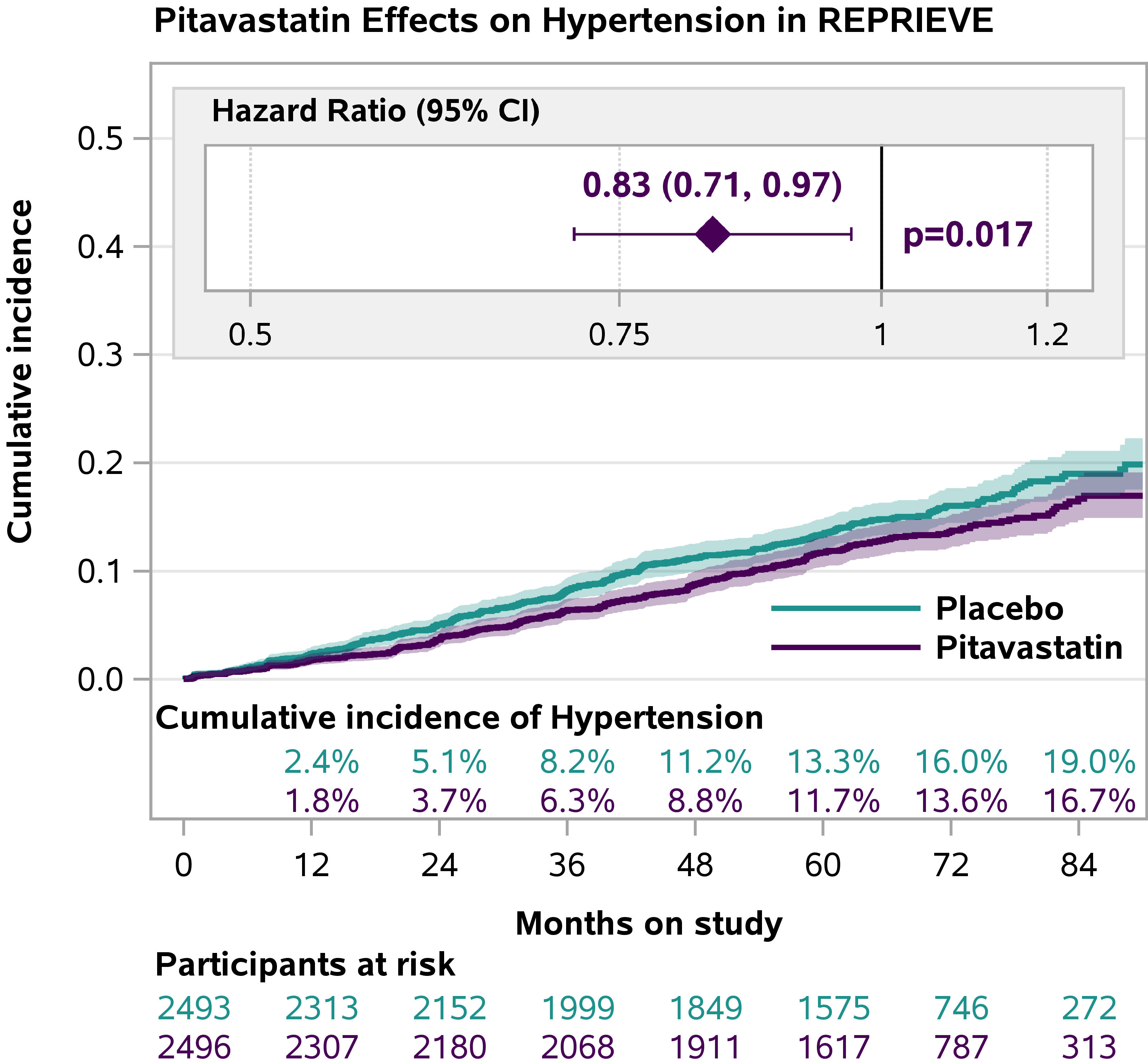
Over a median follow-up of 5 years, 668 of 4,989 participants (13.4%) developed incident hypertension (27.1 per 1000PY). Rates were higher with placebo (29.6 per 1000PY) than with pitavastatin (24.7 per 1000PY); pitavastatin reduced incident hypertension risk (hazard ratio [HR] 0.83, 95% CI 0.71–0.97 (p=0.017), see Figure). Independent predictors of hypertension included older age, higher BMI, metabolic syndrome, Black race in high-income countries, and global burden of disease region (highest in sub-Saharan Africa, lowest in East and Southeast Asia). Among those with incident hypertension, 87% initiated antihypertensive therapy; 60% achieved control within the first year and more than 70% at 2 to 4 years, while approximately 30% remained uncontrolled. After adjustment for baseline cardiovascular risk, incident hypertension was associated with more than a two-fold higher hazard of MACE, regardless of treatment allocation (HR 2.1, 1.3-3.45; p=0.002).
Conclusions
Pitavastatin reduced the risk of developing hypertension in REPRIEVE. Incident hypertension was strongly associated with higher MACE risk, independent of statin use. These findings emphasize both the preventive effect of statins on hypertension development and the prognostic significance of incident hypertension for cardiovascular outcomes in people with HIV.
Table or Figure