Background
One of the potential limitations of doxy-PEP use is interference with syphilis serologic diagnosis. This study aimed to describe the characteristics of syphilis cases diagnosed in individuals enrolled in a doxy-PEP program within a real-life cohort.
Methods
Participants were recruited between March 2023 and April 2025 in a doxy-PEP study (PRIDOX study, CROI 2025 Abstract 1275). STI screening was performed every 3–6 months or upon symptoms. Syphilis diagnosis followed commonly accepted criteria. Doxycycline adherence was classified as poor (<1 dose/week), moderate (<2 doses/week), or good (≥2 doses/week).
Results
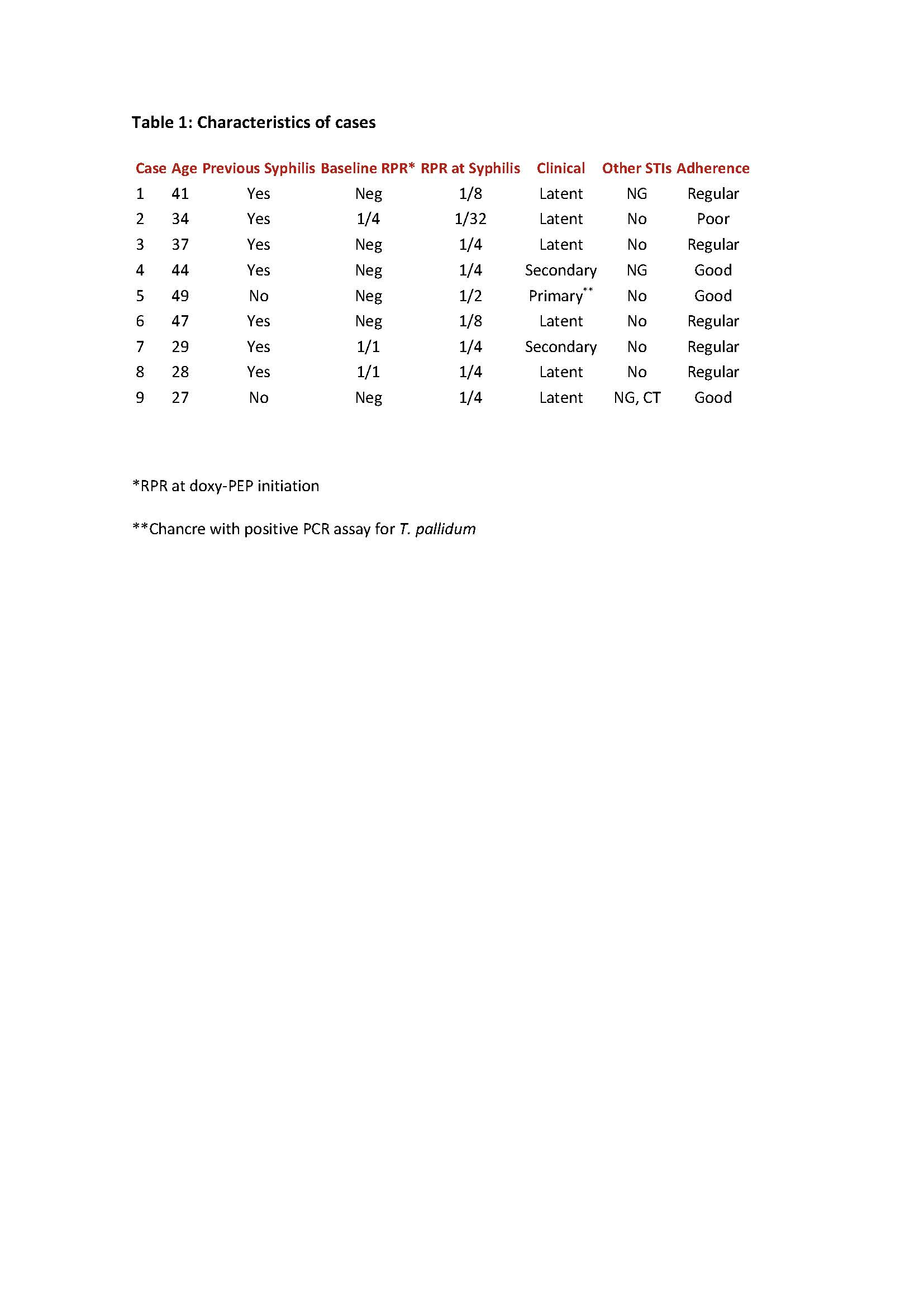
Nine cases of syphilis were diagnosed among 313 participants (prevalence 2.88%; 95% CI: 1.02–4.73), with an incidence of 1.92 episodes per 100 person-years (95% CI: 0.67–3.17). The mean time from doxy-PEP initiation to syphilis diagnosis was 37.1 weeks (± 23.2). All cases occurred in MSM (8 on PrEP and 1 with PLHIV). Seven had a prior history of syphilis. Baseline RPR titers were negative in six cases and ≤1/4 in the remainder. Cases details are shown in Table 1. All patients responded favorably to a single dose of benzathine penicillin G, with RPR negativization in all cases.
Conclusions
In real-world conditions, syphilis incidence among doxy-PEP users is low and comparable to clinical trials. Most cases were asymptomatic, with minimal RPR increases, and treatment with benzathine penicillin G remained effective. Adequate adherence to doxy-PEP may be key to reducing syphilis incidence.
Table or Figure