Background
Viral suppression among children living with HIV is improving but still lags behind adults in Sub-Saharan Africa. We performed a population-level evaluation of the pediatric HIV care cascade among children in rural southwestern Uganda and western Kenya in 2025 to characterize its contemporary status and identify gaps that need to be addressed.
Methods
A household census was performed from March to September 2025 in SEARCH-Sapphire (NCT05768763), an ongoing cluster randomized trial evaluating a precision community health, person-centered approach to HIV prevention and treatment. At risk children < 15 years old were tested by rapid HIV antibody (≥18 mo) or HIV RNA (< 18 mo). For this analysis, we describe testing and treatment outcomes of children in the 8 control communities that were receiving standard Ministry of Health care.
Results
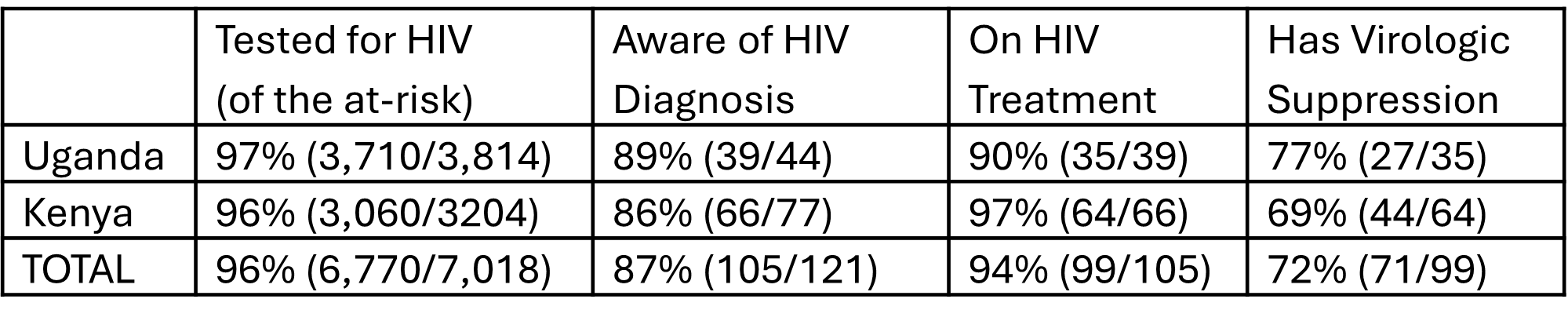
We reached 95% (25,785/27,158) of census enumerated children. HIV status was determined in 97% (6,770/7,018) of children who were at risk: mothers known to be living with HIV (n=2,964), or unknown (absent or declined testing) HIV status (n=3,902), or were reported deceased (n=152). The 131 children identified as living with HIV (50% female) had a median age 8 yr and median household size of 6; 28% (34/121) were not children of the household head. Of the 16 newly diagnosed, 14 had mothers with known HIV and 2 had a mother of unknown status. Among children with HIV, 87% (105/121) had known HIV diagnoses; of these, 94% (99/105) were on ART, but only 72% (71/99) of them had virologic suppression (< 200 c/mL) (Table). Older at-risk children were more likely to have HIV (0-5yo: 1.4%, 6-10yo: 1.4%, 10-14yo: 2.8%). The population-level HIV prevalence among children was 0.47% (121/27,158). Among the population of children with HIV, virologic suppression was only 59% (71/121).
Conclusions
In a 2025 household-based, population-level assessment of over 25,000 children in rural Uganda and Kenya, the HIV care cascade fell short of all UNAIDS 95-95-95 targets, with particularly poor rates of virologic suppression. Our results underscore the need to increase testing of all of children of women with both new and established HIV infection, and the persistent need for more effective pediatric treatment strategies to improve outcomes.
Table or Figure