Background
As the multinational mpox outbreak continues, ongoing transmission persists in the U.S. with recurrent clusters reported in 2025. Although vaccination and prior infection were associated with reduced severity early in the outbreak, the durability of this protection against severe disease remains uncertain. We evaluated disease severity among mpox cases diagnosed in 2025, focusing on the impact of prior immunity and time since vaccination.
Methods
We conducted a multicenter retrospective cohort study of PCR-confirmed mpox cases diagnosed between January 1 and October 31, 2025 across seven sites. Demographics, HIV status, prior immunity (≥14 days since mpox vaccination, all with prior infection were also vaccinated), and clinical outcomes were abstracted from medical records. Disease severity was assessed using the Mpox Severity Scoring System (MPOX-SSS); severe disease was defined a priori as MPOX-SSS ≥7, corresponding approximately to the upper quartile of observed severity. Multivariable logistic regression estimated adjusted odds of severe disease, adjusting for age, any concurrent STI, and HIV status. Secondary analyses among vaccinated individuals assessed associations between time since vaccination and severe disease.
Results
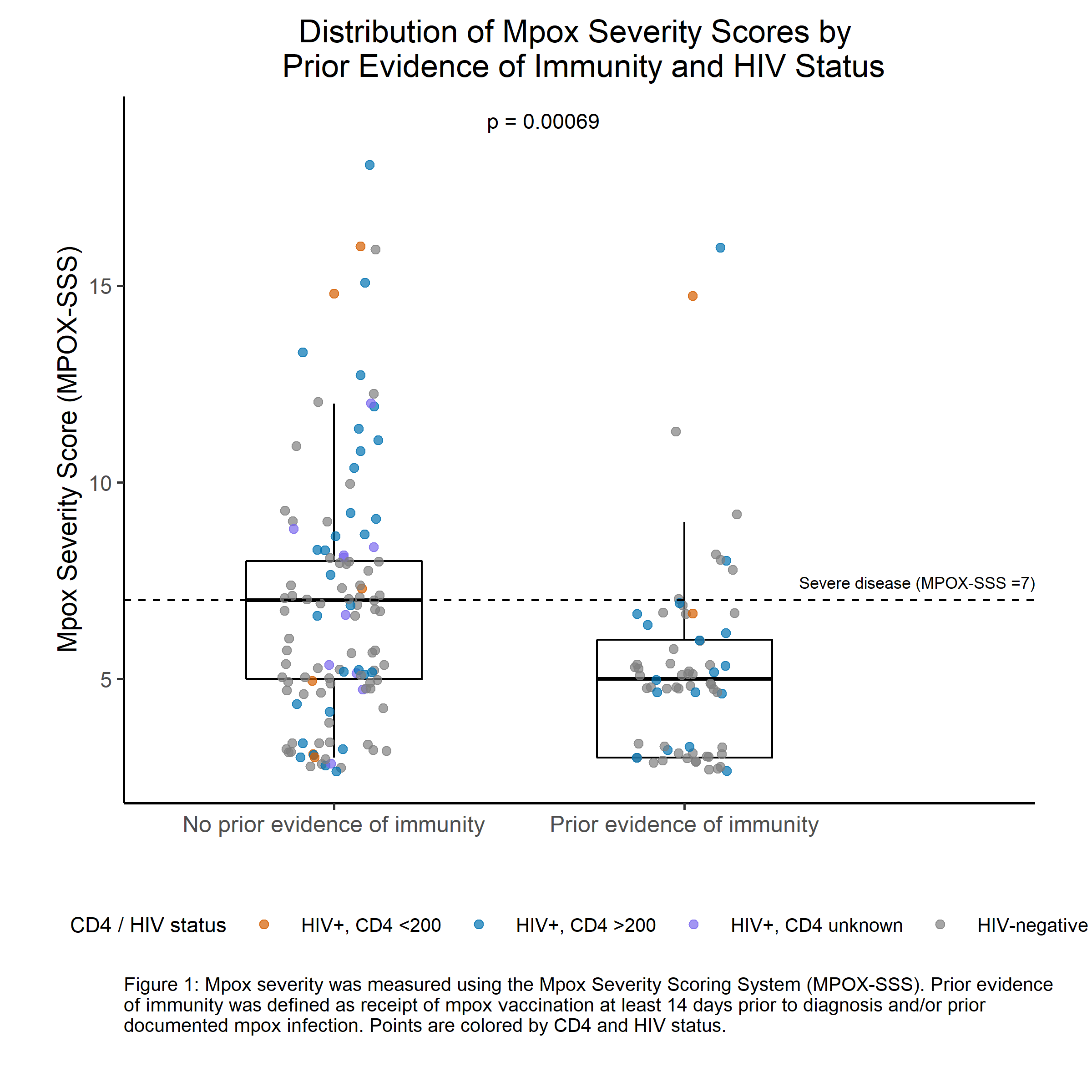
Among 186 mpox cases, 118 (63.4%) had no prior evidence of immunity and 68 (36.6%) had prior evidence of immunity. Severity was lower among those with prior immunity (median MPOX-SSS 5 [IQR 3–6] vs 7 [IQR 5–8]; p<0.001; Figure). Severe disease (24% vs 52%; p<0.001) and hospitalization (2.9% vs 17.8%, p=0.006) occurred less frequently among those with prior immunity. In adjusted analyses, prior immunity was associated with lower odds of severe disease (aOR 0.30, 95% CI 0.14–0.60). Among 66 post-vaccination cases (median time since vaccination 36 months [IQR 34–38]), severity remained low across time-since-vaccination categories, though sample sizes in earlier intervals were limited.
Conclusions
In this multicenter cohort, immunity from vaccination and/or prior infection continued to mitigate mpox severity in 2025. Protection against severe disease appeared durable, with no increase in severity over time since vaccination. These findings do not suggest a need for routine booster vaccination for the general population at this time. Ongoing surveillance and periodic assessment of disease severity by time since vaccination will be critical to inform future vaccination strategies.
Table or Figure