Background
Black Americans and individuals in the Southern United States bear a disproportionate burden of HIV. To address stigma, a key contributor to these disparities, we developed Cutting Out Stigma (COS), a barbershop-based education and multimedia intervention in Tennessee (TN).
Methods
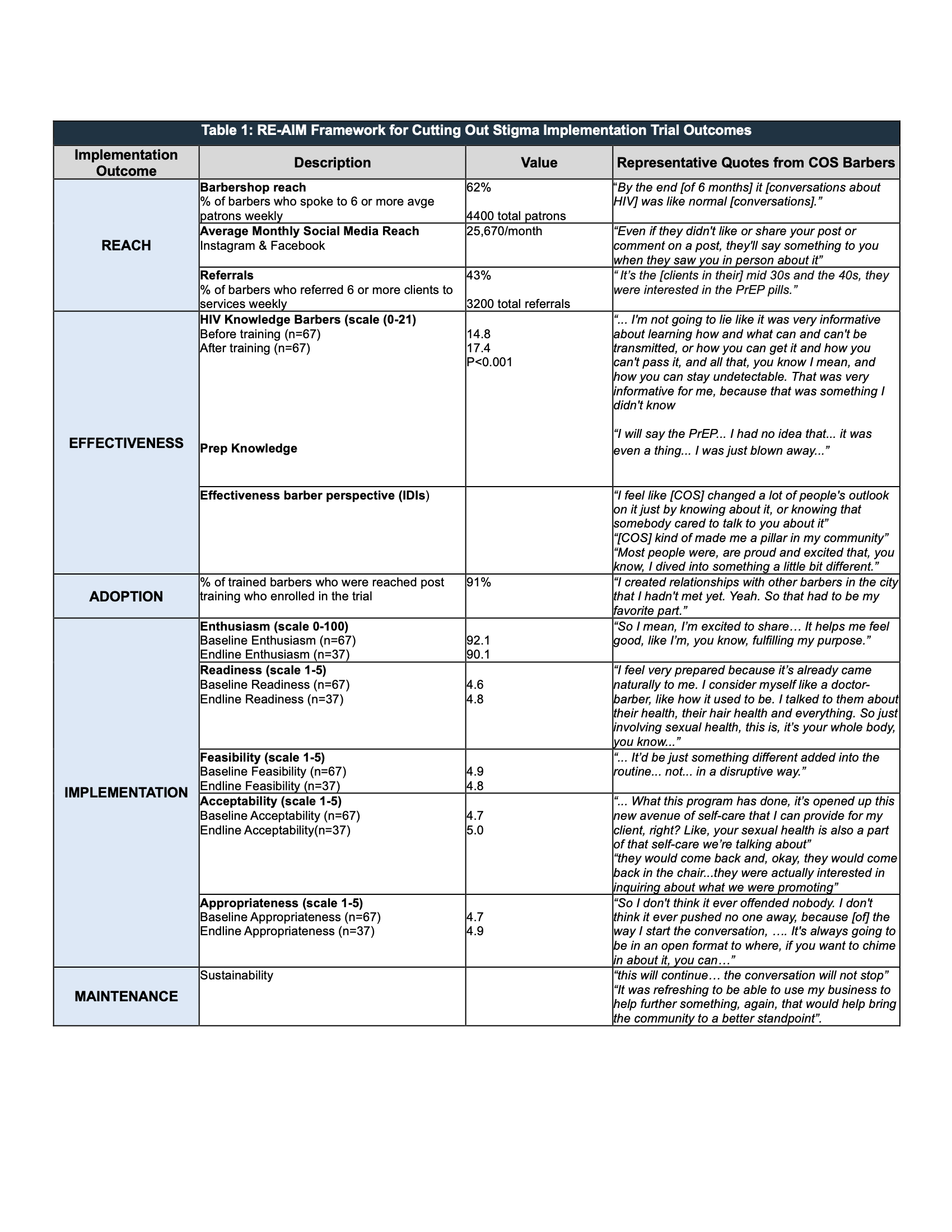
We recruited and trained TN barbers as COS Men’s Health Ambassadors.Trained barbers were eligible to participate in a 6-month pilot implementation trial in which they provided sexual health education, referred clients to HIV (and other health, legal, and financial) services, and shared social media posts to reduce HIV stigma. Outcomes were guided by the RE-AIM framework. Reach was measured via social media metrics and barbers’ standard reporting forms, adoption via intervention uptake among trained barbers. Implementation outcomes (feasibility, acceptability, appropriateness, readiness, and enthusiasm) were assessed at baseline and endline using validated tools. In-depth-interviews with COS barbers who completed training and the pilot were analyzed using thematic and rapid qualitative analyses. We integrated findings to explore both implementation outcomes and preliminary effectiveness on knowledge improvement and stigma reduction.
Results
Sixty-seven barbers completed health ambassadors training and exhibited significant improvement in HIV knowledge; 91% of barbers successfully contacted after training enrolled in the pilot intervention (n=50 barbers in 26 barbershops). Barbershop reach was 4,400 clients with 62% of barbers talking with 6 or more clients per week. Social media content reached 25,670 people monthly (Instagram and Facebook). Implementation outcomes (enthusiasm, readiness, feasibility, acceptability, appropriateness) were high at baseline (after ambassador training) and remained high at pilot end. Qualitative analysis highlighted barbers’ increasing comfort with being men’s health ambassadors and initiating conversations about sexual health, community curiosity and acceptance, positive community impact, and personal benefit to COS barbers [Table 1].
Conclusions
Findings show strong feasibility, acceptability, and early impact of the COS intervention, with barbers sustaining high enthusiasm and reporting personal and community benefit. Improved HIV knowledge and broad reach across barbershops and social media highlight the promise of this novel strategy..
Table or Figure