Background
The GHESKIO HIV clinic in Haiti was among the first to provide antiretroviral therapy (ART) when it became available in 2003. Children with HIV have endured decades of ART and grown up managing numerous psychosocial challenges. As the first pediatric HIV cohorts enter young adulthood, understanding long-term survival is essential to evaluate program impact and identify unmet needs.
Methods
We conducted a retrospective cohort study among participants ages 0–18 who initiated ART between 2003–2010. Follow-up accrued from ART initiation until death or censoring, with survival defined as a clinic visit within six months of database closure (December 31, 2024). Kaplan-Meier methods estimated survival, censoring those lost-to-follow-up (LTFU) or transferred at last visit. To address informative censoring, inverse probability weights were derived from baseline covariates in a logistic model and applied to survival estimates. Time-varying Cox models assessed changing risk as participants aged.
Results
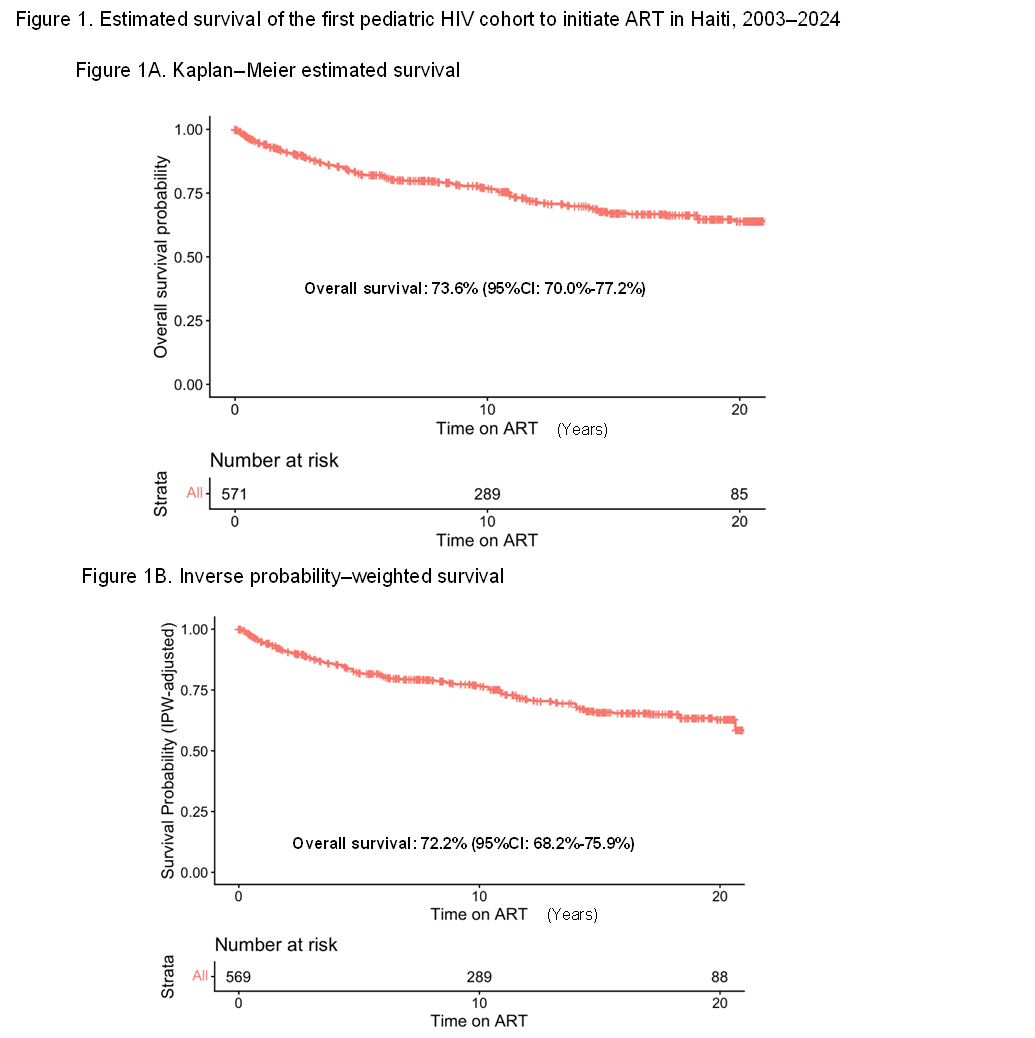
Among 579 patients, 54% were female and 88% acquired HIV perinatally. Median age at ART initiation was 7 (IQR 4–11). At closure, 152 (26%) had died, 164 (28%) were LTFU, 129 (22%) transferred, and 131 (23%) were alive in care. Median age at death was 14 (IQR 7–17). Overall survival was 73.6% (95% CI: 70.0–77.2%) by Kaplan–Meier and 72.2% (95% CI: 68.2–75.9%) with IPW (Figure 1). In time-varying Cox models, baseline mortality did not differ between adolescents (12–18 years) and children (<12 years) at ART initiation. However, among adolescents, each additional year of follow-up increased the hazard of death by 31% (HR=1.31, p=0.027), indicating a disproportionately increased mortality risk during adolescence. Among patients retained at closure, 49% were female, median age was 26 (IQR 23–29), median ART duration was 18 years (IQR 15–21), and 67% were virally suppressed (HIV-1 RNA <1,000 copies/mL).
Conclusions
This analysis documents the effectiveness of an ART program among the first pediatric HIV cohort in Haiti. Excellent survival is tempered by high mortality during adolescence, underscoring the vulnerability of this period when intensive support is essential to sustain long-term ART benefits and reduce excess mortality.
Table or Figure