Background
Long-acting Injectable PrEP (LAI-PrEP) has high efficacy and prior studies found that over half of persons eligible for LAI-PrEP were interested in using it. Charactering national LAI-PrEP will inform future steps for research and public health interventions.
Methods
We conducted a descriptive analysis using PrEP pharmacy and medical claims data from 2022-2024 using a national database that covered 80-90% of all US claims. Eligible participants included persons with at least one claim for any PrEP drug during the period. Persons with ≥1 claim for oral PrEP were classified as oral PrEP users and persons with ≥1 claim for injectable cabotegravir (the only FDA-approved drug for LAI-PrEP during the study period) were classified as LAI-PrEP users. PrEP use was assessed by race/ethnicity, payer, and sex. We analyzed retention in care for LAI-PrEP over a two-year period, defining yearly retention as at least one cabotegravir claim in each 4-month period over the year.
Results
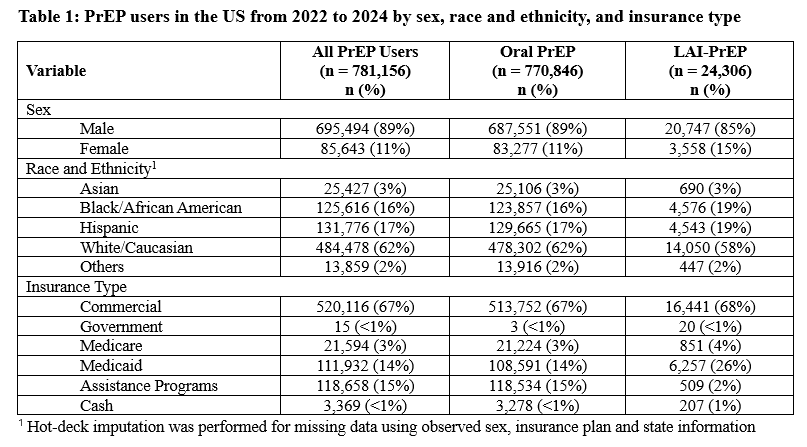
From 2022-2024, there were 24,306 LAI-PrEP users in the US (see Table 1), accounting for 3% of all PrEP users (n=781,156). From September-December 2024, there were 15,121 LAI-PrEP users, representing 4% (n=15,121/361,087) of all PrEP users. Among LAI-PrEP users, 15% were female, 58% were White, 19% Black, and 19% Hispanic. Insurance coverage was predominantly commercial insurance (68%), and Medicaid (26%). Compared to oral PrEP users, a higher proportion of LAI-PrEP users were covered by Medicaid (26% versus 14%). Among persons with at least one year of observed LAI-PrEP follow-up time, 56% (4,920/8,796) were retained in their first year of LAI-PrEP care. Among persons with at least two years of observed follow-up time, 52% (1,753/3,394) were retained in care in their first year of care and 26% (873/3,394) in their second year.
Conclusions
Through 2024, LAI-PrEP scale-up in the US has progressed but remains modest, representing a small fraction of overall PrEP use. Retention in care has been low, consistent with levels observed in studies of daily oral PrEP. A higher proportion of Medicaid users were on injectable PrEP, potentially indicating lower access barriers compared to other coverage. This is consistent with previous studies that identified insurance-related barriers to LAI-PrEP. Given the magnitude of the difference between anticipated and actual LAI-PrEP use, the causes are likely systemic. As new LAI-PrEP modalities are rolled out, barriers should be proactively identified and addressed.
Table or Figure