Background
The global outbreak of clade IIb Mpox Virus (MPXV) caused significant morbidity, particularly among men who have sex with men and persons living with HIV (PLWH). The medical, mental, and socioeconomic consequences of mpox remain unknown.
Methods
We conducted a retrospective, longitudinal study using chart reviews and telephone questionnaires to evaluate the long-term effects of mpox. People diagnosed with mpox by PCR at our institutions were included, and HIV status was reviewed. Participants were administered questionnaires to assess persistent symptoms, socioeconomic effects, and mental health effects like anxiety, depression, and substance use. Scarring was evaluated using the Dermatology Life Quality Index (DLQI). The primary outcome included a composite of death, scarring, or persistent symptoms. We defined persistent symptoms as manifestations beyond scarring, like pain, sexual dysfunction, or fatigue. Logistic regression was used to analyze the associations between long-term sequelae and baseline characteristics during acute mpox.
Results
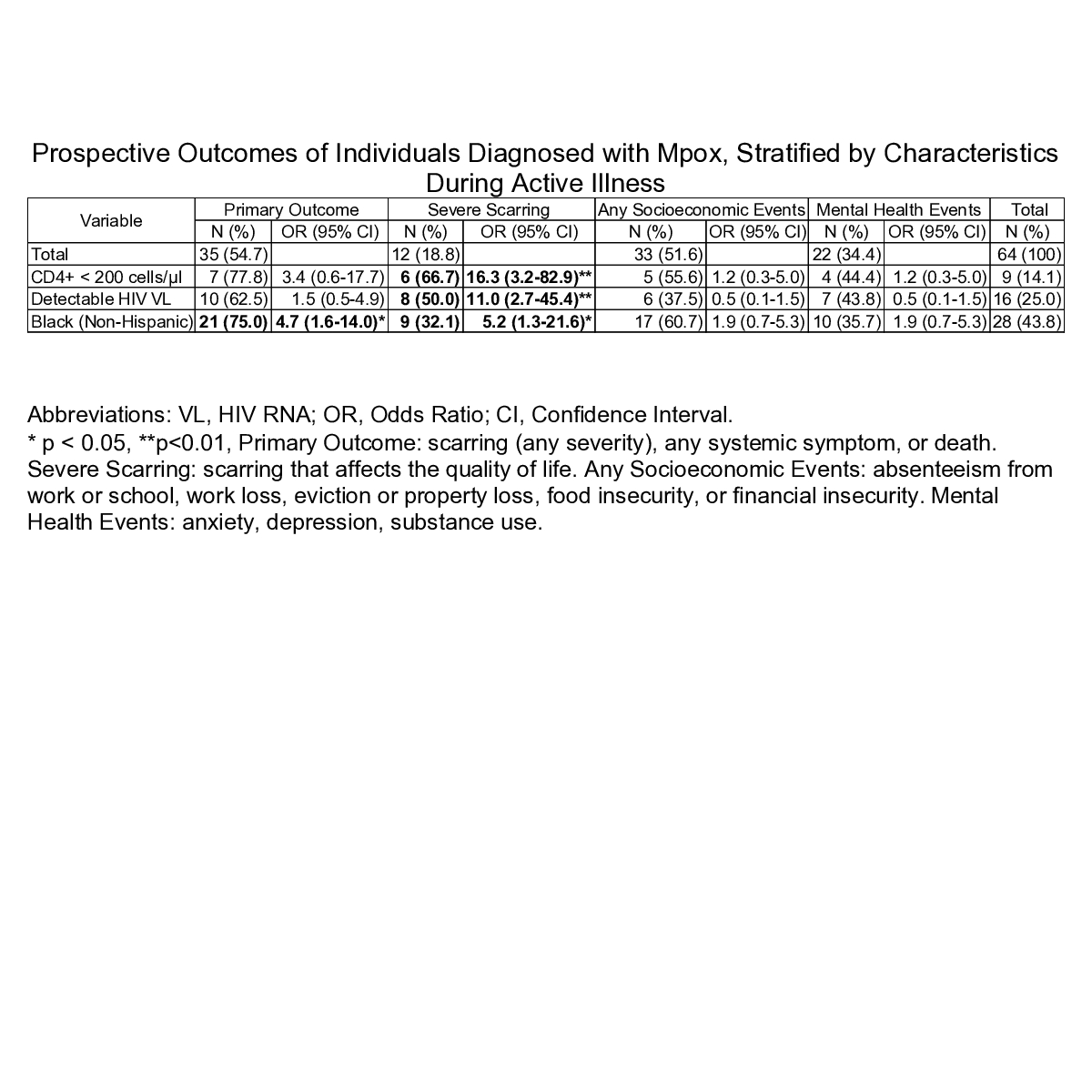
A total of 224 individuals were diagnosed with mpox, of whom 98.2% were male at birth, and 81.3% were PLWH. 16.2% required hospitalization, with four deaths attributed to mpox. Prospective analysis was conducted on the 64 individuals who could be reached, with an average follow-up of 19 months post-diagnosis. Among these, 54.7% experienced the primary outcome. Scarring was reported by 40.6%, with 18.8% experiencing severe scarring that impacted their quality of life (DLQI score >10). Among PLWH, low CD4 counts (<200 cells/μL) and detectable VL were significantly associated with severe scarring (OR: 16.3 [95% CI: 3.2-82.9]; OR: 11.0 [95% CI: 2.7-45.4], respectively). Black individuals were more likely to experience the primary outcome (OR: 4.7 [95% CI: 1.6-14.0]), scarring (OR: 6.3 [95% CI: 2.1-19.0]), and severe scarring (OR: 5.2 [95% CI: 1.3-21.6]) compared to non-Black individuals. Socioeconomic challenges were reported by 51.6% and mental health effects by 34.4%, with no significant associations with baseline characteristics.
Conclusions
PLWH with detectable viral loads and low CD4 counts face an increased risk of severe mpox and long-term sequelae, such as severe scarring, which can affect their quality of life. These outcomes are more prevalent among Black individuals, possibly reflecting disparities in healthcare access and usage. A systematic approach to addressing these long-term effects is essential for improving patient outcomes.
Table or Figure