Background
People living with HIV (PLWH) are at an elevated risk for cardiovascular and cerebrovascular events, often underestimated by traditional CVD risk scores. Identifying factors driving the progression of high-risk carotid ultrasound features, indicative of subclinical atherosclerosis, is essential for improving preventive strategies and outcomes in this population.
Methods
This cohort study enrolled PLWH aged ≥50 years at HIV-NAT in Bangkok. Baseline data included 10-year ASCVD risk, HIV-related parameters including duration of infection, viral load, and CD4 count, antiretroviral treatment history, metabolic profiles, inflammatory markers, and statin use. Baseline carotid ultrasound was performed between 2015 and 2018 and repeated in 2023-2024 to assess development of new high-risk features, including carotid intimal-medial thickness (CIMT) >0.9 mm, and thick (>0.4 mm) or echolucent plaques. Logistic regression was used to identify the factors associated with progression to high-risk carotid features over the study period.
Results
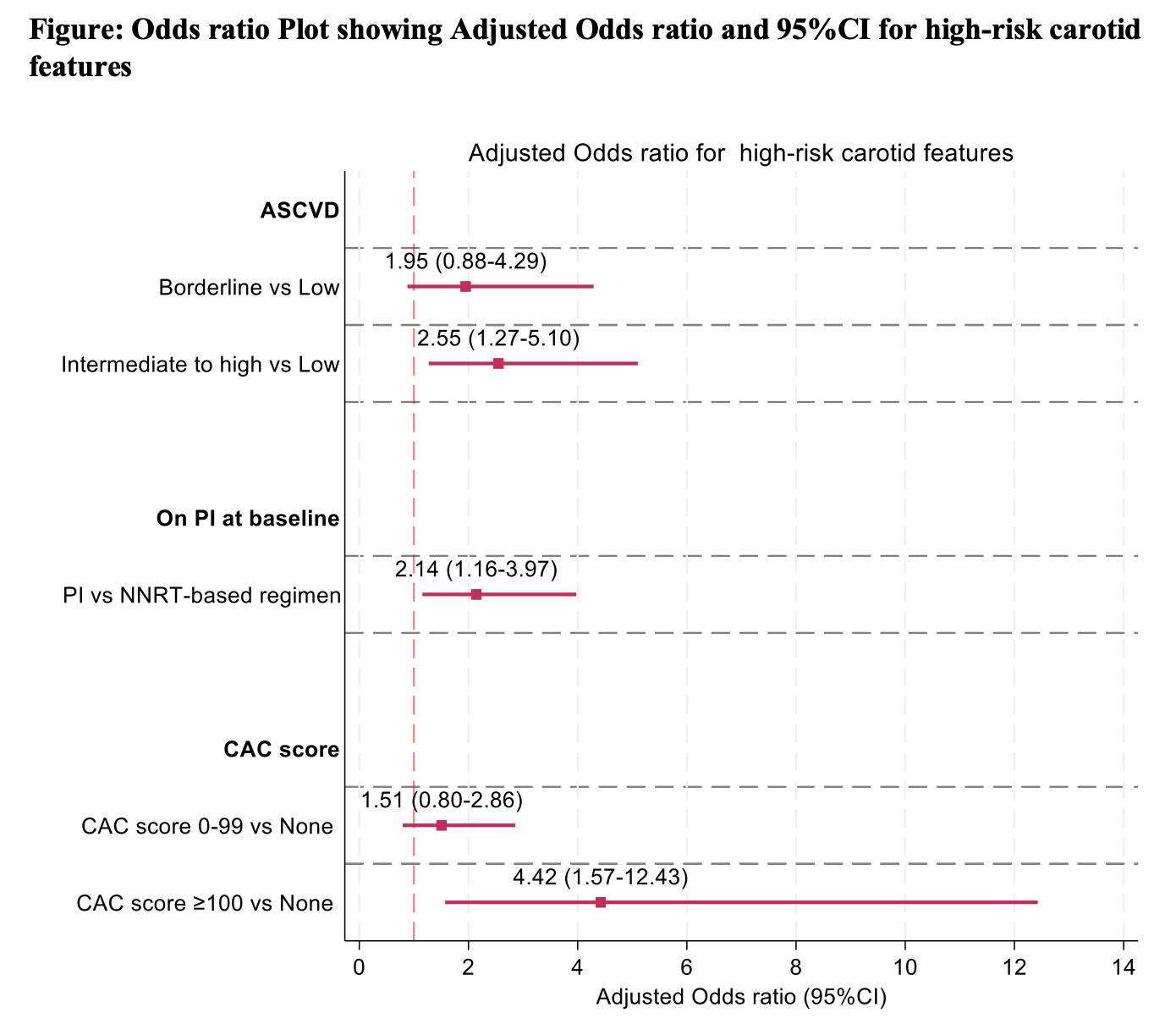
A total of 229 participants were analyzed after excluding those with baseline CVD events or high-risk carotid features. Over a median follow-up period of 6.9 (IQR 6.6-7.4) years, 87 participants (38%) developed high-risk carotid features. Participants with progression had significantly higher baseline 10-year ASCVD risk (7.8% vs. 4.9%, p<0.001), coronary artery calcium scan (CAC) score ≥100 (18.6% vs 5%, p<0.001), diabetes (37.9% vs. 22.5%, p=0.016) and hypertension (49.4% vs. 28.9%, p=0.002). Baseline CAC score ≥100 (OR 4.5, 95% CI 1.6-12.4, p=0.016), Intermediate to high ASCVD score (OR 2.6, 95%CI 1.3-5.1, p=0.008), and protease inhibitor use (OR 2.1, 95% CI 1.2-4.0, p=0.016) were independently associated with an increased risk of developing high-risk carotid features, after adjusting for nadir CD4 count and statin use.(Figure) No association was found with Inflammatory markers (hsCRP, IL-6) and development of high-risk carotid features.
Conclusions
Baseline intermediate to high 10-year ASCVD risk, use of protease inhibitors, and a CAC score ≥100 were associated with the progression of high-risk carotid features, suggesting PLWH with these factors are particularly vulnerable to future high-risk atherosclerosis and cerebrovascular events. Early identification and intensive targeted interventions, are essential to mitigate further cardiovascular complications in this population.
Table or Figure