Background
The NAT2 slow acetylator phenotype is associated with a higher risk of isoniazid-induced hepatitis. There is a high prevalence of slow acetylators in the Thai population. This study aimed to explore the link between NAT2 genotypes and hepatitis risk in Thai people living with HIV (PLWH) after initiating isoniazid containing regimens for TB preventive therapy (TPT) or TB treatment.
Methods
A prospective cohort of 500 Thai PLWH receiving isoniazid with rifapentine (1HP/3HP) for TPT or HRZE for active TB were genotyped for six NAT2 single nucleotide polymorphisms (SNPs). Hepatotoxicity (Grade 2 or higher) was assessed across NAT2 phenotypes (rapid, intermediate, slow acetylator). Multiple logistic regression adjusting for HIV-related factors, viral hepatitis co-infection and antituberculosis regimen were used to assess associations between NAT2 genotypes/phenotypes and hepatotoxicity.
Results
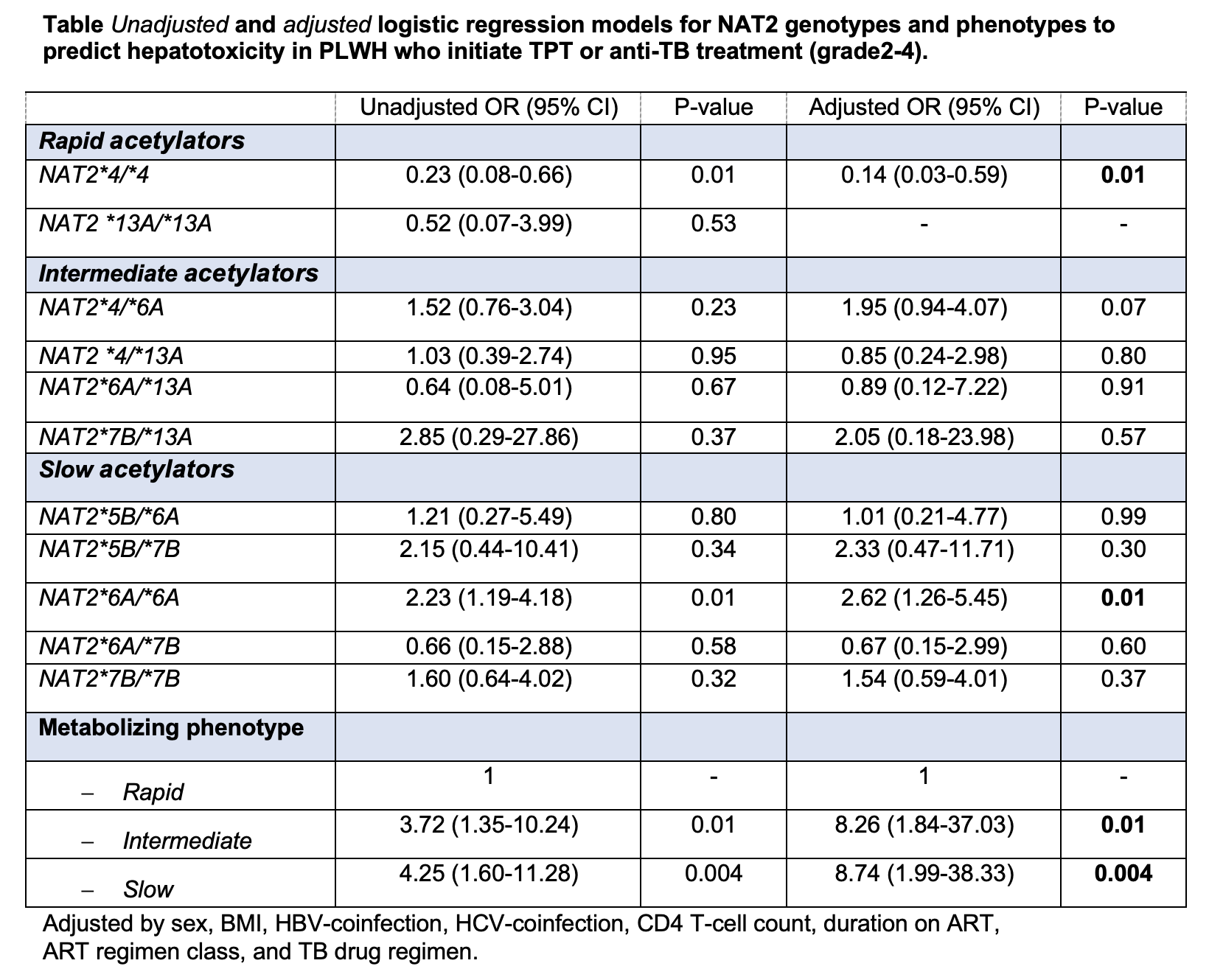
Among the 500 participants, 440 (88%) received TPT, while 60 (12%) underwent treatment for active TB. Classified by phenotypes, 209 (41.8%) were slow, 154 (30.8%) intermediate, and 137 (27.4%) rapid acetylators. Age, BMI, HBV or HCV co-infection, liver enzyme levels were comparable between the acetylator phenotypes. However, the slow acetylator group had the shortest ART duration before anti-TB drug initiation (30 vs. 58 vs. 60 days; p < 0.001). Hepatotoxicity (grade 2-4) occurred in 53 participants (10.6%) overall: 29 (54.7)% slow, 19 (35.8%) intermediate, and 5 (9.4%) rapid acetylators (p < 0.001). As a percentage of each acetylator group, hepatotoxicity was observed in 13.9% of slow, 12.3% of intermediate, and 3.6% of rapid acetylators (p < 0.001). The NAT2 *6A/*6A genotype was associated with a significantly increased risk of hepatotoxicity (adjusted OR 2.6 (95%CI 1.3-5.5), p = 0.01), whereas NAT2 *4/*4, the wild-type fast acetylator genotype and the most common (24.0%), provided a protective effect (adjusted OR 0.14 (95%CI 0.03-0.6), p = 0.01). Slow acetylators had a markedly higher risk of hepatotoxicity compared to rapid acetylators, with an adjusted OR of 8.7 (95%CI1.9-38.1, p = 0.004). (Table)
Conclusions
This cohort of Thai PLWH demonstrates that the NAT2 *6A/*6A genotype and slow acetylator phenotype significantly increase the risk of isoniazid-induced hepatitis. Incorporating NAT2 genotyping an theraputic drug monitoring into clinical practice could help optimize isoniazid dosing and reduce the risk of hepatotoxicity, especially in populations with a high susceptible to hepatotoxicity.
Table or Figure