Background
Substance use is associated with impaired immune functioning and poorer health outcomes in people with HIV (PWH). The gut microbiome plays an important role in overall health through its influence on systemic inflammation, but little is known about how substance use impacts the microbiome. In this study, we examined the relationship between marijuana, cocaine, and methamphetamine (METH) use and their impact on gut microbial diversity and composition in a cohort of individuals from Cleveland, Ohio.
Methods
Rectal swabs were obtained from 174 participants with and without HIV. Microbiome composition was determined by 16S rRNA sequencing. Demographic information was collected by self-report and drug use data were confirmed through hair toxicology. Beta diversity was analyzed using the Bray-Curtis distance metric, with between-group differences assessed by PERMANOVA stratified by sex at birth and sexual orientation. Alpha diversity analyses were stratified by sex to assess the impact of marijuana, cocaine, and METH use. Univariable and multivariable generalized linear models evaluated taxonomic associations with substance use. Bacterial proportions were transformed into centered log-ratio values to improve model accuracy. Covariates included age, sex at birth, sexual orientation, race, ethnicity, annual income and HIV status.
Results
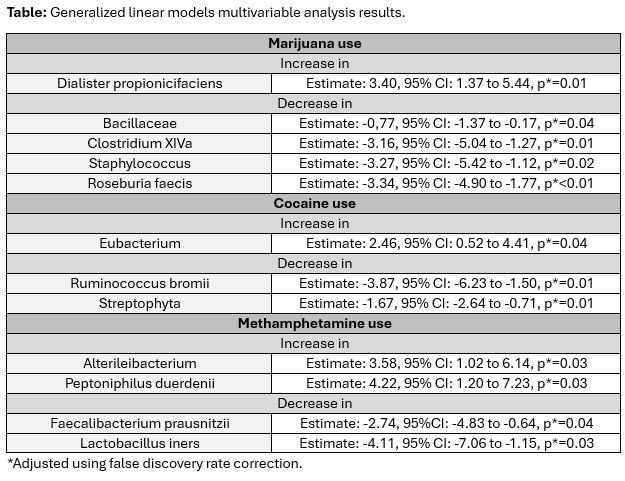
The mean age was 49 years; 77% were male, 55% Black/African American, 15% Hispanic/Latine, 51% earned <$20K/year, and 79% were HIV+. Sequencing identified 108 different taxa. Beta diversity analysis showed that ethnicity explained 1.2% of gut microbiome variability in males (p=0.04), with no significant findings in females. Among straight females, HIV status explained 4.5% of variability (p=0.04); in bisexual males, age and marijuana use explained 6.7% (p=0.03) and 8.9% (p<0.01), respectively. Alpha diversity showed no significant differences between substance use and non-use groups. However, substance use was associated with significant abundance differences in 12 taxa (Table), including many involved in inflammation such as Roseburia faecis and Faecalibacterium prausnitzii.
Conclusions
Substance use was associated with alterations in gut microbiota. These findings suggest microbial pathways through which substance use may affect immune and inflammatory outcomes in PWH. The shifts in bacterial composition may have clinically significant implications, including dysbiosis and a pro-inflammatory state.
Table or Figure