Background
Depression is common among people living with HIV (PWH), disproportionately affecting women. Despite its impact on adherence, disease progression, and mortality, depression is underrecognized in HIV care in Latin America. We evaluated sex differences in the prevalence and 12-month trajectory of depressive symptoms (DS) in two prospective cohorts within the Caribbean, Central, and South America network of HIV epidemiology (CCASAnet) and identified associated factors.
Methods
We included PWH aged ≥40 or ≥50 years on antiretroviral therapy for at least 6 months in the Sentinel and Aging Research Networks of CCASAnet, from 2021-2024 with ≥1 completed Patient Health Questionnaire-9 (PHQ-9). DS were defined as PHQ-9 ≥10. Prevalence and trajectory of DS were assessed at baseline and month 12. Covariates included demographics (sex, age, income, education, employment, marital status), HIV parameters (CD4 count, viral load), comorbidities, and reported substance use in the last 3 months. We assessed the association of covariates in the trajectory of DS, defined as the change of status at 12-months using a logistic mixed-effects regression model.
Results
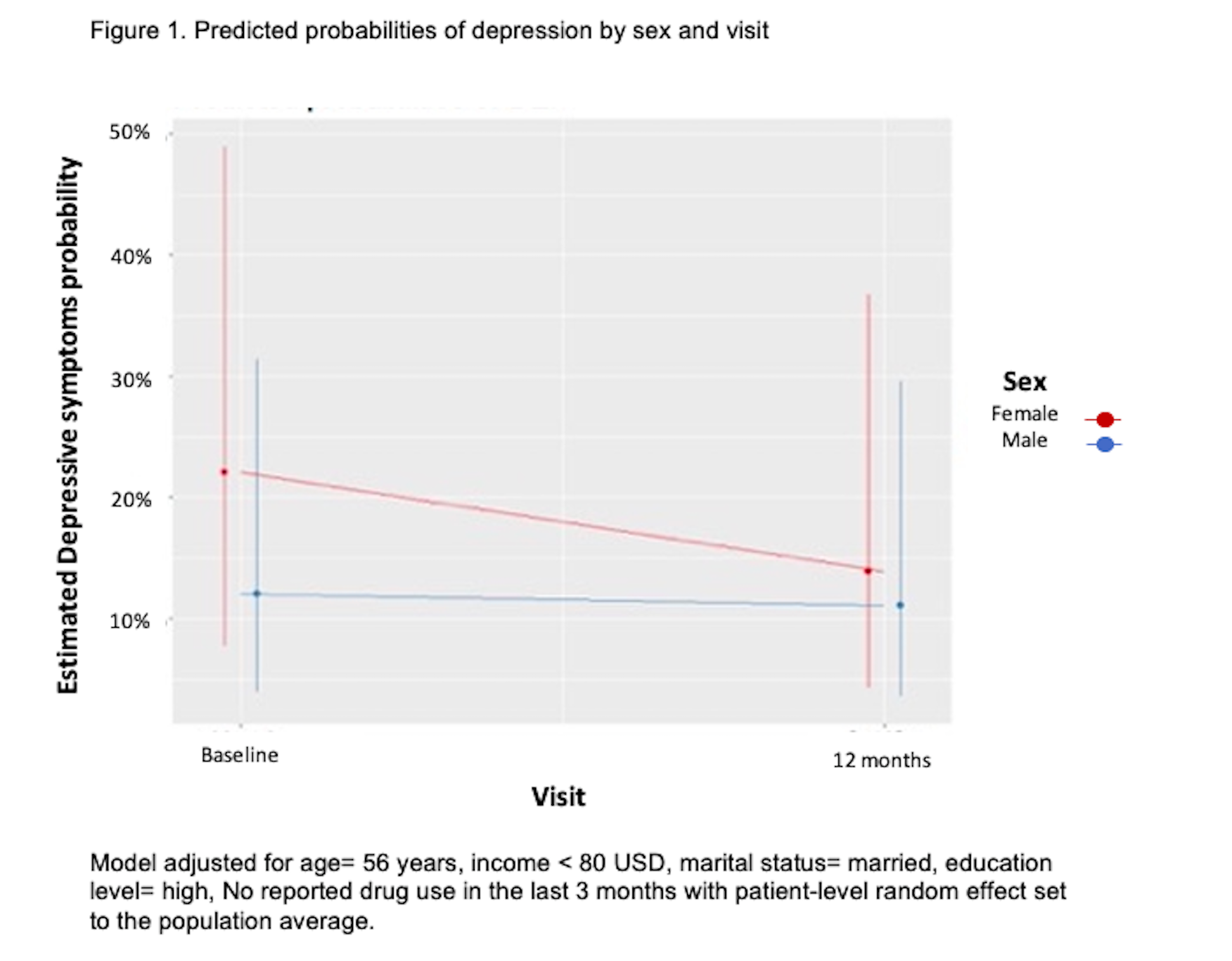
Among 581 participants, 426 (73%) were men and 155 (26.7%) were women. Median age was 56 years (interquartile range [IQR] 48–63). Women were older than men (57 vs. 54 years, p=0.01), had a lower education level (primary or less: 30.3% vs. 9.8%, p≤0.01) and lower income (<40 USD/month: 7.7% vs. 1.5%, p≤0.01). Men were more often single (57.7% vs. 40%, p≤0.01), more frequently reported alcohol use (95.1% vs. 87.1%, p≤0.01), and substance use (59.9% vs. 23.9%, p≤0.01). At baseline, median PHQ-9 score was 4 (IQR 2-7), higher in women (5 vs. 4; p≤0.01). At baseline DS was present in 28.4% of women and 17.6% of men (p≤0.01). At 12 months, median PHQ-9 score remained higher in women (4 vs. 3, p=0.01) but prevalence of DS was similar between sexes (19.5% vs. 15.8%, p=0.36). In the adjusted mixed-effects model, male sex showed a trend toward lower DS risk (OR=0.48 [95% CI 0.22–1.05]. Adjusted probabilities showed DS prevalence decreased from 22% to 14% in women and 12% to 11% in men over time (Figure 1).
Conclusions
DS were common among PWH in Latin America, with women exhibiting higher prevalence. Over 12 months, DS decreased, likely reflecting the effects of medical care. These findings highlight the need for screening and targeted mental health interventions, particularly for women living with HIV.
Table or Figure