Background
Varenicline is potent pharmacotherapy for smoking cessation. However, its efficacy among people with HIV (PWH) in clinical care is uncertain and concerns have been raised regarding psychiatric side effects. We evaluated the impact of varenicline on amount smoked, smoking cessation, anxiety and depression among PWH in care.
Methods
We studied PWH who reported smoking via patient reported surveys collected during routine visits at 9 HIV clinics across the US between 1/21-12/24 in the CNICS cohort. We examined factors associated with initiating varenicline using relative risk (RR) regression and changes in daily cigarette use among PWH who smoked and received varenicline or nicotine replacement therapy (NRT) (compared to untreated PWH who smoked) using adjusted linear mixed models. We examined time to smoking cessation using Cox proportional hazards models. Sensitivity analyses using adjusted linear mixed models examined varenicline and NRT treatment and depression and anxiety symptoms, as well as their interaction terms.
Results
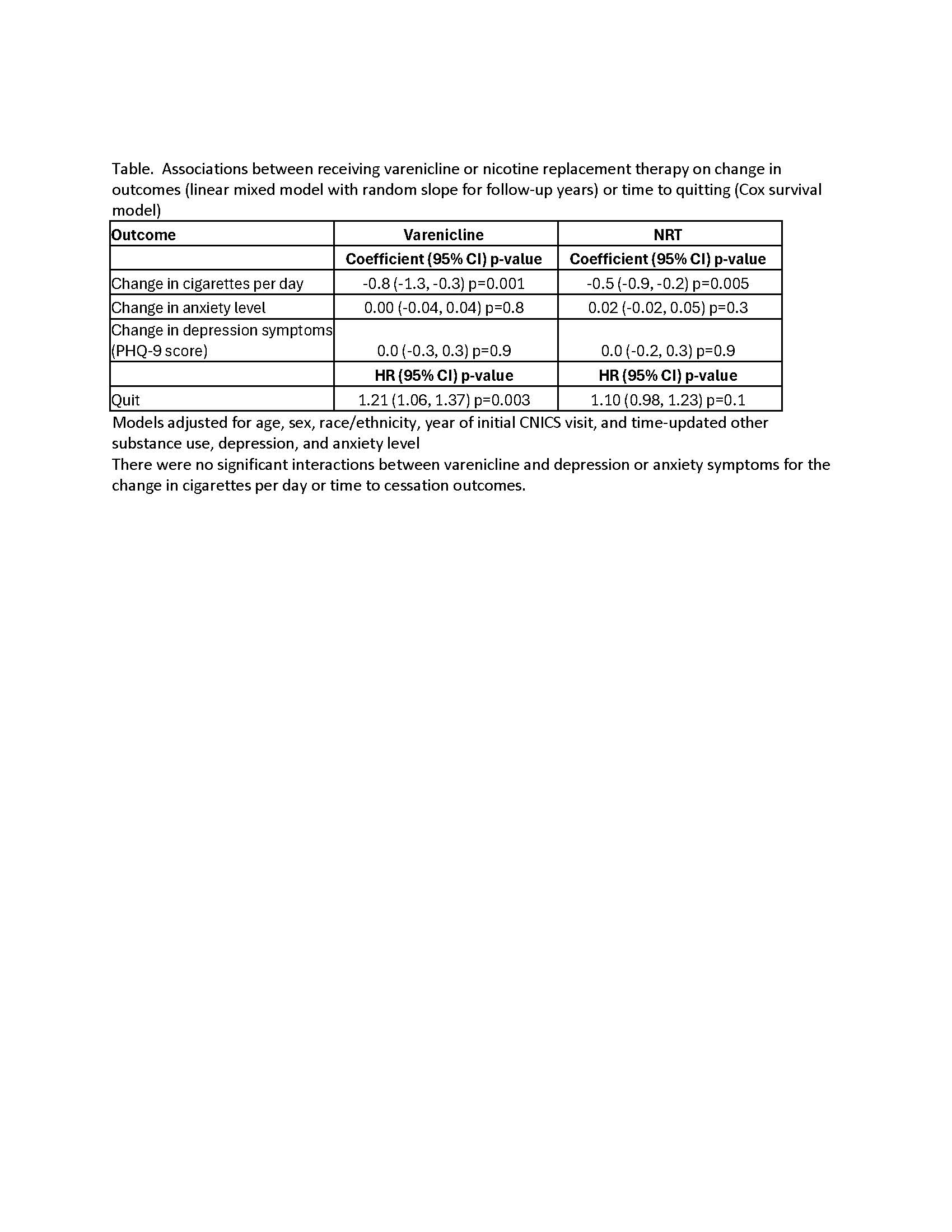
Among 5826 PWH who smoked, 872 (15%) received varenicline. Receiving varenicline was less common among Black (RR 0.70, 0.59-0.83) or Hispanic PWH (RR 0.77, 0.62-0.97), those using cocaine (RR 0.78, 0.62-0.98) or opioids (RR 0.72, 0.53-0.99) and those with more depression symptoms (RR 0.93 per 5 pts on PHQ-9, 0.88-0.99). Receiving varenicline was more common among PWH with hypertension (RR 1.30, 1.11-1.52) or dyslipidemia (RR 1.32, 1.11-1.56). Duration of smoking was slightly higher (mean 19.1 vs. 18.1 years; p=0.009) among PWH who received varenicline. PWH who received varenicline or NRT had a mean decrease of 0.8 cigarettes per day (-1.3,-0.3; p=0.001) and 0.5 cigarettes per day (-0.9,-0.2; p=0.005) respectively, compared to those without treatment (Table). Quitting smoking was more likely among PWH who received varenicline (HR 1.21: 1.06-1.37; p=0.003) vs. NRT (HR 1.10: 0.98-1.23, p=0.1) compared to those without treatment in adjusted analyses. Anxiety and depressive symptoms did not differ between groups.
Conclusions
Receipt of varenicline remains low among PWH in care and there is inequitable prescription of varenicline. Varenicline use is associated with a greater reduction in cigarettes per day and likelihood of smoking cessation compared with NRT. Despite early concerns regarding varenicline and psychiatric side effects, we did not find differences in anxiety and depression symptoms or interactions among PWH with and without varenicline use.
Table or Figure