Background
Glucagon-like peptide-1 receptor agonists (GLP-1RA) are used to treat diabetes and obesity in people with HIV (PWH). It has been hypothesized that GLP-1RA medications may reduce addictive behaviors by modulating neural reward pathways. We sought to understand if semaglutide, the most frequently used GLP-1RA to date, reduces use of tobacco cigarettes among PWH.
Methods
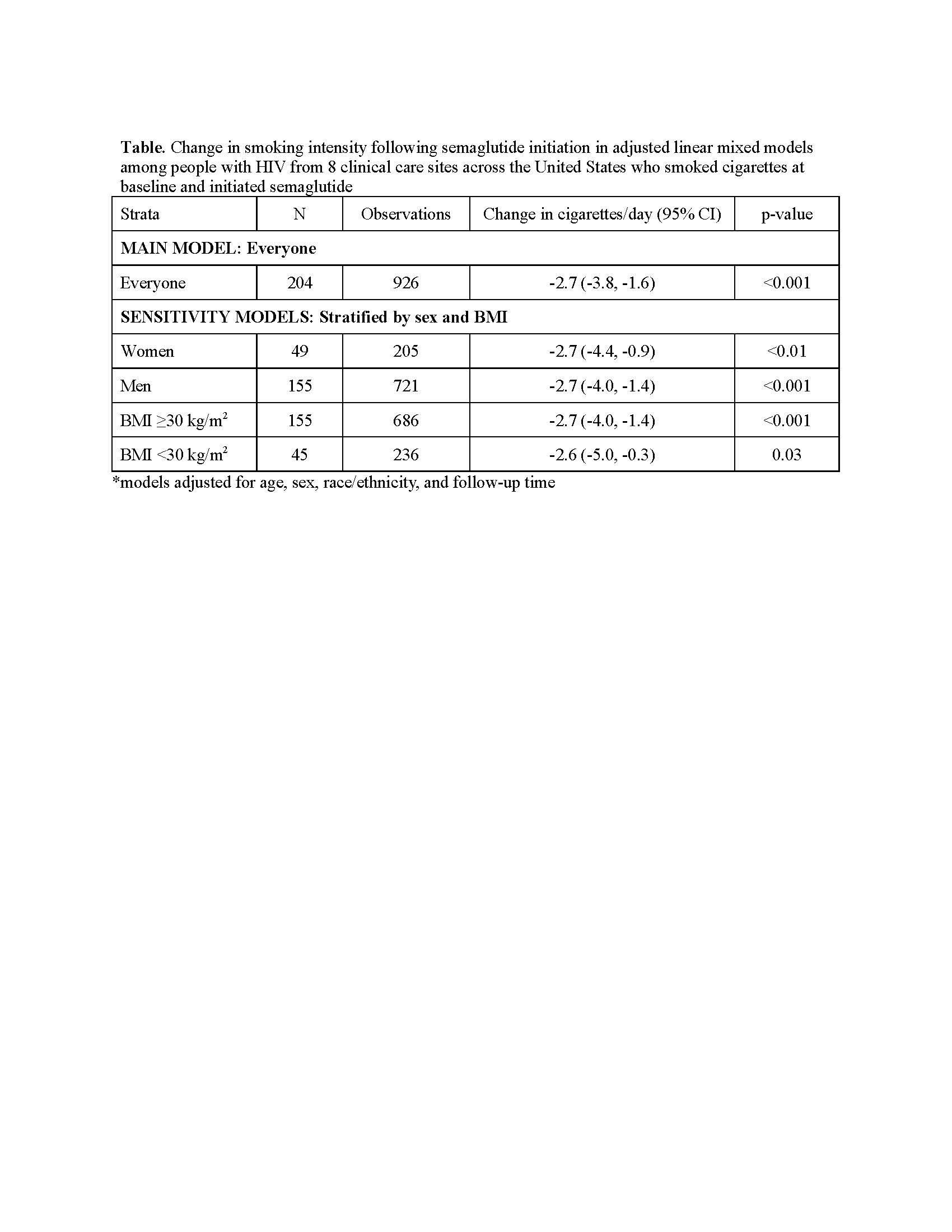
We conducted a longitudinal quasi-experimental pre-post study estimating changes in tobacco cigarette intensity among PWH who reported smoking and received semaglutide for diabetes or obesity treatment at 8 sites in the Centers for AIDS Research Network of Integrated Clinical Systems (CNICS) cohort. Baseline was defined as the date of semaglutide initiation, occurring between April 2018 and March 2025. We measured smoking intensity (cigarettes smoked per day) via patient reported surveys collected during routine clinical visits. We used linear mixed models to estimate the average change in smoking intensity trajectory between the pre-initiation period and post-initiation of semaglutide use and included up to 4 years pre-initiation data to estimate smoking trajectory. We adjusted for age, sex, race/ethnicity, and follow-up time in linear mixed models; and stratified by sex and obesity (body mass index BMI ≥30 kg/m2) to assess for effect measure modification.
Results
There were 204 PWH who reported current cigarette smoking at the time of semaglutide initiation averaging 10.5 cigarettes/day. Mean age was 51 years; 24% were female; 37% were White, 41% Black, and 17% Hispanic/Latine; 95% were virally suppressed; 78% had a BMI ≥30 kg/m2; and 55% had diabetes at baseline. We found a reduction in smoking intensity of -2.7 (95% confidence interval: -3.8 to -1.6) cigarettes per day after semaglutide initiation, with 21% of PWH reporting 0 cigarettes per day at their last follow-up visit. There was no evidence of differences by BMI or sex.
Conclusions
Initiating the GLP-1RA medication, semaglutide, for diabetes and/or obesity among PWH reporting smoking resulted in a mean drop of 2.7 cigarettes per day, representing a 26% drop in total smoking intensity. This substantial reduction occurred despite PWH not necessarily actively seeking smoking cessation, highlighting the potential public health impact of semaglutide as an adjunctive smoking reduction treatment that warrants further investigation.
Table or Figure