Background
Long-acting cabotegravir and rilpivirine (LA CAB/RPV) is injected intramuscularly typically by a nurse in clinic. As more people with HIV (PWH) are switching to long-acting injectable (LAI) antiretroviral therapy (ART), expanding access through different models of care is needed. Perspectives from PWH on in clinic administration of LA CAB/RPV could provide critical insight to optimize new models for LAI ART administration.
Methods
We performed a mixed methods analysis of entry visit data from a 48-week, parallel arm, non-randomized study where PWH on LA CAB/RPV were asked to choose between pharmacist-administered LA CAB/RPV in a pharmacy or continued in-clinic administration by a nurse. At entry, acceptability and appropriateness of the in-clinic model, HIV treatment satisfaction, quality of life (QOL) and HIV stigma were assessed. Semi-structured interviews were conducted in a subset to evaluate barriers and facilitators to the in-clinic model. Linear regression was used to compare quantitative outcomes by group. Thematic analysis identified key themes across interviews.
Results
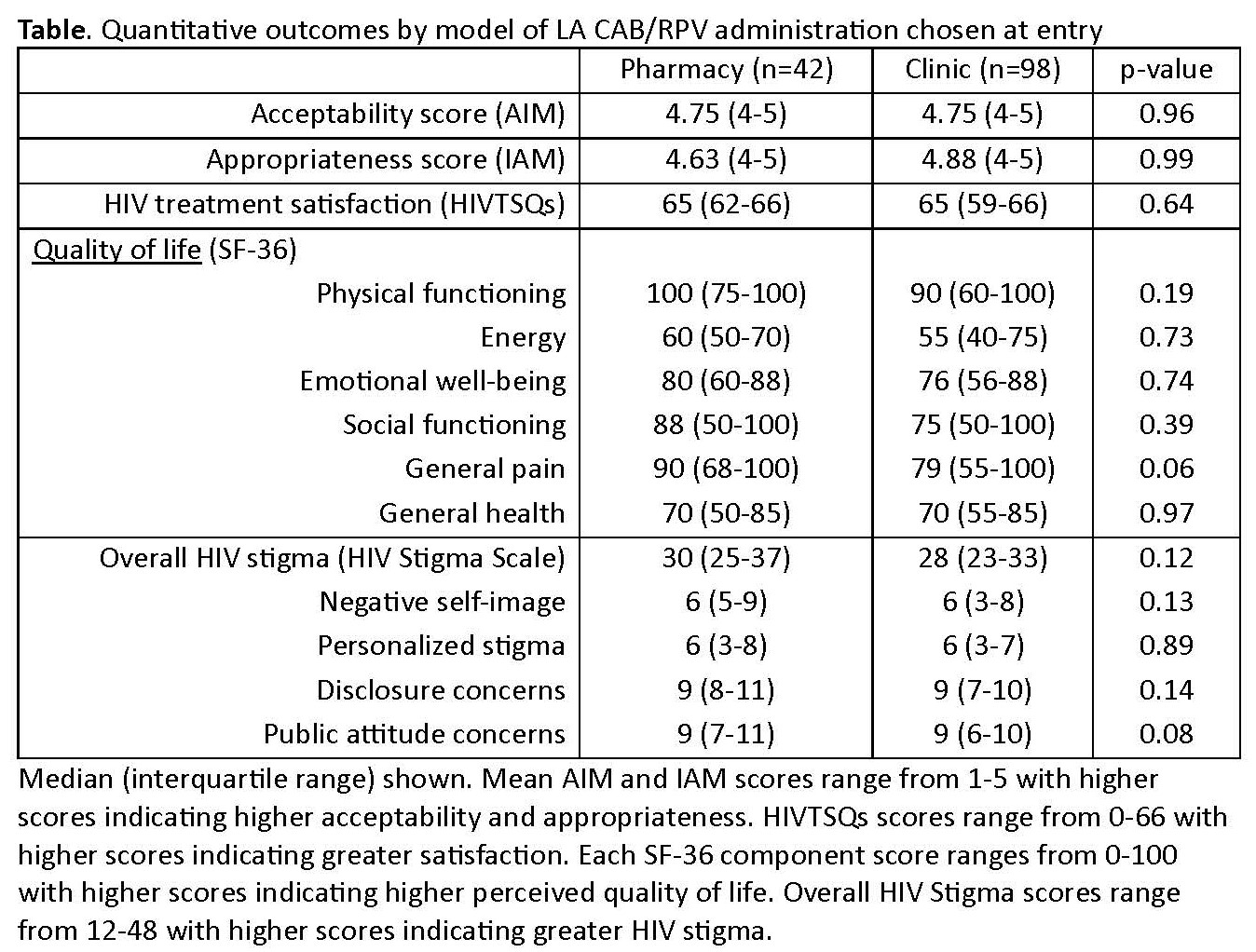
140 participants were enrolled (98 clinic; 42 pharmacy). Overall, median age was 40, 62% were Black and 14% Latine. All had HIV-1 RNA<50 cps/ml. Women were more likely to choose clinic than men (83 vs 65%). Acceptability, appropriateness, treatment satisfaction and QOL were high. These and stigma were similar between-groups (Table). Interviews (n=20) identified two core themes across barriers and facilitators of clinic LA CAB/RPV: emotional factors (respectful provider interactions, perceived provider competence, rapport, anonymity/privacy) and logistical factors (clinic navigation, crowding, integrated and efficient care). Mixed methods findings indicated that while acceptability score was similar between groups, some qualitative patterns differed by model choice. Patients who elected the clinic model did not voice concerns about navigation, perceived provider competence or crowding, while those who chose to switch to pharmacy readily identified these clinic barriers. Conversely, participants choosing pharmacy did not cite clinic facilitators such as quick/efficient appointments or convenient transportation.
Conclusions
These patterns suggest acceptability ratings may mask underlying differences in how patients frame their care preferences. Further, recreating facilitators especially related to familiarity and trust in staff will be important to consider in adapting novel models for LAI ART administration.
Table or Figure