Background
Person with HIV (PWH) are at increased risk for cardiovascular disease, yet data on subclinical atherosclerosis, particularly carotid plaque burden and features, remain limited. We aimed to compare the prevalence, characteristics, and clinical correlates of carotid plaques between PWH and HIV-negative individuals.
Methods
In this cross-sectional study conducted at the Shanghai Public Health Clinical Center, China, we enrolled 1,390 PWH and 1,390 age- and sex-frequency matched HIV-negative controls aged 40 years or older. Carotid ultrasonography was used to assess the presence, number, and echogenicity of carotid plaques.
Results
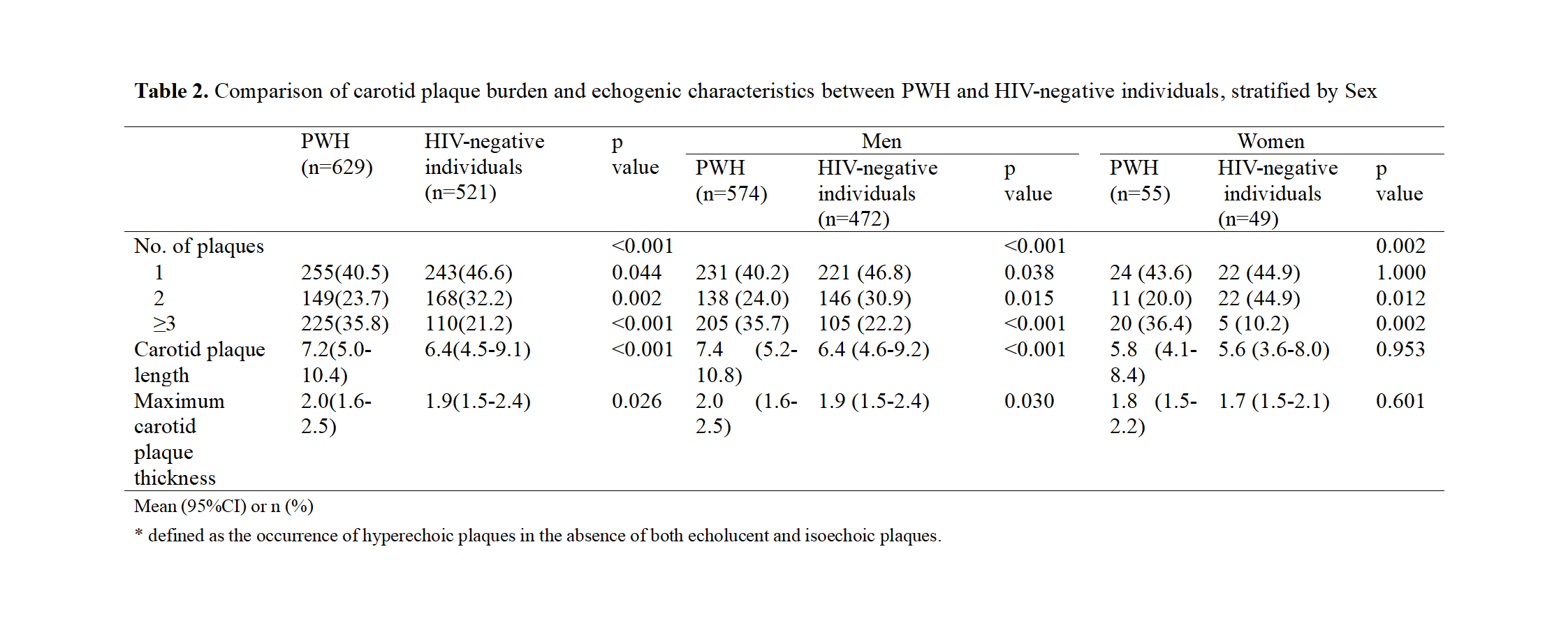
PWH had a higher prevalence of any carotid plaque and high-risk plaques compared with HIV-negative individuals (45.3% vs. 37.5%, P < 0.001; and 21.1% vs. 18.0%, P = 0.045, respectively), with larger differences observed in younger age groups and in men. Among participants with carotid plaques, PWH were more likely to have three or more plaques (35.8% vs. 21.1%, P < 0.001), a pattern observed in both men (35.7% vs. 22.2%; P < 0.001) and women (36.4% vs. 10.2%; P = 0.002). HIV infection independently associated with increased odds of any carotid plaque (adjusted odds ratio [aOR] = 1.45; 95% CI: 1.23–1.70) and high-risk plaque (aOR = 1.24; 95% CI: 1.02–1.50). These associations persisted across the 40–69 year age group and among men. No significant associations were found between carotid plaque and HIV-related clinical parameters.
Conclusions
HIV infection is independently associated with greater carotid plaque burden and plaque vulnerability. These findings underscore the need for early cardiovascular risk assessment and tailored prevention strategies in PWH.
Table or Figure