Background
People with HIV (PWH) are living longer and are at elevated risk of numerous cancers that are associated with aging-related phenotypes such as clonal hematopoiesis (CH). We evaluated whether the presence of detectable CH in blood-derived DNA is associated with risk of AIDS-defining non-Hodgkin lymphoma (NHL).
Methods
We conducted a case-control study of 171 PWH with NHL and 654 PWH who did not have NHL as controls (1:4 case:control ratio), who are participants in the Multicenter AIDS Cohort Study and the Women’s Interagency HIV Study (MWCCS). Specimens between 6 months and 5 years prior to NHL diagnosis were matched to controls within each study on draw date of the NHL case (within ±12 months) and also on sex, age, smoking status, and CD4 cell count at the time of specimen collection. CH was detected utilizing high-depth and genome-wide genotyping arrays to detect mosaic chromosomal alterations (mCAs). We used conditional logistic regression to test for the association between having an mCA and risk of NHL.
Results
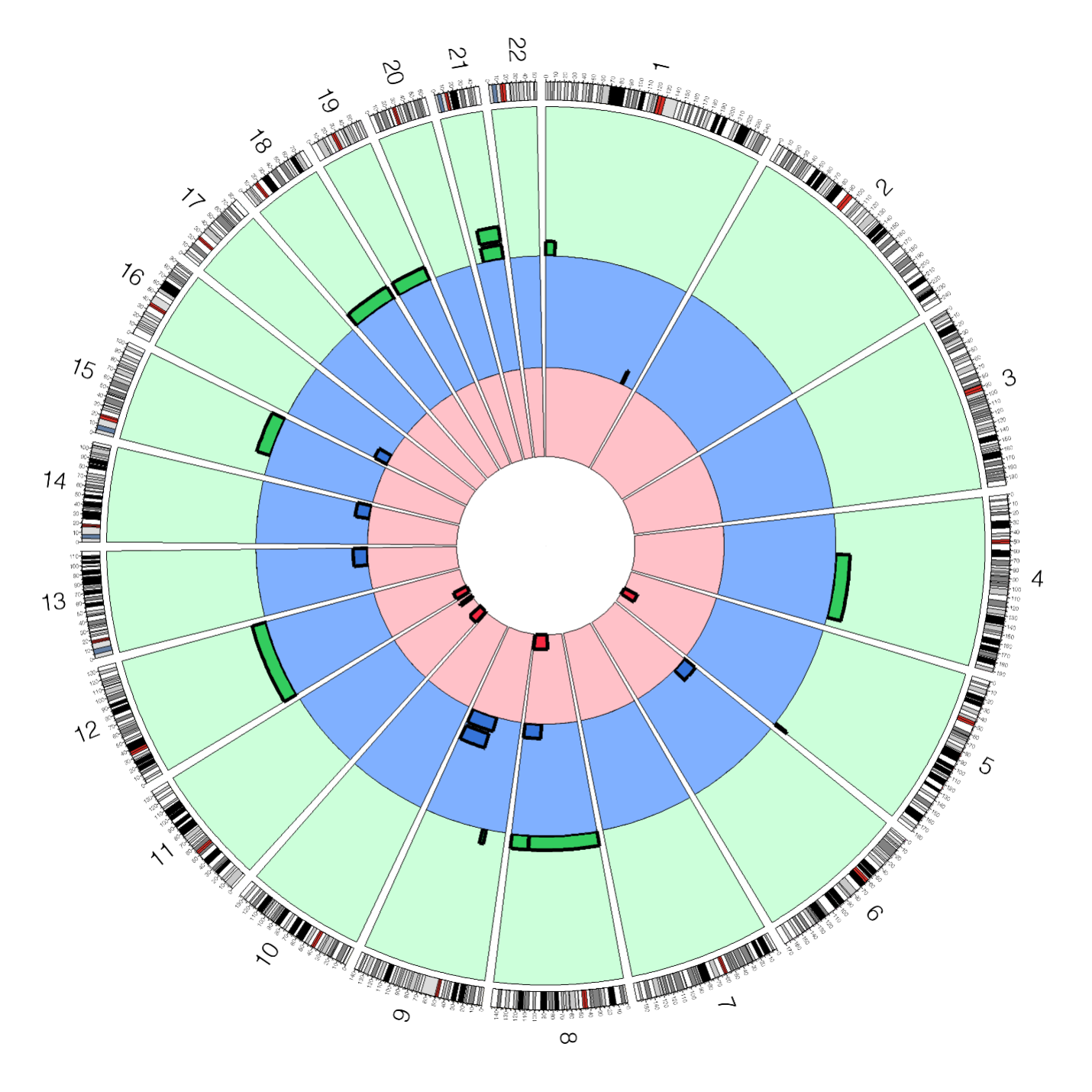
Median age of the study population was 40 years at specimen collection. Among NHL cases, there were 7 (4.1%) with an mCA >2 MB in length and among controls there were 17 (2.5%). Figure 1 displays the chromosomal locations of those 24 mCAs. Additionally, there were 30 (14%) mCAs <two mbps among cases and 130 (17%) among controls. The presence of an mCA was not significantly associated with NHL risk (odds ratio [OR]=1.71, 95% CI: 0.68, 4.31). Among NHL cases, the median time between specimen collection and NHL diagnosis was 2.25 years for those with an any mCA detected vs. 2.50 years for those without an mCA. We further stratified according to time between sample collection and NHL diagnosis. For those whose specimen was within 2.5 years from NHL diagnosis an mCA was associated with 1.86 greater odds of NHL (95%CI 0.91, 3.80) while for those whose specimen was collected between 2.5 and 5 years prior to NHL diagnosis the OR was 0.92 (95%IC 0.39, 2.15).
Conclusions
In this relatively young population of PWH in MWCCS, mCAs were fairly common. Although we did not find strong evidence for an association between mCAs and NHL risk, there was a suggestion that detection of an mCA is more relevant closer to time of NHL diagnosis. Further research is needed to understand the implications of mCAs with risk of age-related diseases among PWH.
Table or Figure