Background
People with HIV (PWH) smoke tobacco at higher rates and have lower response rates to smoking cessation interventions than people without HIV. Few counseling resources exist in lower and middle income countries (LMIC), medication assisted treatment is unavailable due to cost and no behavioral interventions are tailored to LMICs. We developed Behavioral Activation/Problem Solving (BAPS) from two existing interventions designed to treat depressive symptoms given the high rates of depression both in PWH and smokers. We tailored BAPS for PWH in LMICs and compared it to standard counseling (SC) for smoking cessation.
Methods
We randomized daily cigarette smokers with HIV on effective antiretroviral therapy 1:1 to BAPS and SC, stratified on high vs. low depressive symptoms and by sex. Depressive symptoms were assessed using a modified PHQ-8. Both interventions included 5 counseling sessions by phone over 10 weeks. End of therapy (EOT) smoking cessation was defined as not a single puff in the week prior to EOT study visit (week 12) and biologically confirmed with exhaled carbon monoxide level ≤8 ppm. We targeted a sample size of 650 to detect a 10% difference in quit rates. Standardized differences in baseline characteristics assessed balance between randomized arms and X2 tests compared the proportion achieving cessation.
Results
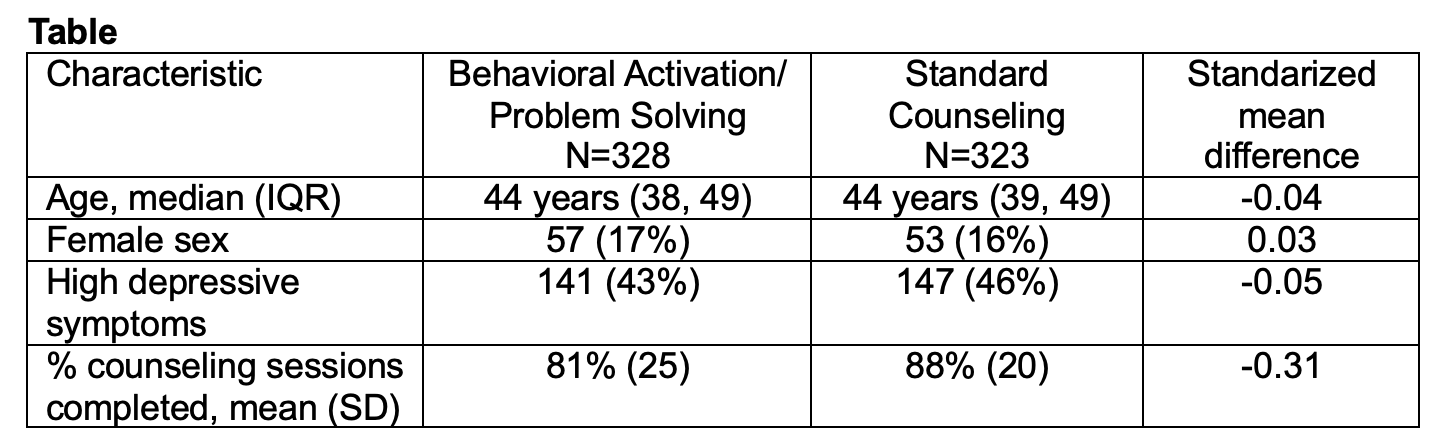
The 651 enrolled participants included 328 in BAPS and 323 in SC. See Table for characteristics which were not substantively different between arms. Counseling session completion rates were >80% for both arms. Biologically confirmed quit rates at EOT were 104 (32%) in BAPS and 121 (37%) in SC, p=0.12. There were two virological breakthroughs detected, one in each study arm.
Conclusions
Both BAPS and SC resulted in substantially higher quit rates than the ~15% typically observed with counseling alone in high income countries. Follow-up will determine the durability of cessation by arm. LMICs should implement one of these counseling protocols for PWH who smoke. Adding medication assisted therapy, if it becomes affordable and available, could result in even higher success rates with smoking cessation and improve health outcomes in PWH.
Table or Figure