Background
Modern antiretrovirals are highly efficacious, however modification of antiretroviral therapy (ART) is still required due to adverse effects, simplification, safety and/or loss of virological control. We examined time to first ART modification (including predictors and modification type) in individuals diagnosed within 12 months of HIV acquisition.
Methods
We pooled data from the CASCADE Study, including participants who initiated ART ≥1/1/2015 with a PI, NNRTI, first- (raltegravir, elvitegravir) or second- (dolutegravir, bictegravir) generation INSTI regimen, maintained for ≥1 month. Time to treatment modification (≥1 drug change) was analyzed using cause-specific hazard models, with treatment interruption (all drugs stopped ≥15 days) treated as a competing event. Models were stratified by calendar year and adjusted for sex at birth, HIV exposure route, region of origin, acute infection (lab evidence or HIV negative-to-positive interval ≤30 days), and time from seroconversion to ART start. Type of modification (different class, same class with cornerstone drug change, or backbone change only) was similarly assessed.
Results
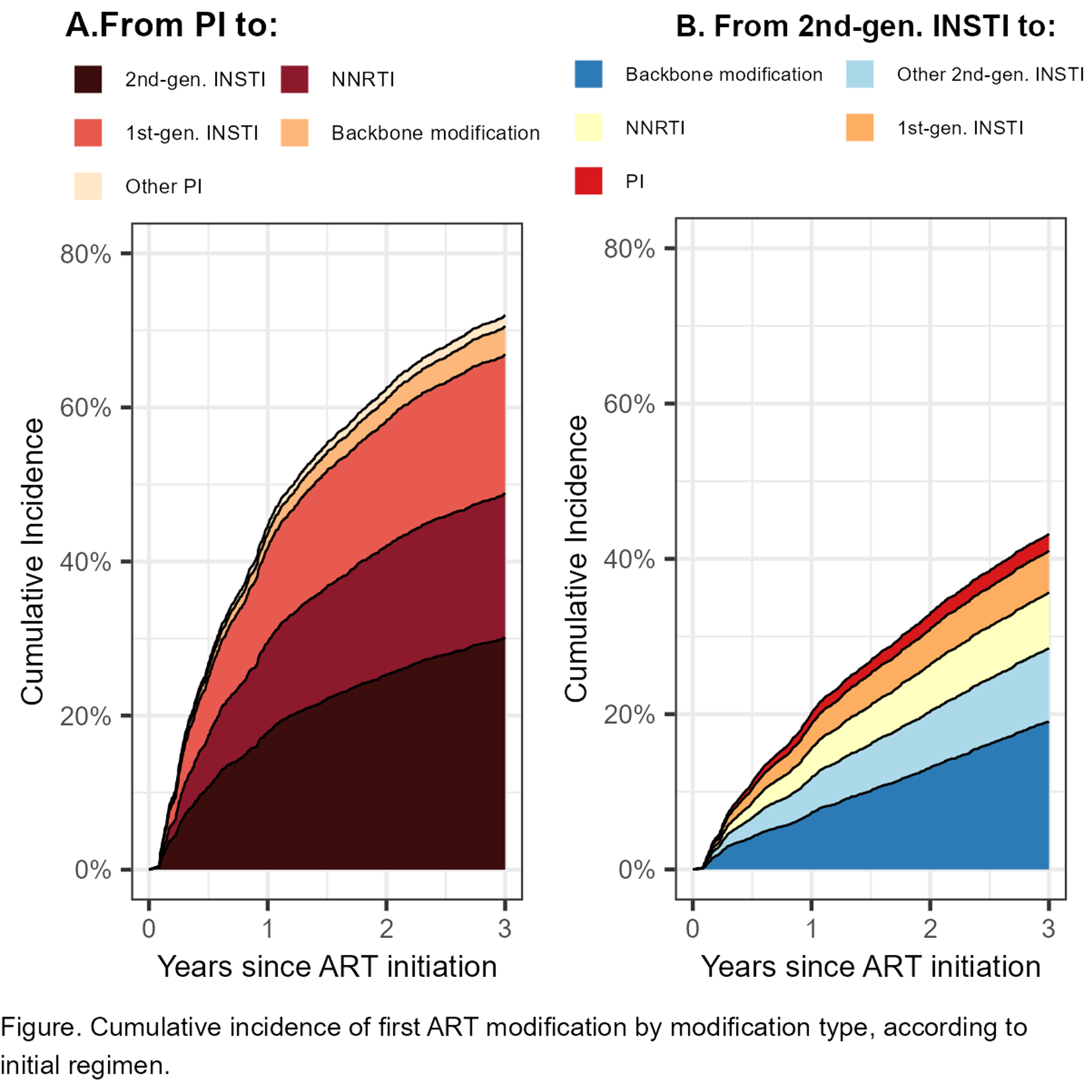
Of 6,225 individuals, 80% were men who have sex with men (MSM), 69.8% from Europe/North America, and 9.3% from Sub-Saharan Africa. Overall, 3,411 (54.8%) modified their first regimen (median time to modification 32 months) and 262 (4.2%) fully interrupted it. Hazard for treatment modification was lower for women with heterosexually acquired HIV(WSM) compared to MSM when starting with a PI regimen (HR = 0.81; p = 0.049), but higher when starting with NNRTI (HR=1.33; p=0.029), first- (HR=1.38; p=0.006) and second-generation INSTI (HR=1.27; p=0.022). Shorter time from seroconversion/diagnosis ART initiation was associated with higher hazard for treatment modification, while region of origin showed no association. Over 60% of those starting a PI regimen switched class within 3 years (Figure A), while second-generation INSTIs showed the lowest modification rates (mostly in the backbone) (Figure B).
Conclusions
Individuals started on second-generation INSTIs were less likely to experience ART modification. WSM were more likely to switch from this class compared to people of other routes of exposure. Moreover, ART initiation close to seroconversion was associated with a higher hazard of treatment modification, independent of initial regimen. Investigation of the specific reasons for modification will provide valuable insights.
Table or Figure