Background
Historically West Virginia has had one of the lowest HIV prevalence rates in the United States. However, newly diagnosed HIV cases began to increase in 2018. Today, there are multiple HIV outbreaks in West Virginia, most of which are among people who inject drugs (PWID). This study examines HIV outcomes among PWID hospitalized with infectious complications related to injection drug use (IDU).
Methods
This retrospective study assessed electronic medical records of PWID admitted to Ruby Hospital, the flagship hospital for WVU Medicine, from 2018 to 2022. Among those diagnosed with HIV, we assessed connection to care and virologic suppression, among other outcomes, over the 12 months following hospital admission.
Results
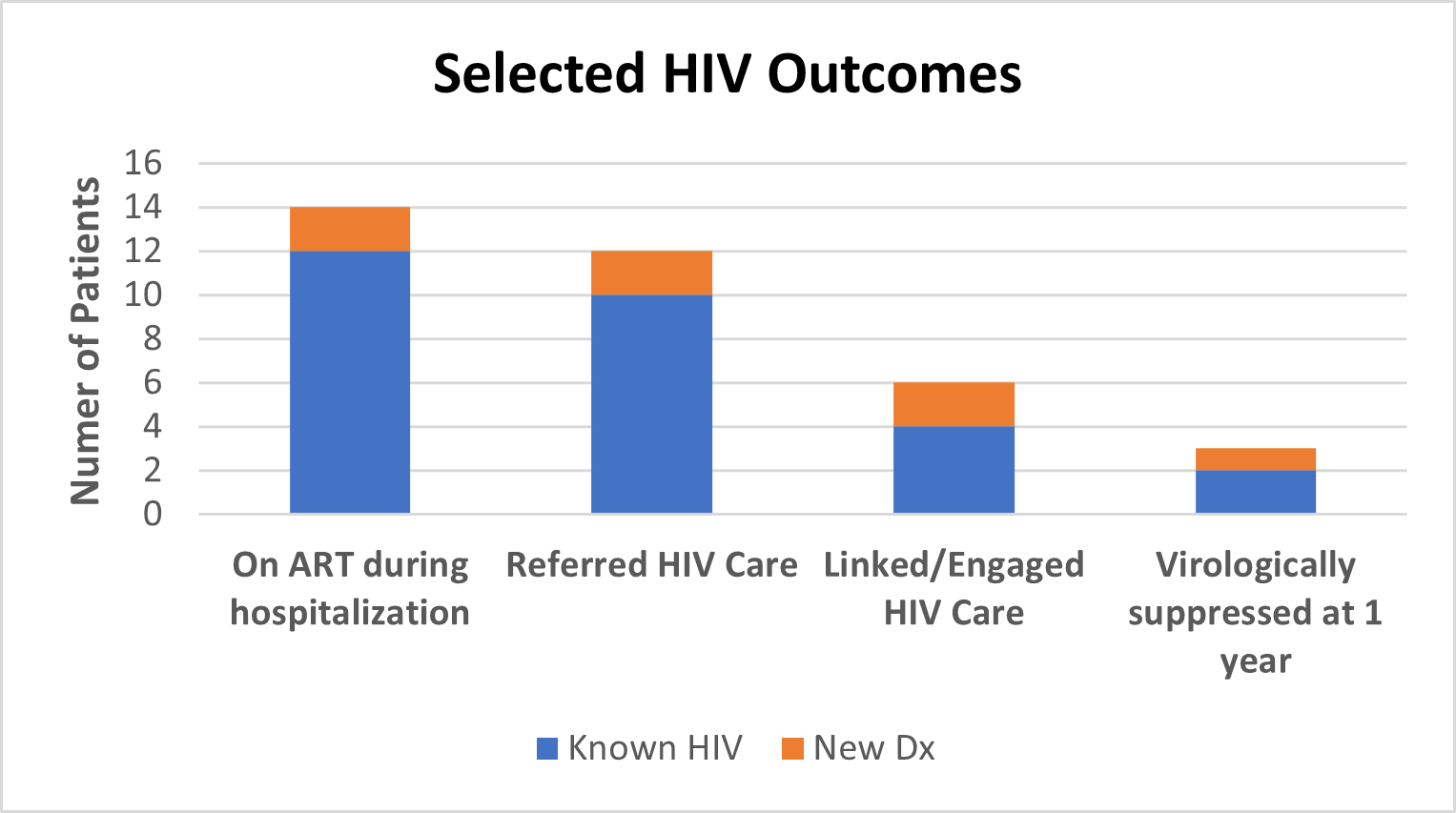
A total of 810 PWID hospitalized with IDU-related infectious complications were identified during the four-year period, of whom 15 (mean age 31 years, 93% White, 40% women) were HIV infected (2 were newly diagnosed during hospital admission). Eight of 15 persons (53%) presented with CD4 count <200 cells/mm3. Seven of the 13 persons with known HIV were receiving antiretroviral therapy upon admission, and only 2 of those were virologically suppressed. One person died during the hospital stay. Other outcomes are shown (Figure 1). Importantly, only 3 persons (20%) were virologically suppressed one-year after hospitalization, 4 persons were not virologically suppressed, and 7 persons were lost to follow-up.
Conclusions
These data suggest that concentrated focus is needed to improve the HIV outcomes among PWID in West Virginia.
Table or Figure