Background
The burden of steatotic liver disease (SLD) is rising globally, but there are few data from child-bearing populations, including pregnant women with HIV (WWH) in Africa.
Methods
The ORCHID study enrolled pregnant WWH receiving TLD and HIV seronegative (HIV-) pregnant women at a primary healthcare facility in South Africa. We conducted a cross-sectional analysis using data from enrolment. In analysis, we included 1836 women (769 WWH and 1067 HIV-) with gestational age (GA) ≤20 weeks, age ≥16 years and valid hepatic ultrasound assessment at enrolment. SLD was assessed using B-mode ultrasound, comparing echogenicity between the liver and right kidney parenchyma. SLD was categorised based on the presence of cardiometabolic risk factors (BMI ≥25 kg/m2, elevated glucose [fasting plasma glucose ≥5.6 or 2-hour post-load glucose ≥7.8 mmol/L or diabetes medication], elevated blood pressure [≥135/80 mmHg or hypertension medication] and/or dyslipidaemia [triglycerides ≥1.7 or high-density lipoprotein <1.3 mmol/L] ) and/or alcohol exposure (AUDIT score >0) into i) metabolic dysfunction-associated steatotic liver disease (MASLD), ii) metabolic and alcohol-related liver disease (MetALD), iii) alcohol-related liver disease (ALD) or iv) cryptogenic SLD. Prevalence of SLD was described using summary statistics and logistic regression was used to assess the association between HIV and SLD.
Results
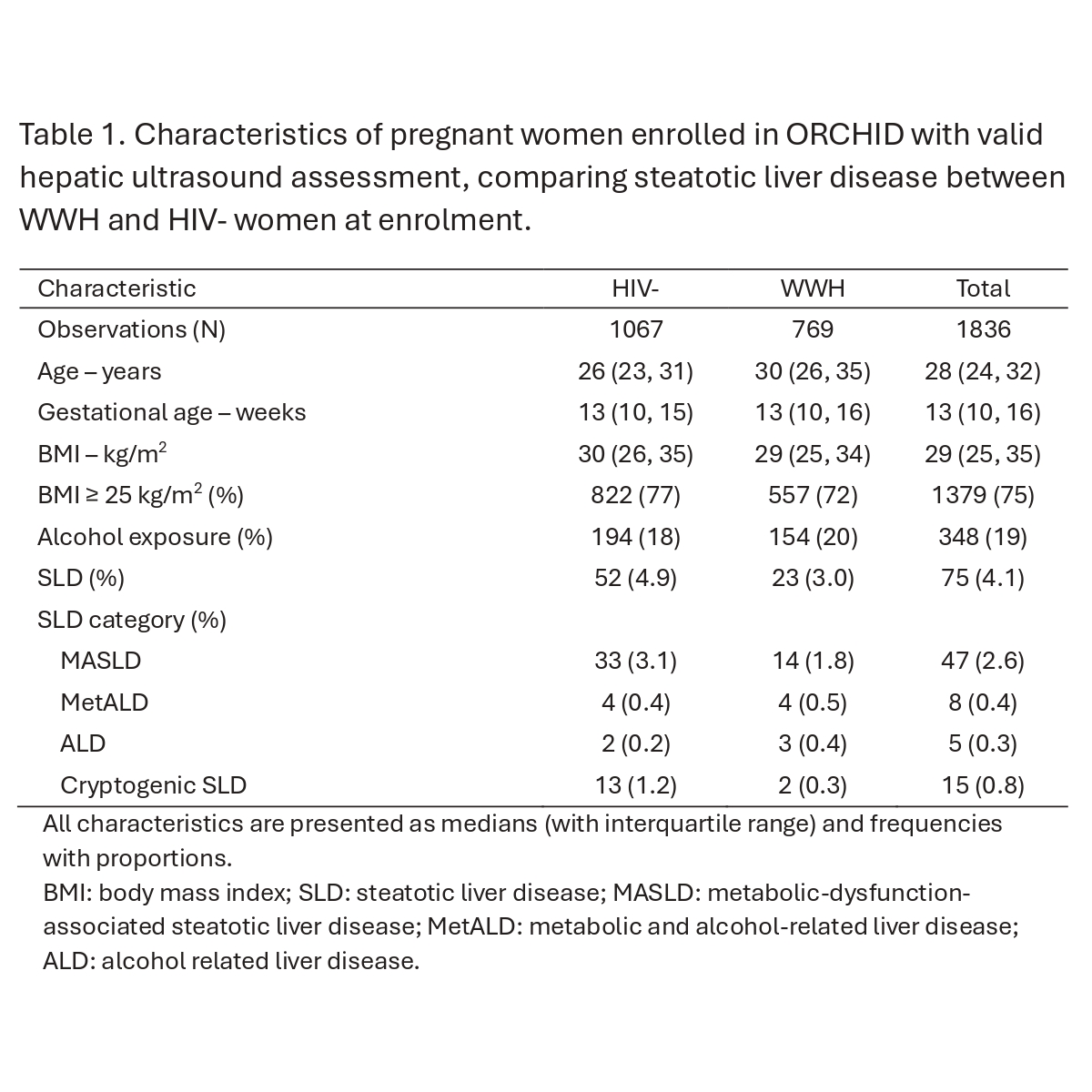
At enrolment, median age was 28 years (interquartile range [IQR] 24–32) and median GA was 13 weeks (IQR 10–16). 75% of women had a BMI ≥25 kg/m2 and 19% had alcohol exposure. In WWH, 27% initiated TLD in pregnancy and median ART duration at enrolment was 4.5 years. Prevalence of SLD was 4.1% (n=75, 95% confidence interval [CI] 3.3–5.1%) overall, 3% (95% CI 2–4.5%) among WWH and 4.9% (95% CI 3.7–6.4%) among HIV- women (Table 1). Prevalence of SLD categories did not differ by HIV serostatus. Among women with SLD, 62.7% (95% CI 50.7–73.3%) had MASLD, 10.7% (95% CI 5.1–20.5%) had MetALD, and 6.7% (95% CI 2.5–15.5%) had ALD. 98% of women with MASLD were overweight/obese. Adjusting for age, alcohol exposure and GA, HIV serostatus was not significantly associated with SLD (adjusted odds ratio 0.64, 95% CI 0.38–1.05).
Conclusions
In one of the largest studies of hepatic steatosis and HIV in pregnant women in Africa, our findings were reassuring, with no association between HIV and SLD. Overall, the prevalence of SLD was low and largely comprised women with overweight/obesity and alcohol use.
Table or Figure