Background
With excellent tolerability, effectiveness and high barrier to drug resistance, integrase strand transfer inhibitors (INSTI) are widely used in HIV treatment. We examined population-based INSTI DR mutation (DRM) prevalence in four high HIV burden African countries using INSTI as first-line antiretroviral (ARV) therapy.
Methods
We pooled and analyzed data from Population-based HIV Impact Assessments conducted between 2019-2022 in Eswatini, Mozambique, Uganda, and Zimbabwe. INSTI DRM were identified using Sanger-based sequencing. We assessed the prevalence of any INSTI DRM and of major dolutegravir (DTG) DRM (G118R, N155H, Q148HRK, R263K), among HIV seropositive adults aged ≥15 years with HIV RNA viral load (VL) ≥1,000 copies (c)/mL.
We examined weighted prevalence between INSTI DRM and recent HIV infection based on LAg-avidity <2.0 OD units, VL>1000 c/mL and lack of detectable ARVs; and among those with a long-term infection, awareness of HIV diagnosis (self-report or ARV detected), and ARV status. Nonoverlapping confidence intervals were used for comparisons.
Results
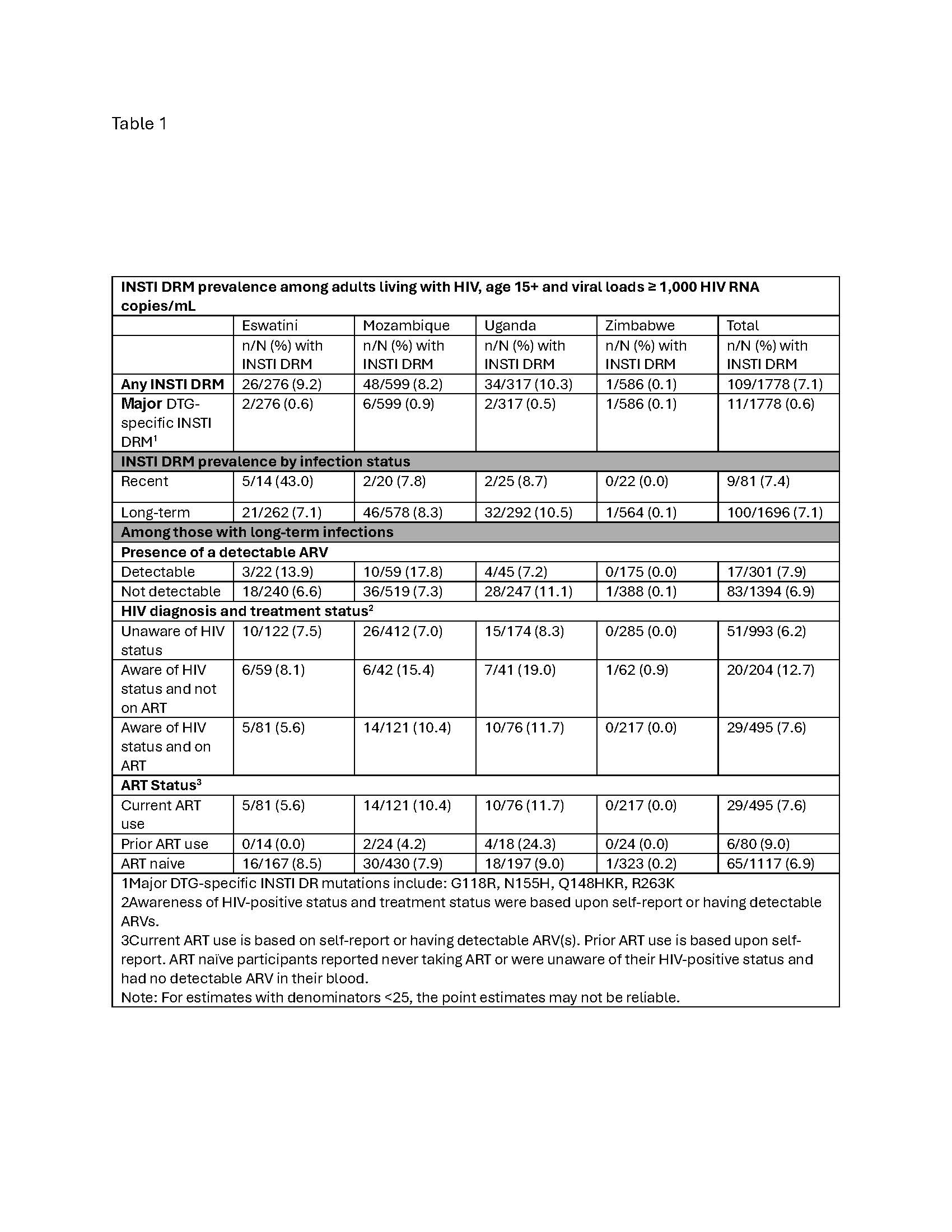
Among 9,361 people with HIV (PWH), 1,778 (26.8%) had a VL ≥1,000 c/mL and INSTI DRM results and 81 (5.4%) had a recent infection. Overall INSTI DRM prevalence was 7.1% and varied from 0.1% in Zimbabwe to 10.3% in Uganda. Overall prevalence of major DTG mutations was low (0.6%, range 0.1%-0.9%). Among those with recent HIV infections in Zimbabwe, none had INSTI DRM, while 43.0% with recent infections in Eswatini had INSTI DRM. Among those with long-term HIV infections, INSTI DRM prevalence ranged from 0.1% in Zimbabwe to 10.5% Uganda.
Among those with long-term infections, aware of their HIV diagnosis and on treatment, INSTI DRM ranged from 0.0% in Zimbabwe to 11.7% in Uganda (7.6%, overall). Among those with long-term infections who reported prior ARV use, INSTI DRM ranged from 0.0% in Zimbabwe to 24.3% in Uganda (9.0%, overall). Among those with long-term infections who were ARV-naïve, INSTI DRM ranged from 0.2% in Zimbabwe to 9.0% in Uganda (6.9%, overall).
Conclusions
Nationally-representative data from four African countries demonstrated overall INSTI DRM prevalence among unsuppressed PWH was 7%. The prevalence of major DTG mutations was <1%. Wide ranging INSTI DRM prevalence may reflect differences in HIV subtype or access to and usage patterns of INSTI ARVs. Given the important role of INSTI for treatment and prevention, ongoing monitoring of clinical and population-based data for INSTI DRM is critically important.
Table or Figure