Background
The AIDS Drug Assistance Program (ADAP) provides access to antiretroviral therapy (ART) for low-income people with HIV (PWH). Enrollment churn—defined as disenrolling or re-enrolling in ADAP coverage—may impact ART access continuity, cause program and client administrative burden, and worsen health outcomes (i.e., loss of viral suppression). Churn has not been examined over long periods or across states. We analyzed churn patterns among adult ADAP clients from 2014-2021 in three states.
Methods
We analyzed individual-level ADAP data from January 2014-December 2021 in Arizona, Maryland, and Virginia. Person-time accrued from first observed enrollment until death or December 31, 2021. We calculated churn events (disenrollment or reenrollment) per client and incidence rates per 100 person-years (py). Poisson regression with a log link, robust variance, and offset for person-time was used to estimate incidence rate ratios (IRRs) for state, enrollment year, demographic, clinical, and program factors.
Results
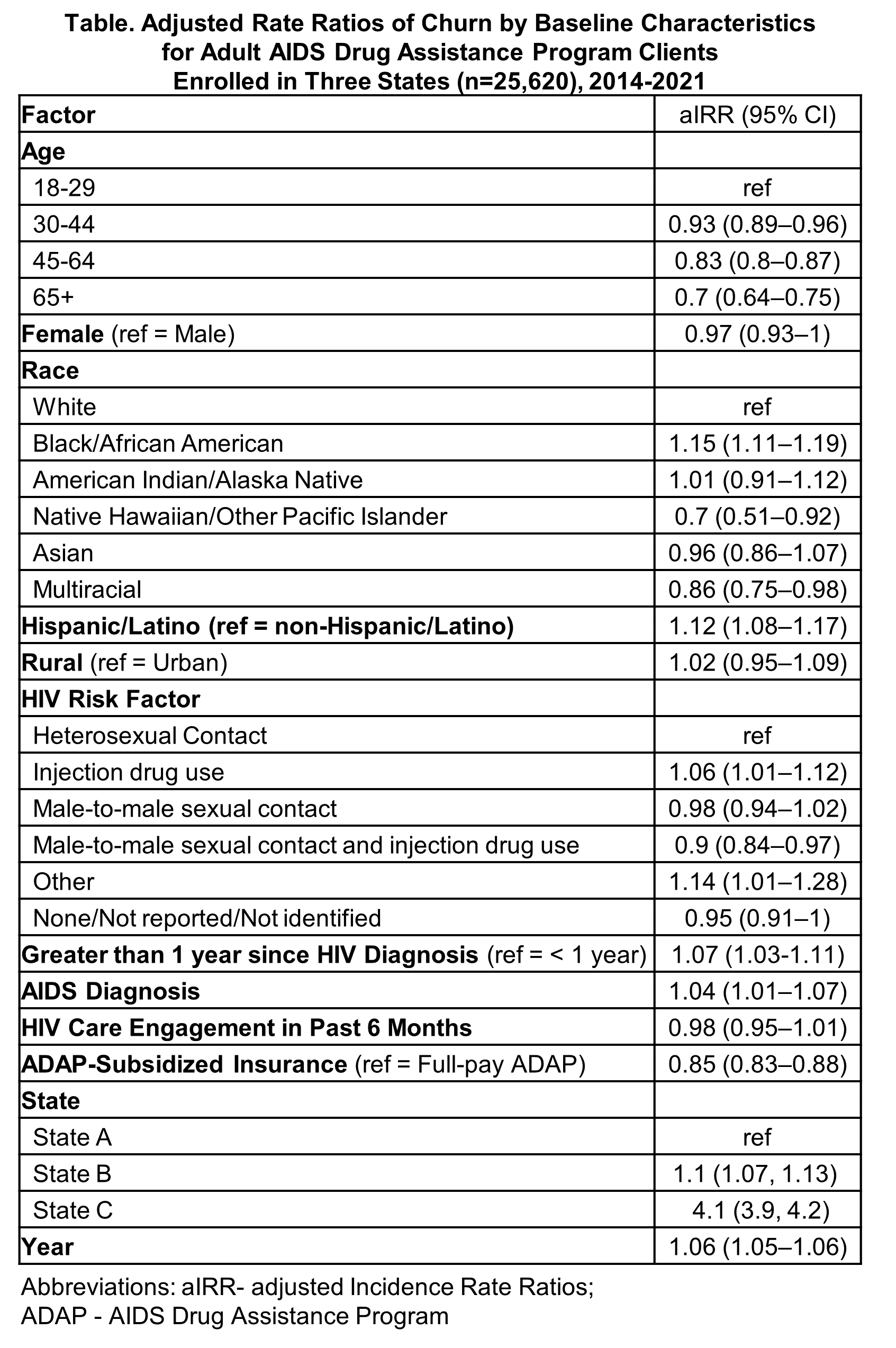
Of 26,423 eligible PWH, 25,620 (97%) had complete data. We observed 134,778 py and 57,682 churn events, an incidence rate of 42.8 per 100 py (95% CI: 42.4–43.2). Mean churn events were 2.27 (SD: 2.97) over 63 months (SD: 25), and the mean proportion of time enrolled was 0.52 (SD 0.35). Older age was protective: 30–44 (aIRR=0.93; see table for 95% CIs), 45–64 (aIRR=0.83), and 65+ (aIRR=0.7) vs. 18-29. Black/African American (aIRR=1.15) and Hispanic/Latino clients (aIRR=1.12) had higher churn. Prior AIDS diagnosis (aIRR=1.04) and more than one year since HIV diagnosis (aIRR=1.07) were associated with higher churn. Compared to heterosexual contact, injection drug use (IDU) was associated with higher churn (aIRR=1.06) and PWH with IDU who were men who have sex with men was associated with lower churn (aIRR=0.9). Clients initially enrolled in ADAP-subsidized insurance had lower churn than those in full-pay ADAP (aIRR=0.85).
Conclusions
High rates of ADAP churn among younger clients, racial/ethnic minorities, and those with certain HIV risk factors, highlight disparities in who experiences churn. ADAPs may consider (1)streamlining reenrollment processes, (2)enhancing outreach and support for those with a higher risk of churn to ensure that clients are not disenrolled when they are eligible, and (3)expanding access to ADAP-subsidized insurance to reduce churn. These strategies could improve ART access continuity and health outcomes while reducing administrative burden on clients and programs.
Table or Figure