Background
The presence of HIV infection at the time of cancer diagnosis is associated with an increase in cancer-related mortality compared to cancer patients without HIV, likely driven by both sociodemographic differences among people with HIV (PWH) as well as the immune-modulatory impact of HIV on tumorigenesis. Our prior studies documenting survival differences among PWH and cancer adjusted for receipt of cancer treatment, but this was examined using aggregate data looking at all treatment modalities together. In the current analysis, we aimed to compare survival differences between cancer patients with versus without HIV across specific cancer treatment modalities administered to earlier stage (Stages I-II) disease. We hypothesized that despite receiving comparable treatments, cancer survival differences would persist in PWH, even for patients diagnosed with these better prognosis tumors.
Methods
We used the National Cancer Database (NCDB) 2004-2020 to identify PWH and people without HIV (PWoH) with an incident diagnosis of stage I-II cancers of the lung, prostate, anus, or breast. Survival was described as the percentage of patients alive at five years after cancer diagnosis within cancer treatment modality (surgery, radiation, systemic therapy, or combinations of these therapies).
Results
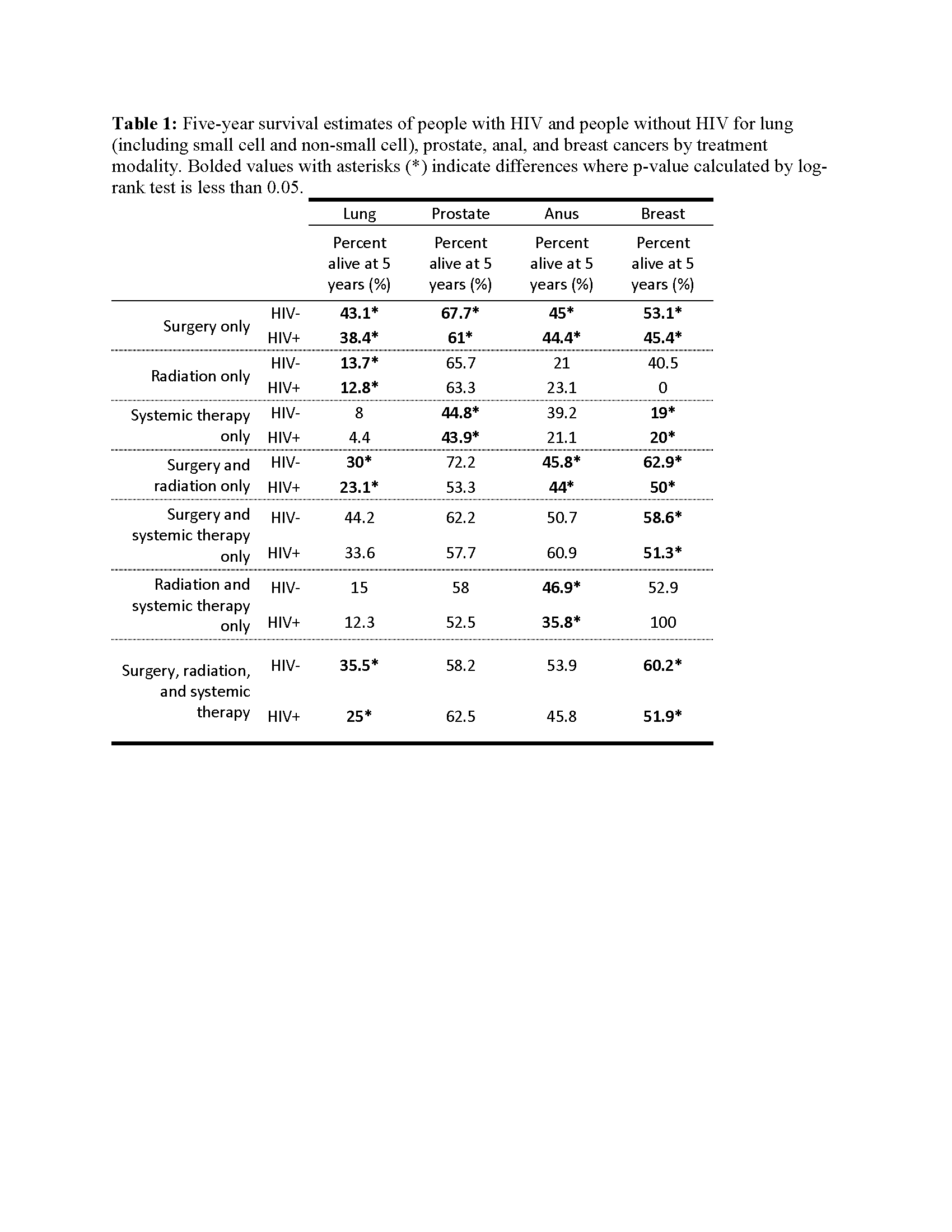
Compared to PWoH (n = 2,749,178), PWH (n = 7,022) had lower-5-year survival rates across most treatment modalities for each cancer site included. At five years, the proportion of cancer patients who remained alive was lower among PWH compared to PWoH for lung (29.6% vs. 39.9%), prostate (72.0% vs. 76.9%), and breast cancer (57.6% vs. 74.2%), with no difference for anal cancer (59.4% vs. 59.5%). This difference in five-year survival comparing PWH and PWoH reached statistical significance for multiple treatment approaches, highlighted in bold text in Table 1.
Conclusions
These results provide preliminary evidence of an HIV-associated survival difference in cancer patients with newly diagnosed early-stage tumors receiving comparable treatments. While a cancer modulating impact of HIV infection could directly contribute to these poorer outcomes, non-HIV medical comorbidities, performance status, and health-related social needs are important confounders to consider in future analyses of this dataset.
Table or Figure