Background
In an open-label, phase 3, randomized clinical study (MK-8591A-051; NCT05631093) in virologically suppressed adults with HIV-1, switching to the fixed combination of doravirine with islatravir (DOR/ISL 100/0.25 mg) once daily showed non-inferior efficacy to continuing oral antiretroviral therapy (ART) and was well tolerated at Week 48. We report on efficacy and safety results through Week 96.
Methods
After Week 48 of the comparative portion of the study, all participants receive open-label DOR/ISL (100/0.25 mg) through Week 144. Discontinuation is required for participants with clinically significant confirmed viremia (CSCV; 2 consecutive HIV-1 RNA ≥200 copies/mL 4 [±1] weeks apart) or confirmed decline from baseline in total lymphocytes (≥30% and <1.0×10⁹/L) or CD4+ T-cells (≥30% and either <350 cells/mm3 if ≥350 at baseline, or <200 cells/mm3 if <350 at baseline).
Results
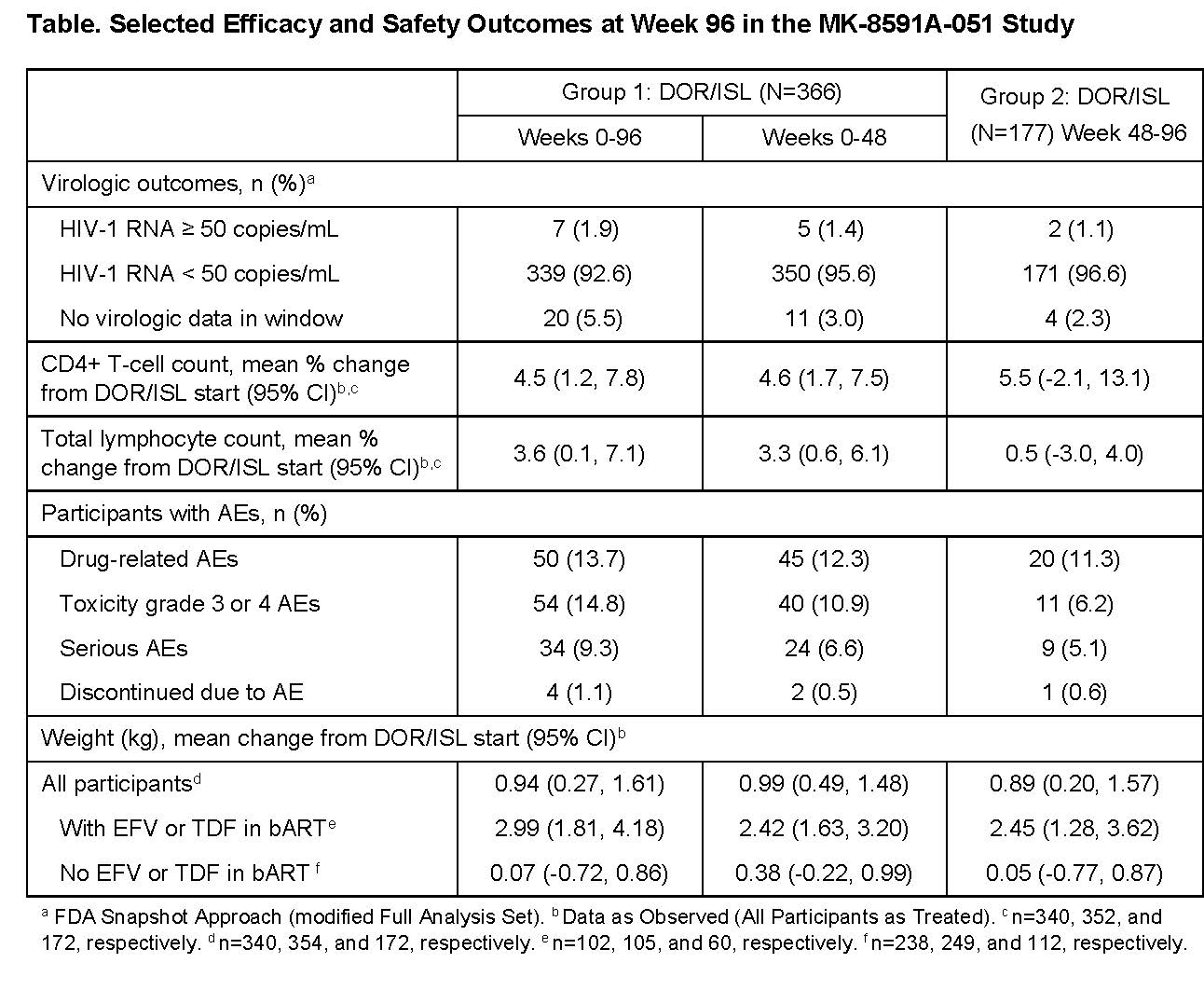
On Day 1, 366 participants switched to DOR/ISL (Group 1) and 185 continued their baseline ART (bART; Group 2). Mean age was 49.8 (±12.3) yrs; 39.7% were female at birth, 45.4% Black, and 14.5% Hispanic or Latino/a; median time since HIV diagnosis 13.3 (IQR 7.2-20.4) yrs. bART was InSTI-based (64.2%), NNRTI-based (30.3%), or PI-based (5.4%) with median duration 3.8 (IQR 2.0-6.3) yrs. At Week 48, 177 participants (95.7%) in Group 2 switched from bART to DOR/ISL, for a total of 543 on DOR/ISL. At Week 96, HIV-1 RNA was ≥50 copies/mL in 9 participants: 7 (1.9%) from Group 1 and two (1.1%) from Group 2, while virologic suppression was maintained in 92.6% and 96.6%, respectively. One participant in Group 1 (and none in Group 2) had CSCV after Week 48 and was discontinued. No participant developed treatment-emergent resistance to either DOR or ISL through Week 96. Adverse event rates in Group 2 (Weeks 48-96) were similar to those in Group 1 (Weeks 0-48) (Table). Mean % change (from start of DOR/ISL) in CD4+ T-cell and total lymphocyte counts were comparable across the groups at Week 96 (Table), with no discontinuations due to decreased CD4+ T-cell or total lymphocyte count. Mean weight change after starting DOR/ISL was similar across the treatment groups, with a greater change seen in participants who switched from weight-suppressive bART containing efavirenz and/or tenofovir disoproxil fumarate (Table).
Conclusions
Switching to DOR/ISL (100/0.25 mg) maintained a high rate of viral suppression over 96 weeks with no emergent resistance to DOR or ISL. DOR/ISL was well tolerated and did not adversely affect lymphocyte counts.
Table or Figure