Background
As of early August 2025, Uganda reported 7,798 cumulative mpox cases and 48 deaths (Uganda Ministry of Health National Mpox Situation Report, August 2025). Nearly half (47.9%) of the fatalities were HIV co-infected, while the rest had non-HIV comorbidities, with the highest attack rates in females aged 24-29 years. This study employed deep sequencing to genotype samples from fatal mpox cases with HIV and non-HIV co-morbidities to identify other risk factors for mortality.
Methods
This cross-sectional study deep sequenced 22 samples from laboratory-confirmed fatal mpox cases collected from the Regional Referral Hospital (RRH) isolation units using metagenomic next-generation sequencing on the Illumina MiSeq platform. Raw sequence reads were analyzed using UVRI metagenomics and Illumina DRAGEN pipelines. The cohort consisted of 18 adults (median age, 31 years) and 4 children (aged 2 weeks to 18 months); 63.6% of the participants were female. HIV infection was present in 59.1% (n=13) and sickle cell anaemia in 9.1% (n=2).
Results
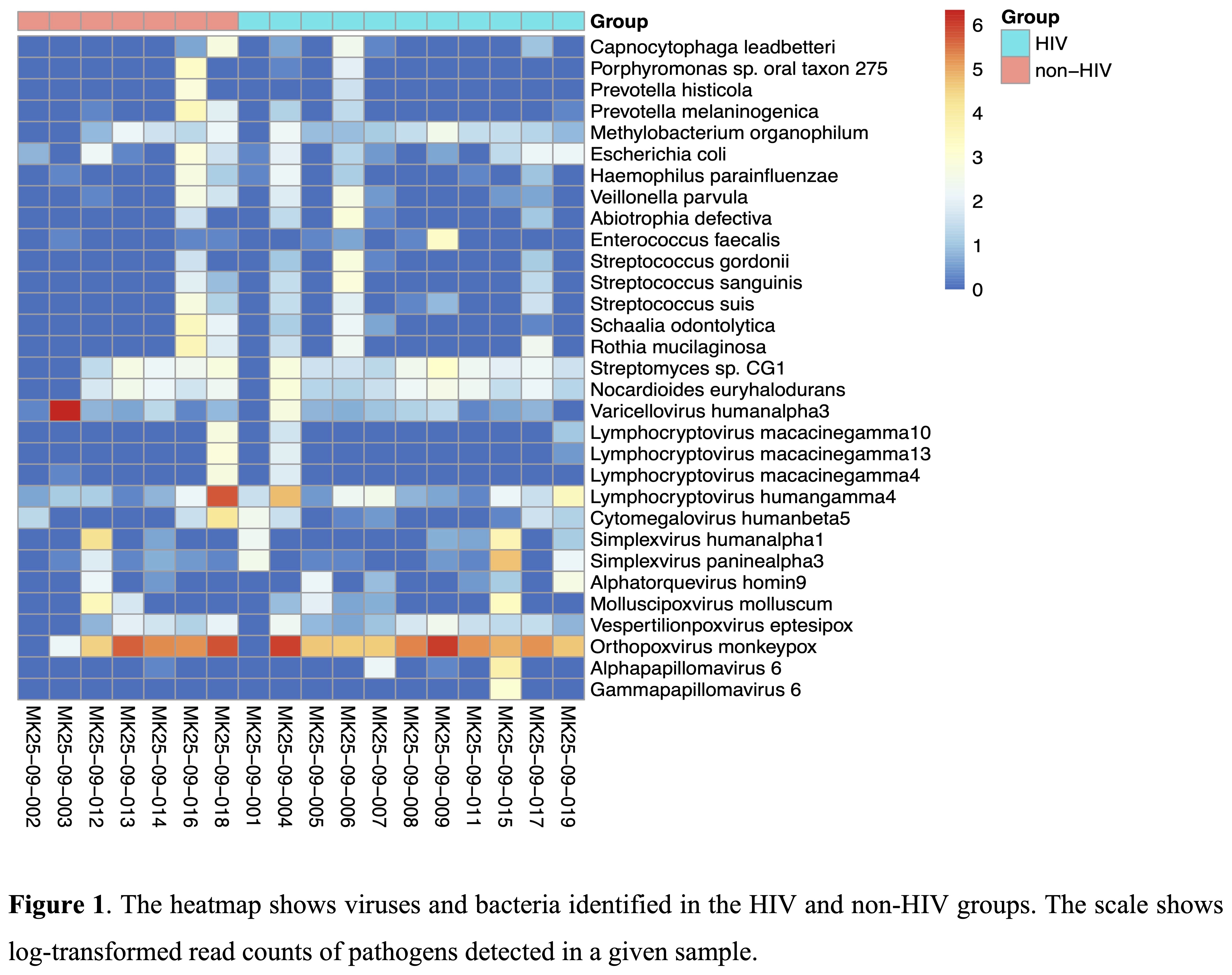
Mpox was detected in all samples at high genomic coverage (>80%) and analysis was stratified by HIV status. As expected, HIV-positive samples showed a strong HIV signal at >80% genome coverage. Notably, Varicella-Zoster virus (VZV)/Varicellovirus humanalpha3 (Figure 1) was detected in 59% (n=10) of non-HIV cases and 41% (n=7) of HIV-positive cases, though this difference was not statistically significant (Fisher’s exact test, p=0.584; OR 2.14, 95% CI: 0.12–40.24). Additionally, antimicrobial resistance (AMR) genetic markers were identified in several bacteria that included Staphylococcus aureus, Staphylococcus haemolyticus, Escherichia coli, Klebsiella pneumoniae, Pseudomonas aeruginosa, Streptococcus pyogenes and Acinetobacter baumannii, with notably higher prevalence in HIV-positive patients.
Conclusions
We previously reported mpox/VZV co-infections (Bbosa et al., submitted 2025). This study demonstrates that while HIV is a major comorbidity in fatal mpox cases, other co-infections such as VZV may exacerbate mortality risk. Furthermore, VZV infection was strongly associated with mortality in the non-HIV arm. Despite the relatively small sample size, the observation of sepsis-related factors in fatal mpox cases suggests potential links to AMR or secondary infections, warranting further investigation. These findings highlight the need for integrated genomic surveillance and antimicrobial stewardship in mpox care.
Table or Figure