Background
While it is well known that substance use disorder (SUD) negatively affects HIV outcomes, most research has focused on individual-level dynamics, overlooking the role of broader influences of SUD prevalence on HIV outcomes. Assessing SUD rates at the county level provides a structural lens for understanding how geographic and contextual factors associate with HIV viral suppression (VS). In response to this gap in the scientific evidence, this study examines the impact of county-level SUD prevalence on HIV VS rates across all 46 counties in South Carolina (SC) from 2013–2020.
Methods
We conducted a cohort study of 11,237 adults diagnosed with HIV in SC between 2005 and 2019, linking statewide electronic health records with sociodemographic and structural data across 46 counties. The outcome was the annual county-level VS rate, defined as the percentage of people with HIV (PWH) with a viral load of fewer than 200 copies per ml in each county’s last viral load report at each calendar year. The primary predictor was yearly county-level prevalence of any of the three most commonly diagnosed forms of SUD in SC (alcohol, opioid, and stimulant) identified via ICD-9/10 codes. Linear mixed-effects models with county random effect assessed associations between SUD prevalence and VS rates, adjusting for aggregated demographic, socioeconomic, and health service factors.
Results
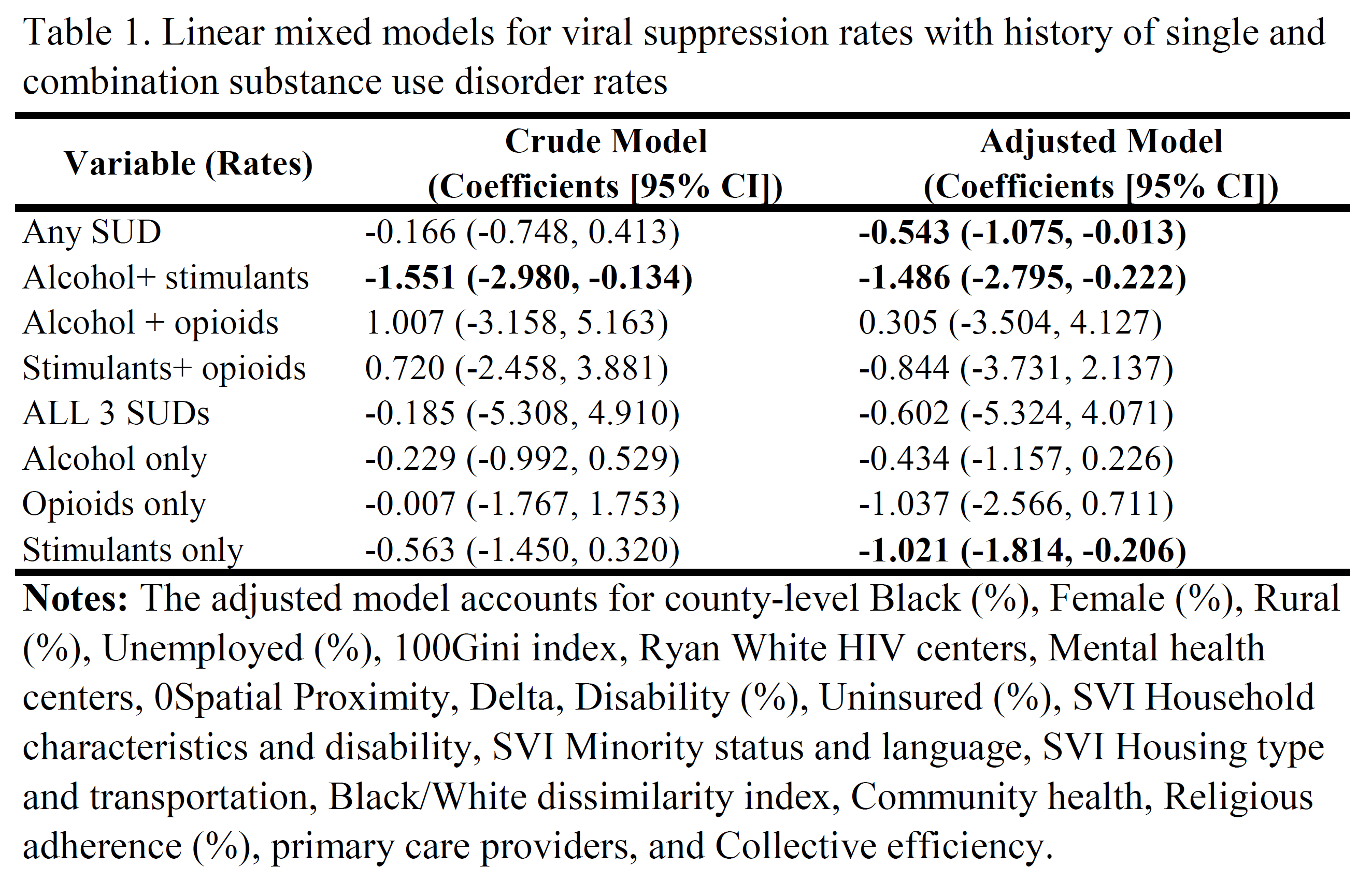
Overall, 9.7% of participants had at least one yearly SUD diagnosis. Among participants with an SUD diagnosis, alcohol use disorder was most prevalent (40.1%), followed by stimulant use disorder (27.4%) and opioid use disorder (4.94%). Counties with higher SUD prevalence had significantly lower VS rates (adjusted β = –0.543; 95% CI: –1.075, –0.013). Stimulant use disorder (adjusted β = –1.021; 95% CI: –1.814, –0.206) and combined alcohol-stimulant disorder (adjusted β = –1.486; 95% CI: –2.795, –0.222) were most strongly associated with reduced VS. Lack of insurance and social vulnerability indices also negatively predicted VS rates, while other structural covariates showed no consistent association.
Conclusions
County-level SUD prevalence, stimulant use in particular, is linked to lower VS rates in SC. Findings underscore the need for geographically tailored interventions that integrate evidence-based SUD treatment and address structural barriers to HIV care Integrating HIV and SUD services at the community level may be critical to achieving Ending the HIV Epidemic goals in SC.
Table or Figure