Background
Criminal legal health systems serve as a crucial setting to identify new HIV diagnoses, particularly in at-risk populations. Limited data exists on the HIV care cascade for individuals newly diagnosed with HIV while incarcerated.
Methods
We conducted a retrospective chart review of all 200 patients identified as having been newly diagnosed with HIV at the Dallas County Jail between January 2015 and December 2023. We integrated data from their medical records at both the jail and community health systems in the greater metropolitan area to construct a HIV care cascade for this population, noting where each service was provided. We compared this data to the reported HIV care cascade for the non-incarcerated population within the same county.
Results
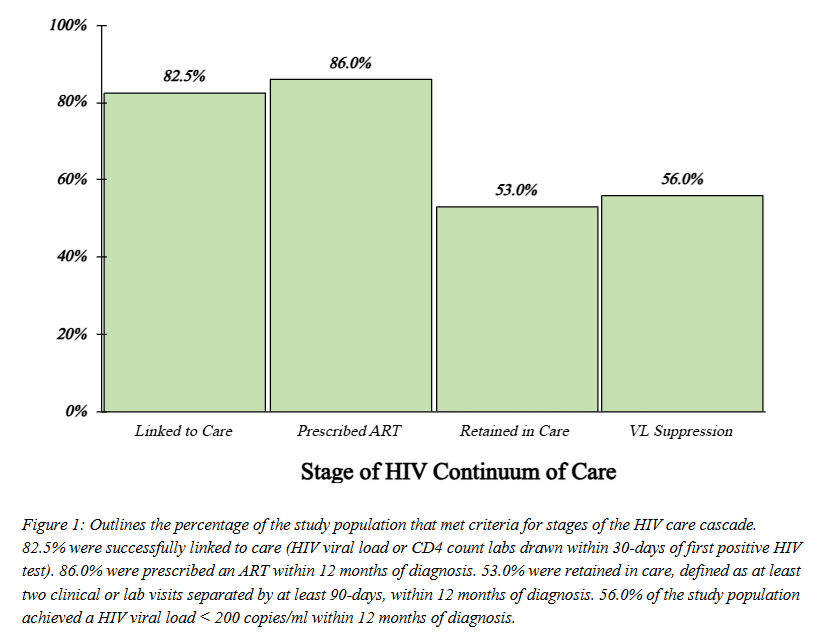
Overall, 82.5% (165/200) of newly diagnosed individuals were successfully linked to HIV care, with greater than 99% (164/165) of those individuals being linked during incarceration at the county jail. Only 53.0% (106/200) of individuals were retained in HIV care within a tracked health system 12 months post-diagnosis; of those retained in care, 53.8% (57/106) were retained exclusively within the jail system, and the remaining individuals had at least one clinic or lab visit in the community. 86.0% (172/200) of newly diagnosed individuals were prescribed ART. Overall, 56.0% (112/200) achieved viral suppression within a year of diagnosis, with 19.5% (39/200) having a detectable viral load and 24.5% (49/200) with missing data. Of individuals with data available at 3 years post-diagnosis, 20.9% (23/110) maintained viral suppression.
In comparison, Dallas County-wide data on people with HIV report an annual linkage to care rate of 74.4%-79.5% between 2018-2023. Across this same period, 61.4% were retained in care and 61.3% were virally suppressed.
Conclusions
Individuals who received a new diagnosis of HIV while incarcerated in a large county jail had a higher rate of linkage to care but lower rates of retention in care and viral suppression than the non-incarcerated county population. A substantial drop-off persists in care engagement and virologic suppression after jail release. These results highlight the critical role of criminal legal health systems as settings for initiation of HIV care in individuals newly diagnosed, and the need for improved systems for care transitions to maintain retention in HIV care. Data and care coordination with the criminal legal system are crucial to ending the HIV epidemic.
Table or Figure