Background
Individuals in the justice system are at increased risk for HIV, but few studies have characterized new HIV cases identified in correctional settings.We describe a cohort of individuals first diagnosed with HIV in a large urban jail to understand the potential impact of HIV testing programs in correctional settings.
Methods
We used jail electronic health records to identify individuals with a positive HIV test from 2015-2023 first detected through testing in the Dallas County Jail. We compared the distribution of HIV risk factors in the jail population to county, state, and national estimates using chi-square or Fisher’s exact tests. We estimated rates of new HIV diagnoses overall, in demographic subgroups, and over time for the jail population and compared these to county, state, and national data.
Results
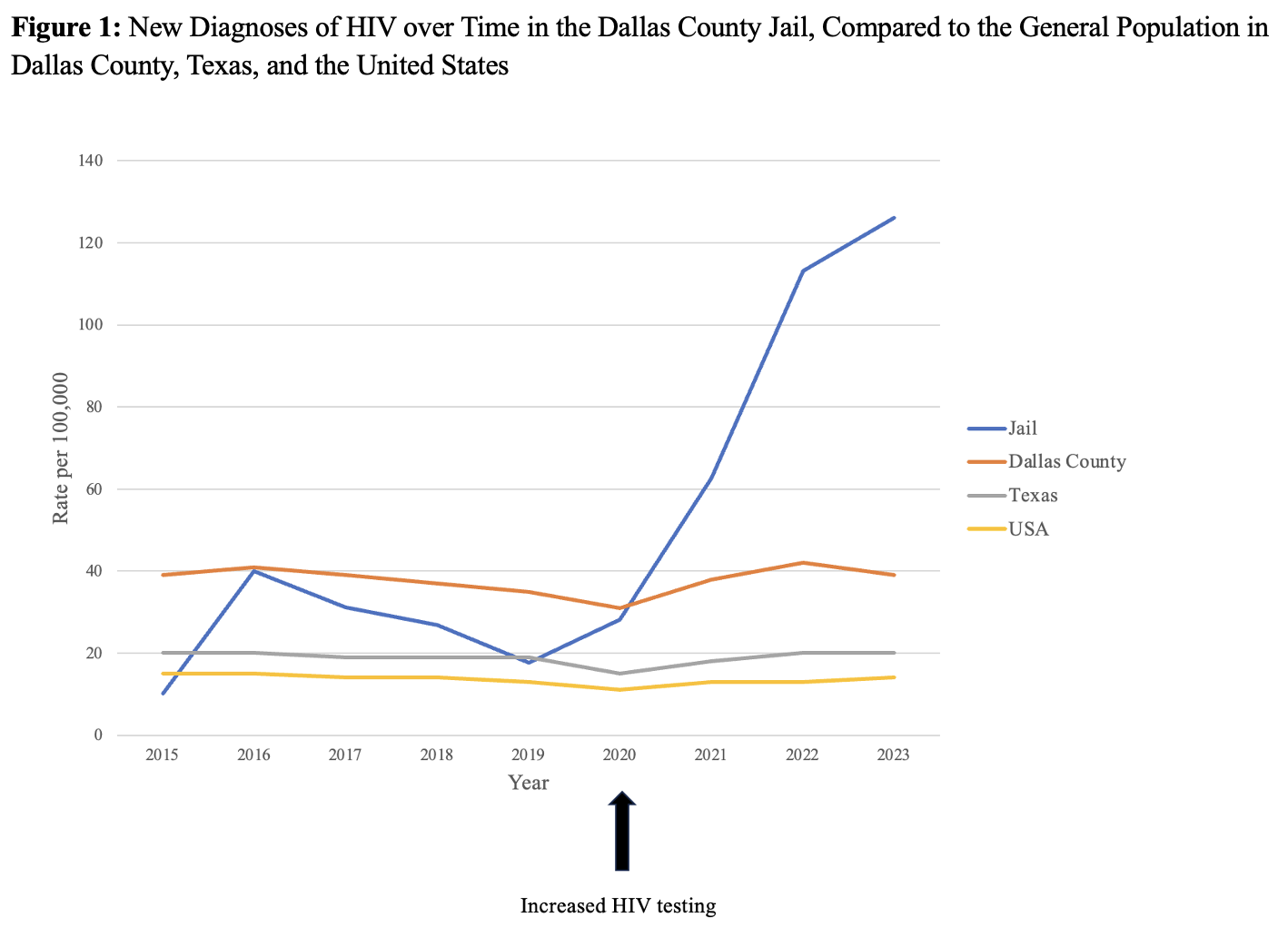
Of 200 individuals newly diagnosed with HIV at the jail, 146 (73%) were cisgender men, 41 (21%) cisgender women, and 13 (7%) transwomen; 115 (58%) were non-Hispanic Black, 43 (22%) non-Hispanic White, and 42 (21%) Hispanic. Median age was 31 years (IQR 26 – 38), 86 (43%) reported heterosexual sex, 53 (27%) were men who had sex with men (MSM), 24 (12%) had injected drugs, 19 (10%) were MSM who injected drugs, and 18 (9%) had other/unknown HIV risk factors. Median CD4 count at diagnosis was 529 (IQR 358 – 674), and 5% had CD4 <200. 88 (44%) had concurrent bacterial sexually transmitted infections, 133 (67%) had active substance use, and 51 (26%) were unhoused. A higher proportion of those diagnosed in jail reported heterosexual sex (47%) compared to county (19%), state (19%), and national (22%) estimates, and a higher proportion were non-Hispanic Black (57%) compared to county (49%), state (32%), and national (41%) estimates (p <0.001 for all). New HIV diagnoses increased over time with increased testing efforts that began in 2020 (Figure 1), reaching 126 cases per 100,000 in 2023 in the jail, compared to 39 cases per 100,000 in Dallas County, 20 cases per 100,000 in Texas, and 14 cases per 100,000 in the US. Diagnoses in each race/ethnicity, sex, and age group were all higher in the jail compared to the general population in 2023.
Conclusions
An HIV testing program in a large county jail in the US South identified rates of new HIV diagnoses 3 times the county average and 9 times the national average, with most diagnoses made early in the disease course. HIV testing in correctional health settings is a critical tool for ending the HIV epidemic.
Table or Figure