Background
Although research on the epidemiology of transactional sex among men has grown, few studies examine this behavior longitudinally. The objective of this study was to examine the prevalence and correlates of transactional sex among men comparing those who reported transactional sex intermittently with those who reported engaging in transactional sex consistently over time.
Methods
This was a prospective cohort study in Los Angeles, CA. Enrollment began in August 2014, and follow-up continued through January 2025. Participants were eligible if they were (1) ≥ 18 years; (2) male sex; and (3) if not living with HIV, behaviorally at risk for HIV. By design half of the participants were living with HIV at enrollment. At all study visits, participants completed computer-assisted self-interviews collecting data on sexual behaviors, including transactional sex, assessed via the question: “In the past 3 months, have you received money, drugs, or other goods in exchange for sex?”
Results
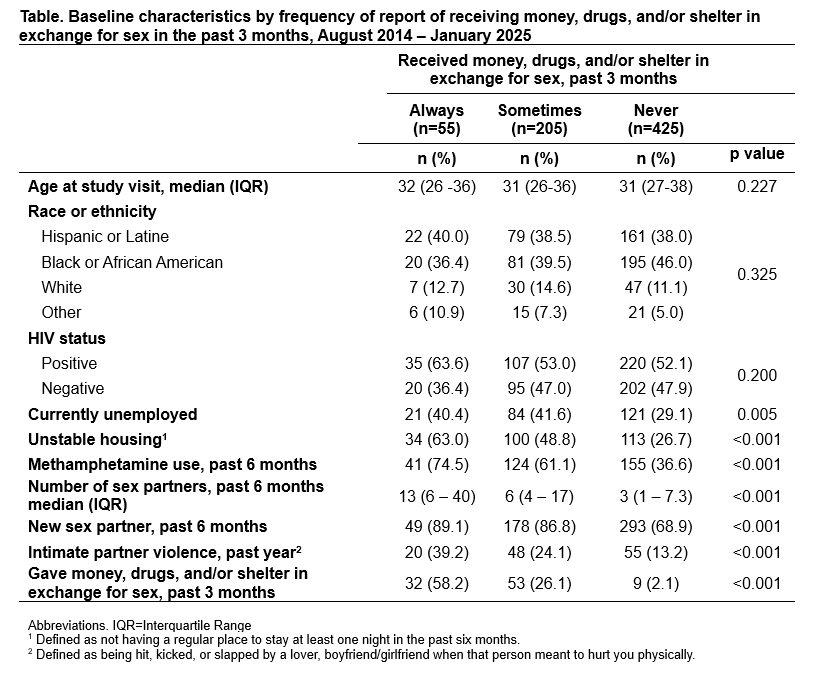
A total of 685 participants were enrolled, resulting in 4,268 study visits, and a median of 3.1 years of follow-up (IQR 0.6-7.5). At baseline, the median age was 31 years (IQR 26–37); 43% identified as Black/African American and 38% as Hispanic/Latino. Across all study visits, 62% reported never engaging in transactional sex, 8% reported transactional sex at every visit, and 30% reported it at some but not all visits (Table). There were significant differences at baseline across the groups, with notable contrasts between those reporting transactional sex consistently versus intermittently. Compared with the intermittent and never groups, participants who reported engaging in transactional sex at all study visits had higher prevalence of unstable housing (63% vs 49% vs 27%; p<.01), methamphetamine use (75% vs 61% vs 37%; p<.01), giving money, drugs, or other goods in exchange for sex (58% vs 26% vs 2%; p<.01), and had significantly higher number of sex partners.
Conclusions
Among men reporting transactional sex, a minority did so consistently representing a high-vulnerability subgroup characterized by an increase in risk factors for HIV transmission and acquisition. These findings support ongoing screening and integrated services that pair HIV prevention and care with housing support, and stimulant-focused treatment for those who consistently report engaging in sex work, while intermittent reporters may represent critical windows for HIV prevention.
Table or Figure