Background
Recent HIV infection testing distinguishes recent (≤1 year) from long-term infections. Tanzania conducted facility-based HIV recency surveillance among HIV testing services (HTS) clients. The Asante HIV-1 Rapid Recency Assay, a rapid test for recent infection (RTRI), was used with HIV viral load (VL) to create an HIV recent infection testing algorithm (RITA). We report proportion of RITA-recent infections and associated factors among HTS clients who attended 275 facilities conducting recency surveillance in 11 regions of mainland Tanzania and Zanzibar between September 2023−October 2024
Methods
HTS clients ≥15 years with new HIV diagnoses were offered recency testing. Consenting clients completed an HIV risk questionnaire, received RTRI testing, and those with RTRI-recent results had VL testing. Clients were classified as RITA-recent if RTRI-recent result and VL ≥1000 copies/mL. For RTRI-recent clients missing VL, RITA status was imputed using multivariate chained equations. We calculated proportions and adjusted odds ratios (aOR) of RITA-recent infection comparing demographic characteristics and HIV risk behavior factors using t-test, Fishers’ Exact test and logistic regression. Results included 95% confidence intervals (CI) and used significance level of 0.05
Results
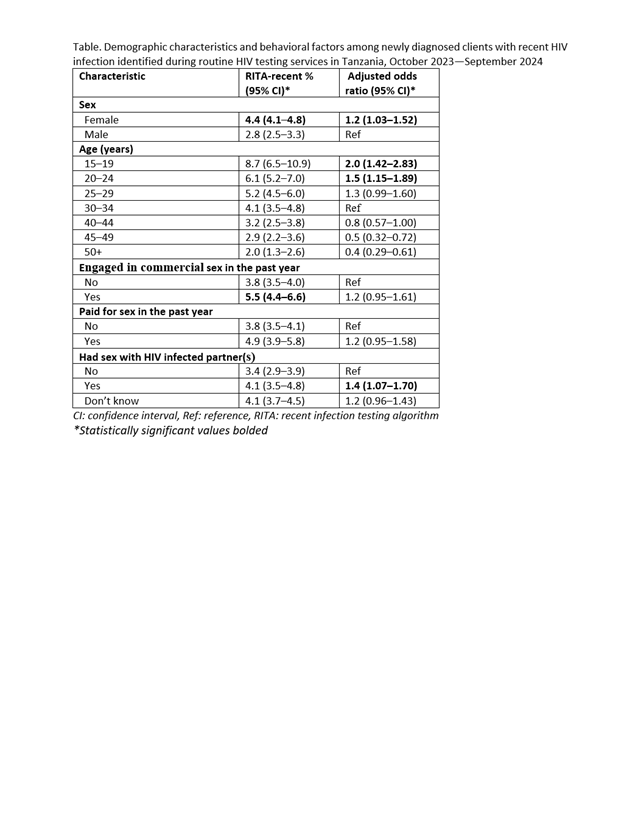
Of 20,303 newly diagnosed HTS clients, 20,088 (98.9%) consented. Among them, 67.5% were female and median age was 34 years. A total of 1,266 (6.3%) had RTRI-recent results and 1,080 (85.3%) had available VL results; RITA status for 186 (14.7%) was imputed. Overall, 3.9% (95% CI: 0.14–4.2) were RITA-recent. RITA-recent infection was higher among females (4.4%) compared to males (2.8%) (p<0.001) and among those reporting engaging in commercial sex in the past year (5.5%) compared to those who did not (3.8%) (p <0.001). Adjusted results showed higher odds of RITA-infection among younger clients aged 15–19 (aOR: 2.0, 95% CI 1.42–2.83) and 20–24 years (aOR: 1.5, 95% CI 1.15–1.89) compared to 30–34 years, and among those reporting sex with an HIV-positive partner in the past year (aOR: 1.35, 95% CI: 1.07–1.70) compared to those who did not
Conclusions
While the overall proportion of recent HIV infections was low, specific sub-populations were more likely to have been recently infected. These findings highlight the value of recency surveillance in detecting ongoing transmission within priority populations. Recency surveillance may help identify active transmission, sharpen prevention strategies, and guide targeted interventions
Table or Figure