Background
In adults, HIV-1 subtype A is associated with higher rates of heterosexual transmission, whereas subtype D is linked to faster disease progression. Less is known about the impact of subtype in perinatal transmission, although data indicate a greater susceptibility of female infants to perinatal acquisition. Here, we evaluated the impact of infant sex and maternal HIV-1 subtype on perinatal transmission and subsequent infant mortality in a Ugandan cohort from the pre-antiretroviral therapy era.
Methods
We analyzed the proportion of HIV-1 perinatal transmission during the pre-ART era by maternal HIV-1 subtype and infant sex in 131 mother-child pairs known to be infected with subtype A or D from the Rakai Community Cohort Study. Transmission risk was assessed using risk ratios (RRs) reported with 95% confidence intervals (CIs) and p-values calculated using Fisher’s exact tests. Analyses were stratified by infant sex and maternal viral subtype. Infant mortality was evaluated for two years post-birth using Cox’s proportional hazards and Kaplan-Meier analysis.
Results
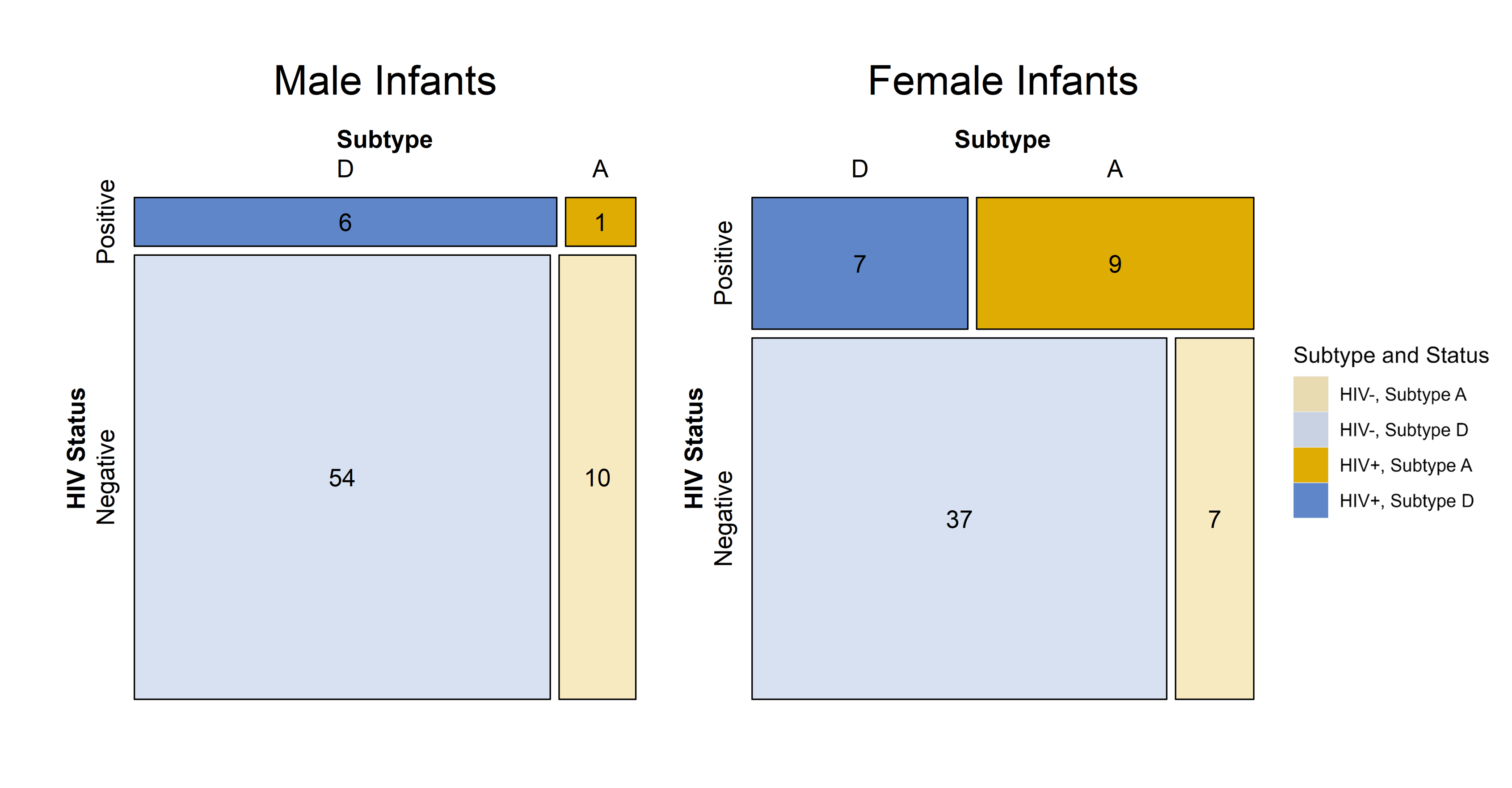
Most infants (104/131) were born to mothers living with HIV-1 subtype D, while 27/131 had subtype A. Regardless of the HIV-1 subtype they were exposed to, female infants had a higher risk of infection than males (RR=2.70, CI=1.19-6.13, p=0.02). Among all infants, if the mother was infected with subtype A there was a nearly 3-fold increased risk of perinatal transmission as compared to subtype D (RR=2.96, CI=1.46-6.01, p=0.008). When stratifying infants by both sex and maternal subtype, significantly more female (56.3% [9/16]) than male (9.1% [1/11]) infants born to mothers with subtype A were infected (RR = 6.19, CI=0.91-42.12, p=0.02). In contrast, among infants born to mothers with subtype D, transmission rates were more comparable across sex: 15.9% (7/44) in female infants versus 10.0% (6/60) in males (RR=1.59, CI=0.57-4.41, p=0.39). There was no significant difference in two-year mortality by subtype in the infected infants.
Conclusions
HIV subtype A had a higher rate of perinatal transmission than subtype D. When stratifying by infant sex, this trend was only observed among female infants, highlighting the importance of disaggregating sex and subtype when analyzing perinatal transmission.
Table or Figure