Background
Breastfeeding (BF) can reduce pregnancy risk, particularly exclusive BF in the 6 months post-delivery (PD); BF may provide layered protection during imperfect progestin-based contraceptive use or in the presence of drug interactions that reduce systemic progestin levels. We evaluated contraceptive effectiveness of the levonorgestrel (LNG) implant versus depot medroxyprogesterone acetate (DMPA) injectable, by BF status at the time of contraceptive initiation, among a cohort of women with HIV (WHIV) receiving efavirenz (EFV).
Methods
The FP-ART prospective study aimed to compare the effectiveness of 2 progestin-based contraceptives in the setting of drug interactions with EFV. We enrolled WHIV aged 18-40 years in Malawi within 28 days of initiating the LNG implant or DMPA. Study visits and urine pregnancy testing were done at enrollment, week 4, and every 24 weeks thereafter. We analyzed participants on EFV with follow-up censored at: 28 days after EFV discontinuation, implant/DMPA discontinuation, tubal ligation, or the last study visit. Within BF groups (BF for ≤6mo PD, for >6mo PD, and not BF), we estimated 48- and 96-week pregnancy risks and risk differences (RDs) for LNG versus DMPA. We used inverse probability of treatment and censoring weighted Kaplan-Meier estimates to address confounding by contraceptive choice and study/contraceptive dropout. We constructed percentile-based bootstrap 95% CIs (10,000 resamples).
Results
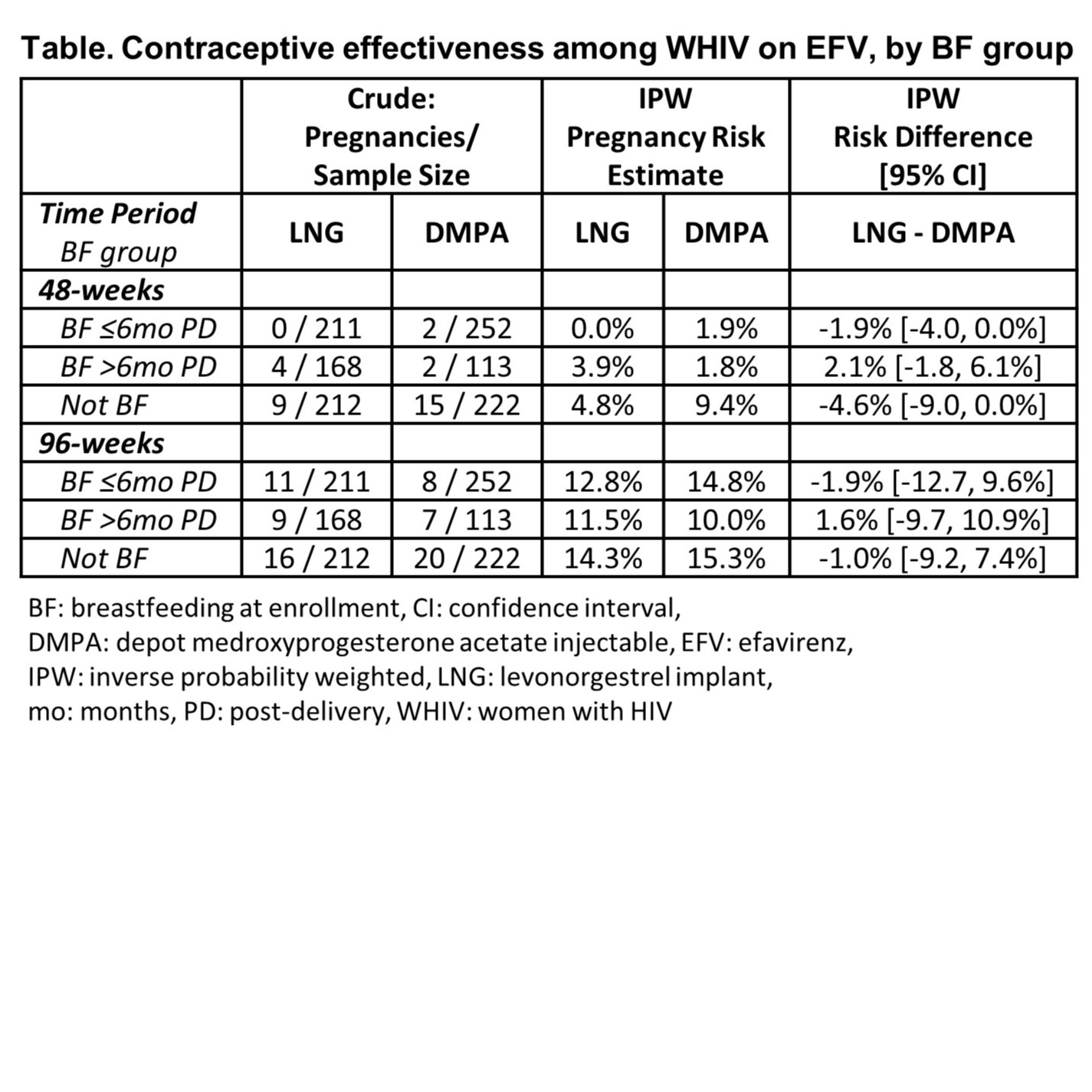
We analyzed 1,178 WHIV: 463 BF ≤6mo PD, 281 BF >6mo PD, and 434 not BF. At enrollment, the proportion of women reporting coitus in the past week varied by BF status (BF ≤6mo PD: 39%, >6mo PD: 55%, not BF: 59%; χ2 p<.001). Initially, absolute pregnancy risk was lower among BF women. At 48 weeks, LNG implant was associated with lower pregnancy risk than DMPA in 2 of 3 BF groups (≤6mo PD: RD -1.9 (95% CI -4.0, 0.0); >6mo PD: RD 2.1 (CI -1.8, 6.1); not BF: RD -4.6 (CI -9.0, 0.0)). In contrast, 96-week pregnancy risks were similar for the implant compared to DMPA within each BF group (Table).
Conclusions
For WHIV receiving EFV, 48-week pregnancy risk was lower for LNG implant vs. DMPA users among those BF ≤6mo PD or not BF at enrollment, whereas 96-week risk was comparable for LNG vs. DMPA across BF groups. Contraceptive effectiveness studies should consider the impact of enrolling women during the first 6 months PD, when we observed low pregnancy incidence likely due to reduced sexual activity and additional protection via BF.
Table or Figure