Background
Long-acting cabotegravir plus rilpivirine (LA CAB/RPV) is an effective alternative to oral ART in non-pregnant populations, reducing pill burden and improving adherence. For pregnant individuals unable to tolerate or reliably take oral therapy, LA CAB/RPV may provide a critical option to achieve and maintain suppression and reduce perinatal HIV transmission. Data in pregnancy are lacking; we present the first case series describing viral decay kinetics in viremic pregnant persons initiating LA CAB/RPV.
Methods
We conducted a multi-center retrospective cohort study and collected data on any exposure to LA CAB/RPV during pregnancy. This analysis includes any pregnant person who initiated LA CAB/RPV while viremic. Patient demographics, reason for switch to LA CAB/RPV, HIV RNA throughout pregnancy, and key perinatal and neonatal outcomes, including birth weight, gestational age, and rates of viral suppression at delivery were collected.
Results
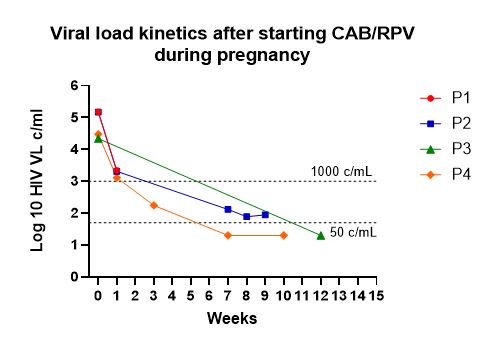
Four pregnant cisgender women met criteria for inclusion in analysis. The median maternal age was 26 years (range 24-33) and median gestational age at initiation of LA CAB/RPV was 28 weeks (range 22-36). Median baseline HIV RNA prior to first injection of LA CAB/RPV was 89,500 copies/mL (range 26,000-149,000). The main reasons for switching to LA CAB/RPV were adherence challenges and pill fatigue. Among the 3 women with paired viral load measurements during the first week, the median slope of decay was –1.6 log10 copies/mL per week (range –1.36 to –1.83), consistent with steep early viral suppression and similar to the reported decay in nonpregnant people. (Fig 1). All 4 participants achieved HIV RNA <1,000 copies/mL within 4 weeks of initiation. The 1 participant who initiated LA CAB/RPV at 36 weeks had a cesarean delivery for prevention of HIV transmission. Three neonates were born at term, with a median birth weight of 2287 grams (range 2230-2400). There were no cases of vertical transmission. No cases of congenital anomalies were present.
Conclusions
In this first report of LA CAB/RPV initiation during pregnancy, viral decay was steep and rapid, with all participants achieving suppression to <1,000 copies/mL within four weeks. These findings suggest that long-acting injectables may represent a viable alternative for pregnant persons unable to tolerate or adhere to oral ART, offering a practical strategy to reduce perinatal transmission risk. Larger studies are urgently needed to define safety, pharmacokinetics, and maternal–infant outcomes
Table or Figure