Background
In 2022, the World Health Organization recommended a single high-dose liposomal amphotericin B (L-AmB) regimen with fluconazole and flucytosine as induction therapy for cryptococcal meningitis. This was based on the AMBITION trial which showed 2-week and 10-week mortality of 13% and 24% with reduced toxicity in comparison to 7-days of conventional amphotericin B. Data from implementation of this regimen as part of routine care in low-resource settings remain limited.
Methods
We conducted a prospective cohort study (2023–2025) in Médecins Sans Frontières–supported hospitals in the Democratic Republic of Congo, Guinea, and Mozambique. Adults (≥18 years) with HIV-associated cryptococcal meningitis received a single 10 mg/kg L-AmB infusion plus 14 days of oral fluconazole and flucytosine with standardized intracranial pressure (ICP) management and WHO-minimum laboratory monitoring. Fidelity to recommended management was assessed and mortality at 2 and 10 weeks determined.
Results
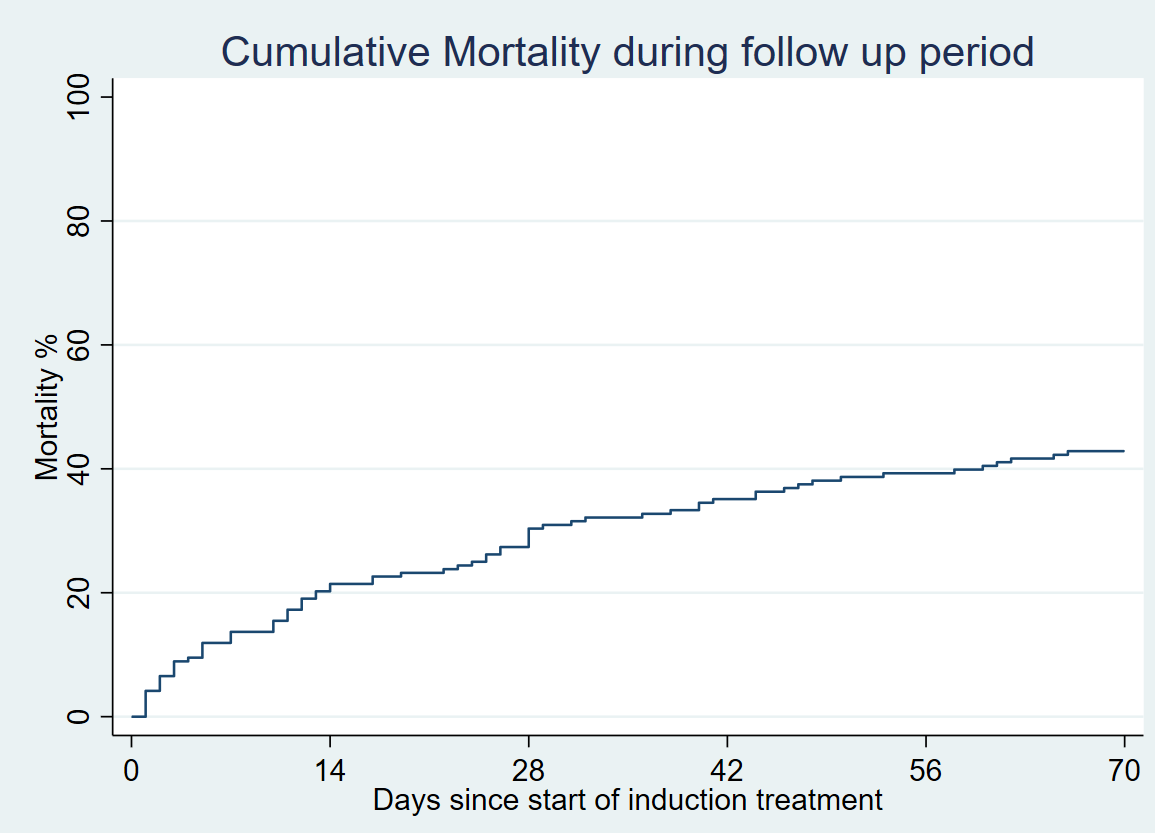
Of 187 screened, 168 were enrolled. Median age was 40 years (IQR 33–47); 49% (82/168) were female; median CD4 count was 50 cells/µL (IQR 34–121) and 40% (68/168) had GCS<15 on admission. Two and 10 week mortality were 21% (34/168, 95% CI 16–28) and 43% (72/168, 95% CI 36–51) respectively; 1% (1/168) were lost to follow-up. Median time to death was 17 days (IQR 5–36). Among 129 discharged alive, median hospitalization was 8 days (IQR 5–13); 36% (46/129) were discharged before day 7. Post-discharge mortality up to 10 weeks was 26% (33/129). Fidelity to care was moderate: 81% (136/168) had adequate ICP management, 90% (151/168) received L-AmB within 4 hours of diagnosis, and 36% (60/168) underwent WHO-recommended laboratory monitoring. Adverse events included grade III/IV renal impairment (2%, 4/168), hypokalaemia (3%, 5/168), and a mean haemoglobin decline of 1.6 g/dL (from 10.2 to 8.6) by day 7.
Conclusions
Implementation of the single-dose L-AmB regimen in routine low-resource hospitals was feasible, with 2-week mortality comparable to trial settings and a favourable safety profile. Over one-third of patients were discharged before 7 days, offering potential system and health economic benefits versus prior regimens. Laboratory monitoring was a challenge, highlighting the value of low-toxicity regimens in resource-limited contexts. Mortality increased substantially between 2 and 10 weeks largely due to high post-discharge mortality. Earlier diagnosis and post discharge support are key to sustain inpatient gains.
Table or Figure