Background
People living with HIV remain at increased risk of severe outcomes from COVID-19 due to underlying immunologic vulnerability and comorbidities. Pemivibart is a recombinant human monoclonal IgG1λ antibody that targets the SARS-CoV-2 spike protein receptor binding domain, thereby inhibiting virus attachment to host cells. Based on Phase 3 CANOPY data (NCT06039449), pemivibart was granted emergency use authorization (March 2024) for pre-exposure prophylaxis of COVID-19 in certain adults and adolescents with moderate-to-severe immune compromise (IC). Here we describe a post hoc analysis of CANOPY Cohort A participants (pts) with advanced HIV infection receiving pemivibart.
Methods
Cohort A dosing: 4500 mg pemivibart (intravenous) on day 1; 2nd dose at month 3. Primary endpoints: pemivibart safety via study drug-related treatment emergent adverse events (TEAEs), serious adverse events (SAEs), and treatment interruption/discontinuation. Secondary analysis: pemivibart neutralization by sVNA titers against relevant SARS-CoV-2 variants. Exploratory endpoint: composite incidence of RT PCR-confirmed symptomatic COVID-19, including COVID-related hospitalization and all-cause mortality. Data were analyzed through month 6.
Results
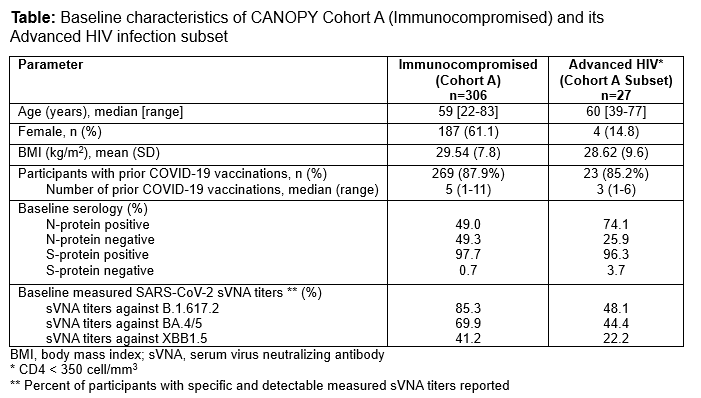
Enrollment began in September 2023 (XBB-related and JN.1 variants were dominant). Twenty-seven (8.8%) Cohort A pts were included in the advanced HIV subset: median age [range]:60 [39-77] years; 4 (14.8%) female (Table). Twenty-six (96.3%) were drug-managed via antiviral/antiretroviral treatment. Prior to enrollment, 85.2% received ≥ 1 COVID-19 vaccine; majority were seropositive to N (74.1%) and S (96.3%) antigens but < 50% had measurable sVNA titers against historical/concurrent variants (Table). TEAEs were reported in 18 (66.7%) pts; 7 (25.9%) considered SAEs. One (3.7%) study-drug related treatment interruption and no study drug-related serious TEAEs or study discontinuations were reported. Two all-cause mortalities were reported but not considered drug-related or attributable to COVID-19. Following pemivibart dosing sVNA titers were boosted to levels associated with protection against COVID-19. Through month 6, the composite incidence of RT-PCR-confirmed symptomatic COVID-19 was 11/298 (3.7%) in Cohort A; 2/27 (7.4%) within the advanced HIV subset.
Conclusions
Pemivibart was well tolerated in the advanced HIV subset. These data support pemivibart as a preventative option against COVID-19 in this high-risk clinical group.
Table or Figure