Background
Reduced bone mineral density (BMD) is a recognized complication of HIV and antiretroviral therapy (ART) in the global north. However, there is a paucity of data on how HIV and ART impact BMD in sub-Saharan Africa, home to 70% of the world’s population of people with HIV (PWH).
Methods
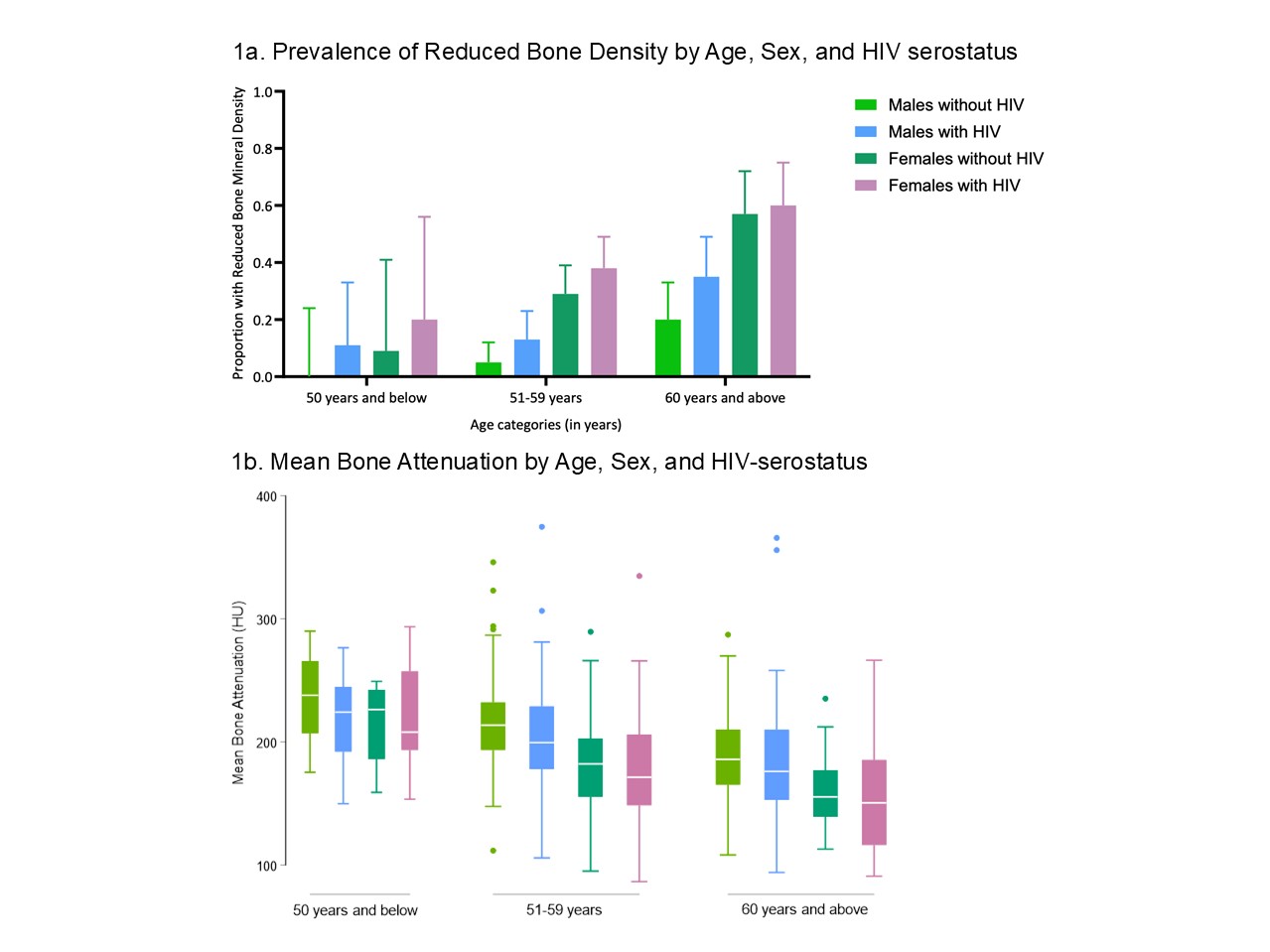
We analysed baseline data from the Uganda Epidemiology of Coronary Artery Disease (CAD) study comprised of ambulatory PWH aged ≥40 years on ART for ≥3 years, and an age-/sex-similar comparator group of people without HIV (PWoH). We estimated the BMD in Hounsfield Units (HU) of three consecutive thoracic vertebral bodies starting at the origin of the left main coronary artery on non-contrast computed tomography (CT) chest scans. Prevalence of reduced BMD, defined as a mean attenuation of <160 HU, was stratified by HIV serostatus, sex, and age (≤50, 51 to 59, and ≥60). We fit multivariable logistic regression models to estimate correlates of reduced BMD. Among PWH only, we included nadir and current CD4 count, and ART and tenofovir disoproxil fumarate (TDF) use duration. Vertebral compression fractures were compared (based on the Genant method, scored from normal/grade 0 to severe deformity/grade 3) by HIV serostatus.
Results
There were 579 participants (48.4% PWH vs 51.6% PWoH) with a median age of 57 (IQR: 53, 61) years. Among PWH, the median duration of ART use was 8.7 (IQR: 7.6, 12.0) years. PWH (vs. PWoH) had a lower median BMD (185.9 HU, IQR: 152.9, 218.6 vs 191.9 HU, IQR: 163.9, 217.5) and a higher rate of reduced BMD (31.4% vs 22.4%, p=0.014). Prevalence of reduced BMD was higher among females (39.2% vs 15.1%, p<0.0001), and among people age ≥60 years (40.7% vs 21.4% [51–59] vs 9.4% [≤50]) (figures 1a and 1b). In multivariable logistic regression models, reduced BMD was associated with HIV seropositivity (aOR 1.95, 95%CI [1.29, 2.95], p=0.002), female sex (aOR 5.10 95%CI [3.23, 7.92], p<0.0001), and age (aOR 3.38 per 10 years, 95%CI [2.44, 4.66], p<0.0001). Among PWH, reduced BMD had no association with nadir CD4, current CD4, and ART and TDF duration (all p>0.05). Vertebral compression fractures were more prevalent among PWH vs. PWoH: (grade 1: 16.1% vs 14.1%; grade 2: 2.1% vs 1.0%; grade 3: 0.4% vs 0.0%; p=0.410).
Conclusions
In Uganda, reduced BMD and vertebral compression fractures were more prevalent among PWH, women, and older adults. Further studies are needed to clarify the causal role and underlying mechanisms of HIV/ART and prospective validation with fracture outcomes in this population.
Table or Figure