Background
Anal cancer disproportionately affects people with HIV (PWH) and is preventable via ablation of high-grade dysplasia through high-resolution anoscopy (HRA). Performing HRAs requires specific training not routinely offered by any subspecialty and are often performed by infectious disease, surgery, gastroenterology and gynecology subspecialists, among others. Anal cancer screening with HRAs is now recommended by federal and state guidelines for all PWH.
Methods
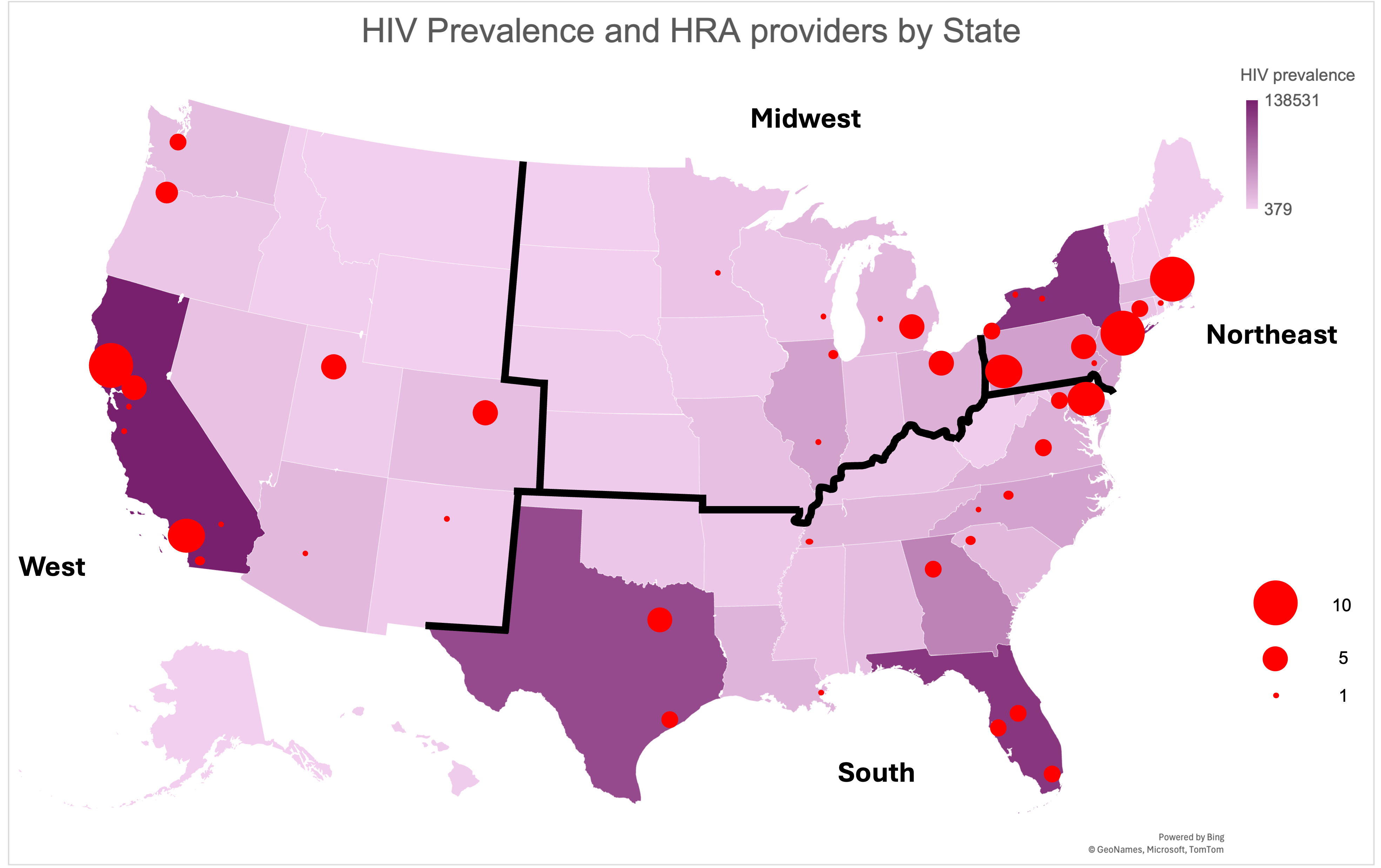
Using Microsoft Excel, we created a heat map of the number and location of HRA clinics and providers in the United States currently listed on the HRA Provider List from the University of California San Francisco (UCSF) Anal Neoplasia Clinic, Research and Education Center as well as independent internet searches. We also used publicly available AIDSVu datasets from Emory University to map the prevalence of PWH by state and calculate the ratio of HRA clinics to PWH on a regional and state level.
Results
Twenty-seven states in addition to Washington, DC have clinics that offer HRAs (Figure 1). The Midwest had the lowest ratio of HRA clinics to PWH (5 clinics/100,000 PWH), followed by the South (6 clinics/100,000 PWH), followed by the Northeast (9 clinics/100,000 PWH) and lastly the West (11 clinics/100,000 PWH). Illinois had the lowest ratio of clinics to PWH with 1 clinic for the 36,225 PWH that live in the state. Oregon had the highest ratio of clinics to PWH with 2 clinics for the 7553 PWH that live in the state.
Conclusions
Though the UCSF HRA Provider List is not a comprehensive list and relies on provider self-referral, it is the largest list known to the authors. A list of HRA providers and clinics that is routinely updated would be a highly valued tool for HIV providers looking for these services in their state or region. With the data currently available, there is a need to expand HRA providers and clinics in the United States especially among the Midwest and Southern regions.
Table or Figure